
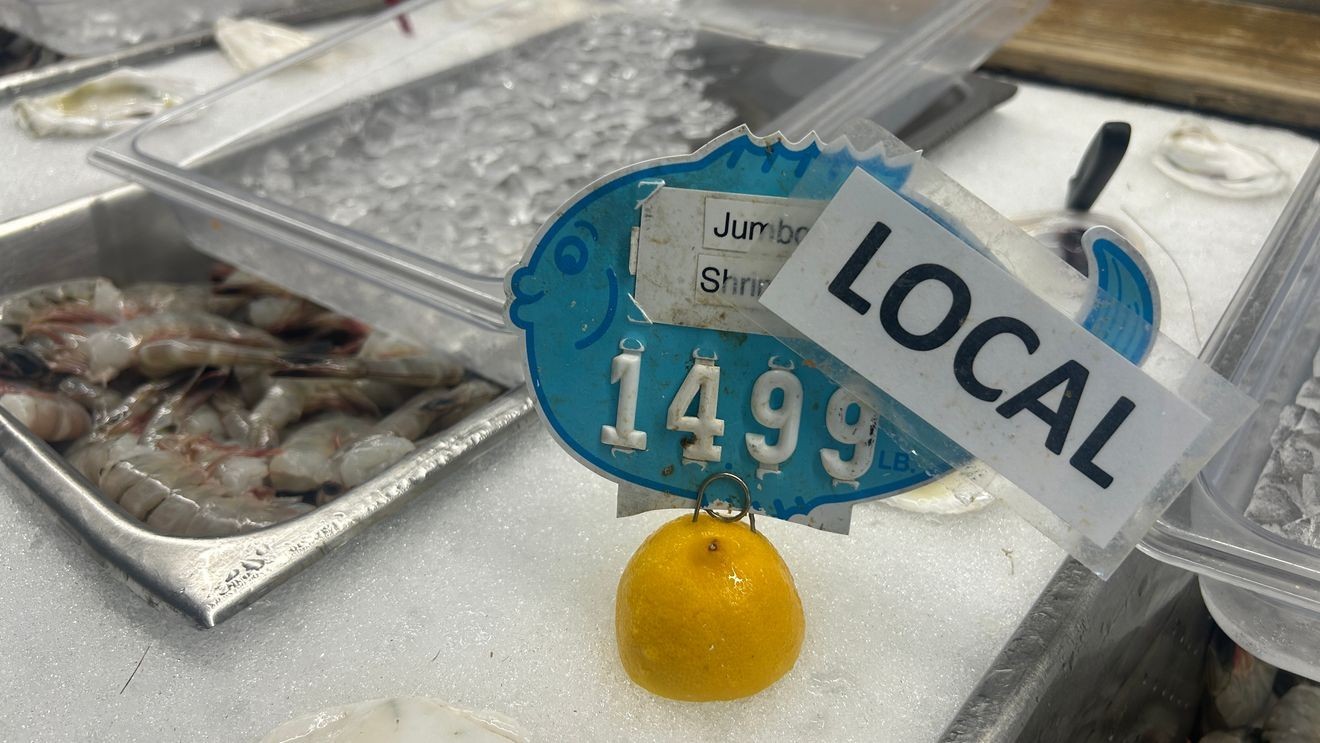
South Carolina restaurants must now explicitly tell customers whether the shrimp on their plates was caught in local waters or imported from overseas. The “Truth in Shrimp Labeling Act” officially took effect after a 120-day grace period following Henry McMaster’s signature, as reported by WCIV. The law mandates that seafood origin be disclosed on menus or through clear signage across the state.
Earlier this year, roughly 40 restaurants faced intense scrutiny after claiming their shrimp was local when it was actually imported.
The fight for the Lowcountry plate
For generations of fishermen, the influx of cheaper, imported shrimp has been a challenge. Rocky Magwood, a shrimper in McClellanville whose family has been in the business for about 110 years that they can prove, has spent nearly five decades moving shrimp in McClellanville. He believes that if a family can do a job for 110 years, they are “doing pretty good.” He views the new transparency requirements as a way to level a playing field that has been tilted toward global imports for too long.
“You come to Charleston, you should get what you think you’re eating,” Magwood said.
The economic stakes are high. Magwood noted that while imports remain a challenge, he finally sees “some light coming” for the local industry. He believes local shrimpers will “get a little bit more ground back from the imports.”
How restaurants are adapting to the mandate
The transition hasn’t been a shock to every establishment. Some businesses had already pivoted toward transparency before the law became a requirement. In Mount Pleasant, Arts—one of the area’s oldest bars—already uses stickers to certify that their shrimp is local. General manager Jessica Brighenty says the move is about more than just compliance; it’s about preserving the “roots of the community” from McClellanville down the entire coastline.
While some restaurants are using physical stickers or menu footnotes, others have taken to social media to shout about their local sourcing. The requirement is designed to be straightforward: if the shrimp comes from Indonesia, the menu says so. If it comes from Charleston, the menu says so. Magwood said the process is simple: “Put it on your menu and tell me if somebody wants to eat shrimp from Indonesia or they wanna eat it from Charleston, South Carolina.”
NEW LAW IN SOUTH CAROLINA:Starting today, restaurants and other food service establishments that serve imported shrimp are required to post it on their menus and on a sign visible at their main entrances. 🛥️🦐🦐🦐🍽️@ABCNews4 pic.twitter.com/MImUDxPsYl
The tension between cost and community
Magwood argues that the state should prioritize using local resources first, stating, “We should be using what we have,” and suggesting imports should only happen if local supply is unavailable. He believes the law ensures fishermen have a “fair shot” with consumers.
A broader shift in seafood transparency
Through the “Truth in Shrimp Labeling Act” state law, South Carolina now requires restaurants to disclose whether the shrimp they serve is local or imported.
The practical result for the diner is a simpler choice. Instead of trusting a verbal claim from a server, the burden of proof has shifted to the menu. As Magwood puts it, the goal isn’t to ban imports entirely, but to ensure that fishermen have a fair shot to sell what they have before the state relies on outside sources.
The question that remains is how strictly the state will enforce these labels.
Related reading

Austin City Council 2026 Race: Final Campaign Finance Reports
With the November 3 election just days away, more than 20 candidates fighting for five Austin City Council...

Sober Living Homes in Utah: Licensing, Costs, and How to Choose
Finding a safe place to live during recovery in Utah is fundamentally different than in most other states...

TN Governor Candidates Debate as Marsha Blackburn Skips Event
Seven days before Tennesseeans head to the polls, three candidates for governor faced off in a debate at...

Edgewater Villas in South Sioux Falls Offers apartments from $970
Edgewater Villas in south Sioux Falls is currently offering immediate and upcoming availability for one-, two-, and three-bedroom...