Pennsylvania election officials are finalizing preparations for the November 3, 2026, election, deploying enhanced cybersecurity and physical security measures to ensure a stable voting process in a state that remains a battleground. In Philadelphia and Lehigh counties, officials are coordinating with the Department of Justice to manage federal monitors and address voter anxieties regarding potential federal interference at polling sites.
The stakes for this cycle are high, with four House races in Pennsylvania currently in play as Democrats attempt to flip the balance of power in the chamber. For the people running these elections, the goal is to decouple the administrative act of voting from the political volatility that has defined the state since 2020. They aren’t just counting ballots; they are managing a psychological environment where misinformation often travels faster than official guidance.
DOJ Monitors Observe Federal Election Law Compliance
Philadelphia County is one of four in the state where the Department of Justice (DOJ) will deploy federal election monitors. According to Philadelphia City Commissioner Seth Bluestein, these monitors will play a passive role, observing compliance with federal civil rights and accessibility laws. While they can speak with voters after they have cast their ballots, they are prohibited from doing so before.
Despite the passive nature of DOJ monitors, a cloud of uncertainty has lingered over the polls. Earlier this year, Steve Bannon suggested that Immigration and Customs Enforcement (ICE) agents might be deployed to polling places. While the administration has since stated it will not send immigration agents to the polls, the rumor created a tangible ripple of fear among voters and poll workers alike.
The legal guardrails are strict. Pennsylvania law prohibits federal or state troops—whether armed or unarmed—from being present at polling places during an election, unless they are there to vote. Police are also barred from being within 100 feet of a polling site unless they are specifically called to preserve the peace. To prevent confusion, Bluestein’s office has already provided poll workers with specific protocols on how to handle the appearance of ICE agents, even though officials do not expect them to arrive.
“The most important thing for the voters to know is that Election Day is safe,” says Lisa Deeley, a Philadelphia city commissioner. “People should vote without fear of intimidation; we want people to participate in spite of all the rhetoric.”
The Trauma of 2020 as a Blueprint
For many in the trenches of election administration, the “normalcy” of 2026 is relative. Seth Bluestein recalls the 2020 cycle not as a professional challenge, but as a personal crisis; while he was counting ballots at the city convention center, police were stationed at his home to protect his wife and children from death threats. This shift in the nature of the job—from clerical oversight to security management—has fundamentally changed how Pennsylvania prepares for Election Day.
The training now looks more like a crisis management seminar than a manual on ballot chain-of-custody. Kathy Boockvar, who served as secretary of state in 2020 and now works with the Committee for Safe and Secure Elections, has led sessions covering everything from bomb threats and drones to the discovery of envelopes containing white powder. These scenarios, once unthinkable for a local election board, are now standard line items in the preparation process.
This heightened state of readiness is a direct response to the aftermath of the 2020 presidential election. On November 4 of that year, Donald Trump claimed a lead of nearly 700,000 votes in Pennsylvania while more than 2 million ballots remained uncounted, later filing a lawsuit to prevent the certification of results. That era of litigation and public protest has left officials with a permanent mandate for transparency.
Radical Transparency in Lehigh County
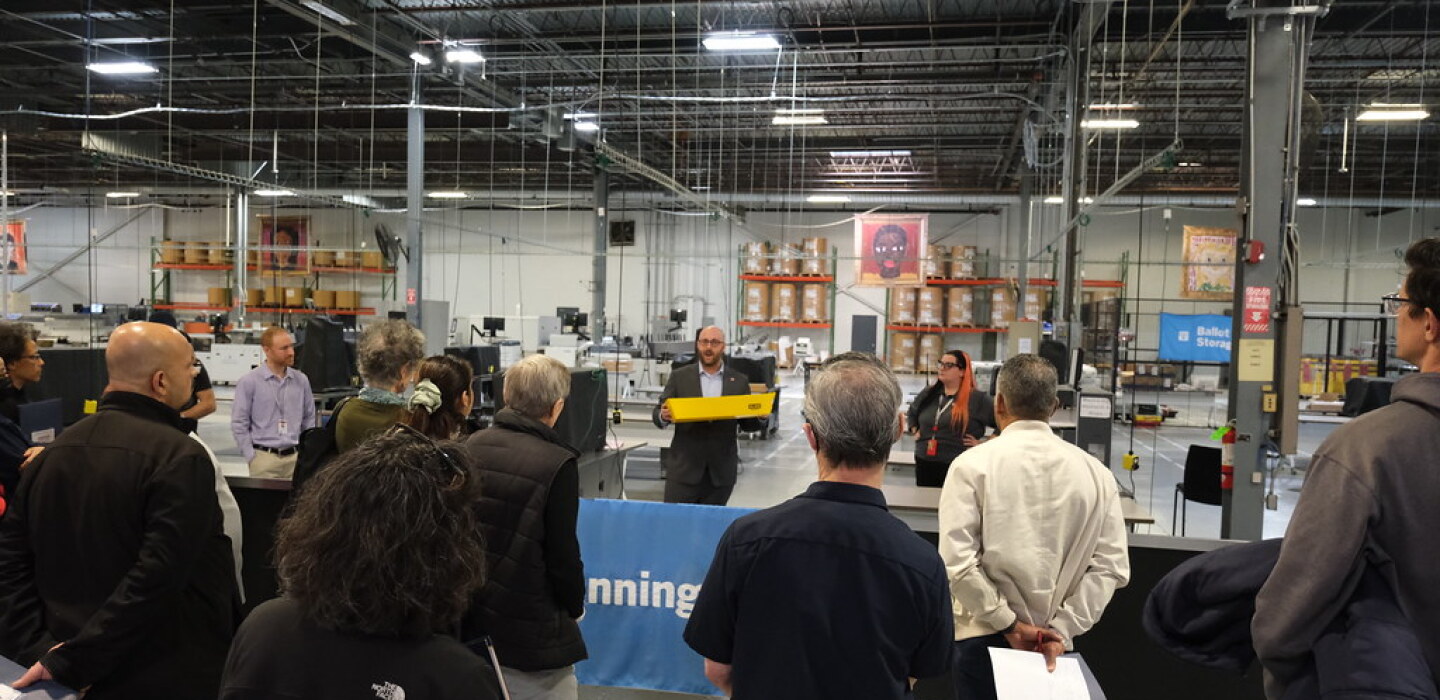
In Lehigh County, where one of the contested House districts is located, Chief Clerk Michael Paston and his staff are leaning into visibility to combat disinformation. Two weeks ago, the county held an open house, inviting the general public to walk through the facility and see exactly how the vote-counting equipment functions.
Lehigh County Executive Josh Siegel noted that opening the doors was the most effective way to treat the issue of misinformation. Paston argues that the administrative process remains the same regardless of the political stakes, noting that his staff works 12-plus hours a day, six or seven days a week, leaving little room for nervousness.
The tension in these districts often stems from a fundamental disagreement over the role of federal oversight. While some see DOJ monitors as a safeguard for civil rights, others view any federal presence as a sign of instability or interference. However, Paston dismisses the fear of ICE involvement as a waste of federal resources, stating plainly that “illegals don’t vote.”
The Logistics of Trust
To reduce friction on November 3, Philadelphia has shifted its timeline.
The human cost of this work is often invisible. Poll workers, many of whom are volunteers, now require briefings on conflict de-escalation and the laws forbidding firearms at polling places.
As the state moves toward the finish line, the goal is to return the act of voting to something communal. For Commissioner Lisa Deeley, the day should feel as quintessentially Philadelphia as “Rocky and Tastykakes.” But that feeling of community is now something that must be actively defended through cybersecurity, physical barriers, and a relentless commitment to transparency.
Keep reading

Henry Starr Earns RMAC Men’s Golfer of the Week Award
Henry Starr closed out the fall collegiate golf calendar by capturing the Rocky Mountain Athletic Conference Men's Golfer...
Sacramento Trustees Question Police Communication on ICE Activity
Federal immigration agents detained an individual during a targeted operation in south Sacramento on October 27, prompting local...
3 Areas Arkansas Must Improve Before Season Opener Against UAPB
Fixing Free Throws and Post Defense Before Arkansas Basketball Opens Against UAPB Arkansas head coach John Calipari made...

Hydraulic Jacks Scattered on US 60 in Mesa Damage Over a Dozen Vehicles
Mesa Freeway Debris Incident Damages 13 Vehicles on US 60 Law enforcement officials are seeking community assistance following...