South Dakota State University Weighs 90-Credit Bachelor’s Degrees
As covered by South Dakota News Watch, institutions within the South Dakota Board of Regents are exploring the state’s initial shortened bachelor’s programs, reflecting evolving perspectives on higher education and the worth of a four-year diploma.
South Dakota State University is evaluating an initiative that would convert its Hospitality, Tourism and Event Management bachelor’s degree—currently mandating 120 credits similar to standard BA paths—into a 90-credit bachelor of applied science. Nationally, reduced-credit degrees are gaining traction as institutions face shifting public perceptions and declining enrollment.
A study from RAND found that as of this spring, 30 states had implemented 90-credit degrees. The number of such programs announced by institutions grew from five programs in 2024 to 48 programs in 2025, with reduced-credit degrees proving more common in private, nonprofit institutions than in public ones.
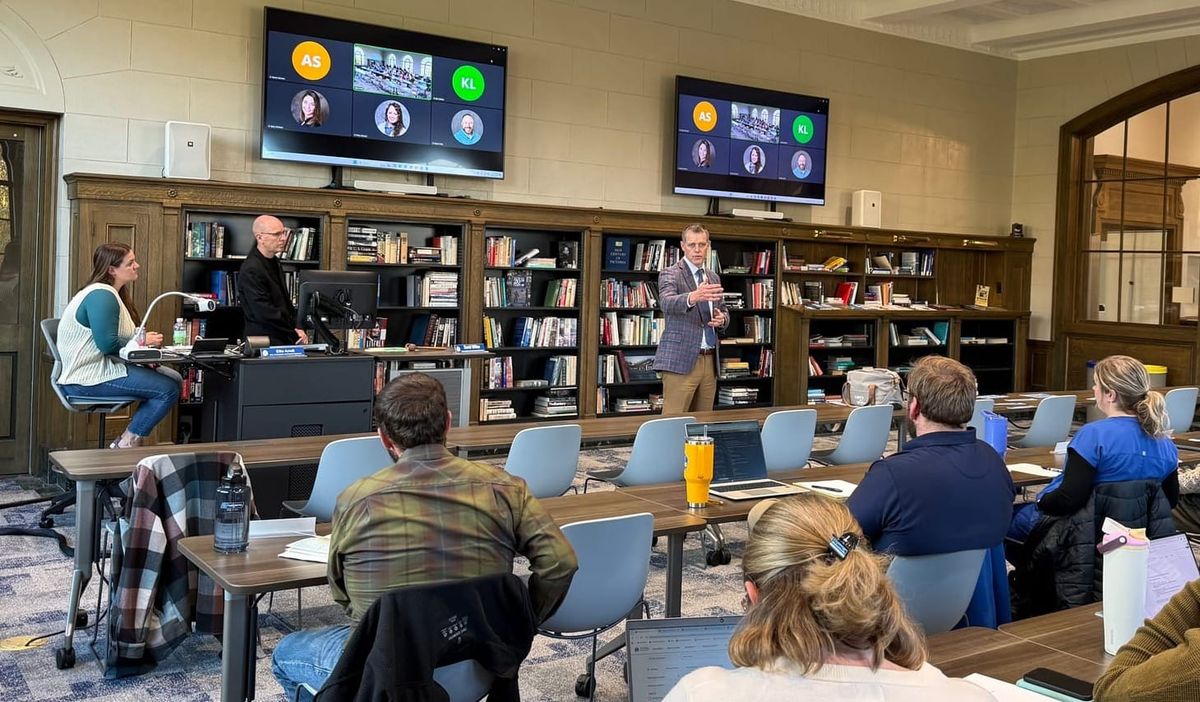
At an SDSU Faculty Senate meeting on October 27, 2026, faculty debated the proposal for almost an hour. Following discussions attended by Board of Regents executive director Nathan Lukkes, four senators voted against the measure before it advanced to the BOR Academic Affairs Council.
Schools Consider Reduced-Credit Degrees to Retain Students
Lukkes did not specify where or how many schools are proposing reduced-credit degrees within the board of regents system. Shuree Mortenson, communications director for the BOR, could not disclose the other schools considering 90-credit bachelor of applied science degrees.

“There is one in the business realm,” Lukkes said at the meeting. “And then there’s one, I believe, that’s getting kicked around in the criminal justice realm.”
Faculty, university leadership, and Lukkes discussed higher education’s role in retaining students amid changing societal views. “Higher ed used to be valued. I mean, face value – unquestionable. You did it; the return was there.
To now, just questioning everything,” Lukkes said, according to South Dakota News Watch. “‘We’re not going to pay the price you’re charging. We don’t need all of these credits. There’s a better model out there.’ And I don’t have the answer.”
At its peak, almost 70% of high school graduates in South Dakota went on to continue their education. Now, Lukkes noted, the state is regressing into the low-60% range.
The state’s two largest population centers have seen decreased rates of students attending college after high school. In the Sioux Falls School District, 56% of students pursue higher education within 16 months of graduating, per data from the South Dakota Department of Education’s most recent report card. In the Rapid City Area School District, that figure drops to less than half (49%) of students continuing their studies.
Proponents argue these programs offer a solution to the college affordability crisis and help non-traditional students. Critics, however, worry they might narrow student learning, confuse employers, limit graduate school options, and create complications in fields requiring state licenses.
Faculty Debate and Accreditation Realities
Lee Weidauer, an associate professor in the same college as the Hospitality, Tourism and Event Management program, praised the proposal’s flexibility in responding to industry changes. “One of our charges by our accrediting body is to put out professionals into the field that are trained in the manner that they can be employed and that adds value to the people in the field,” Weidauer said.
Other faculty members raised caution. James Murphy, an associate professor of religion in the School of American and Global Studies, voiced worries that the move could become a slippery slope and set a precedent.
“My concern is with precedence and that something that is 72 classroom credits plus 18 internship credits will be called a bachelor’s when the norm is 120 credits,” history professor William Prigge said, South Dakota News Watch reported. “This program may come and go. But once the precedent has been set, it’s been set, and that’s concerning.”
Proposal Moves to the Academic Affairs Council
The proposal will next go to the Board of Regents Academic Affairs Council, a committee including representatives from each university and the board office, according to Mortenson. If approved by that council, the measure advances to the full Board of Regents for consideration at an upcoming board meeting, which could be in December or April.
“Do we retreat, give up some ground, protect the rest of the castle, and keep 70% of what we’ve always done in the traditional sense, and then give up 30% in other areas?” Lukkes asked during the faculty meeting. “Do we stand firm and not erode and risk market share, not serving students – and at some point potentially your financial liability?”

Tropical Storm Pena Brings Gusty Winds and Elevated Surf to Hawaii
Tropical Storm Pena is tracking well to the south of the Hawaiian island chain today, forcing a shift...

Four Shorter University Wrestlers Place at Georgia Open
The Shorter University wrestling team competed at the Georgia Open on Sunday, November 8, in Franklin Springs, Georgia....

Stephen Curry Scores 41 Points as Warriors Win in Overtime Against Magic
Stephen Curry is once again bending the trajectory of an NBA season to his will. The 38-year-old guard...

How to File a Civil Lawsuit Without an Attorney
To file a civil action in the District of Delaware without an attorney, a plaintiff must submit a...