
Democratic Gains in Sioux Falls Signal Shift in South Dakota Politics
South Dakota’s political landscape saw a ripple of change this week as Democratic candidates managed to flip four state legislative seats in Sioux Falls. While the statewide results remained firmly in Republican control—with no Democratic candidate for statewide office breaking the 40% threshold—the modest legislative gains mark the first time in 18 years that the party has successfully expanded its footprint in the statehouse.
According to reporting from SDPB, the shift is largely concentrated in the Sioux Falls area, where changing demographics and an increase in what political scientists call “quality candidates” have begun to alter the electoral math. Emily Wanless, an associate government and international affairs professor at Augustana University, noted that the state’s Republican supermajority remains intact, but the emergence of experienced challengers has made incumbents more vulnerable than in previous cycles.
South Dakota Democrats are bringing former President Biden to Sioux Falls on June 5. McGovern Day 2026 will be a night for the record books, and it brings a clear message: South Dakota is back in the fight. pic.twitter.com/5UgOiapwYq
In order to be convinced to run, but to get support, you need people to run. So, we’re starting to see the people, Democratic candidates running maybe in races that they didn’t before.
The success of candidates like Ali Rae Horsted, who ousted incumbent Republican Rep. John Hughes in District 13, illustrates this trend. Horsted, who had run a campaign previously, fits the profile of the “quality challenger” that Wanless identifies as essential for breaking into long-held red districts. This development is particularly notable given that the Democratic Party failed to field a candidate for that House seat as recently as 2024.
The “Three-Alarm Fire” Warning for State Republicans
While Democrats see a path forward, the election results have also sparked internal warnings within the Republican Party. Pat Powers, who tracks state politics via his blog South Dakota War College, argues that the party’s traditional structure is showing signs of wear. He points to a decline in organizational focus and a shift in voter sentiment as primary factors that allowed Democrats to capitalize on local races.
“This should be a warning for a three-alarm fire because the structure that’s given the Republican Party in South Dakota success over the last 18-20 years is kind of burning down,” Powers stated. He noted that in areas like Brookings and Brown County, Democrats outperformed expectations, suggesting that the party’s organized efforts—particularly regarding absentee balloting—paid dividends in a cycle marked by historically low voter turnout. Official reports indicate that statewide turnout fell below 50%, the lowest level in 62 years.
Rapid City Council Adjusts Public Comment Protocol
Further west, the Rapid City Common Council has moved to shift its general public comment period to the end of its meetings. The decision, passed on a 7-3 vote, brings the city in line with procedures already adopted by Sioux Falls in 2020. Supporters of the change argue that moving non-agenda items to the end of the docket aligns with Robert’s Rules of Order, ensuring that specific city business is addressed before opening the floor to general discourse.
Ward three councilmember Greg Strommen defended the move by pointing to Sioux Falls as a model for efficiency. However, the change was not without opposition. Ward one councilmember Josh Biberdorf voted against the measure, arguing that it could be perceived as a barrier to civic engagement.
Statewide Developments in Education and Governance
As the legislature prepares for the 2027 State of the State Address, local school districts are bracing for changes in state aid formulas. Rapid City Area Schools CFO Coy Sasse indicated that the board is monitoring potential adjustments to enrollment count policies. Meanwhile, district superintendent Jami Jo Thompson is advocating for a portion of the state’s share of the Meta settlement—estimated between $50 million and $70 million—to be earmarked for student mental health partnerships.
In state administration, the governor’s office announced that Steven Kohler will serve as the interim commissioner of the Bureau of Human Resources and Administration. Kohler, a 14-year veteran of state government, replaces Darin Seeley, who is transitioning to the private sector. This follows the recent departure of former Department of Social Services Secretary Matt Althoff.
Public Safety and Federal Oversight
Law enforcement agencies have reported progress in several investigations across the state. In Sioux Falls, 45-year-old Travis Moore is in custody facing second-degree murder and assault charges related to a fatal October 10th shooting. In the northeast, U.S. Marshals and local police apprehended a juvenile suspect wanted for a homicide in Arlington, Texas, who had allegedly fled to Aberdeen. Additionally, 18-year-old Micchael Ottmo has been arrested in connection with a fatal stabbing in Chamberlain.
On the federal front, the Rural Health Transformation Program has missed its second-year funding deadline. The program, which aims to distribute $10 billion nationally over five years, faced delays attributed to “additional administrative process requirements.” South Dakota, which secured $189 million in the first year for initiatives like regionalizing maternal and emergency medical services, now awaits further clarity on the timeline for the next round of funding.

- Madison voter Terri Lachance referred for review after attempted second vote
- Ron DeSantis Denies Washington Post Reports of 2028 Presidential Bid
- Turning Point USA Faces Backlash After Major Republican Election Losses (world-today-news.com)
- Miller's Chief of Staff Job Needs No Senate Vote; Three DOJ Seats Do (daybreakwire.com)
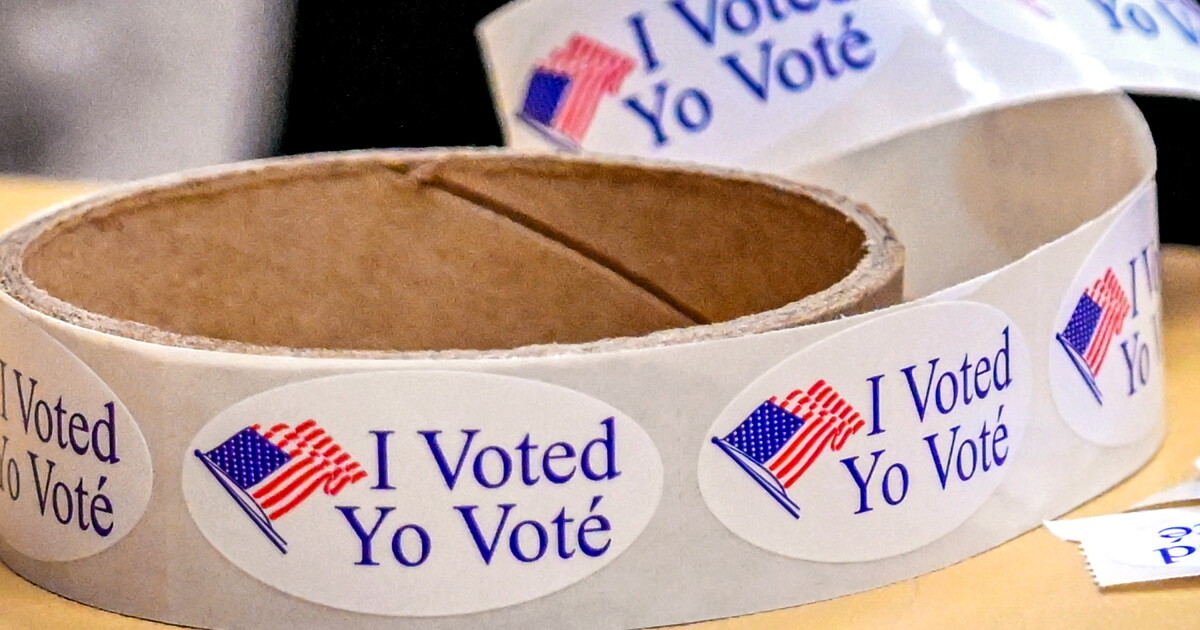
Madison voter Terri Lachance referred for review after attempted second vote
The Madison Voter Who Tried to Beat the System When Terri LaChance walked back into her Madison polling...

Ron DeSantis Denies Washington Post Reports of 2028 Presidential Bid
The 2028 Speculation and the Governor’s Rebuttal Florida Governor Ron DeSantis took to social media this past Friday...

Virginia Beach prepares for Tunnel to Towers 5K Run & Walk
The Tunnel to Towers 5K Run & Walk in Virginia Beach serves as a local extension of a...

Salt Lake City Cemetery monument marks Japanese American veterans
A Granite Reminder of Sacrifice at Salt Lake City Cemetery A monument standing above 11th Avenue at the...