A Historic Lull: South Dakota Voter Plummets to 49% as Tax Shifts Fail
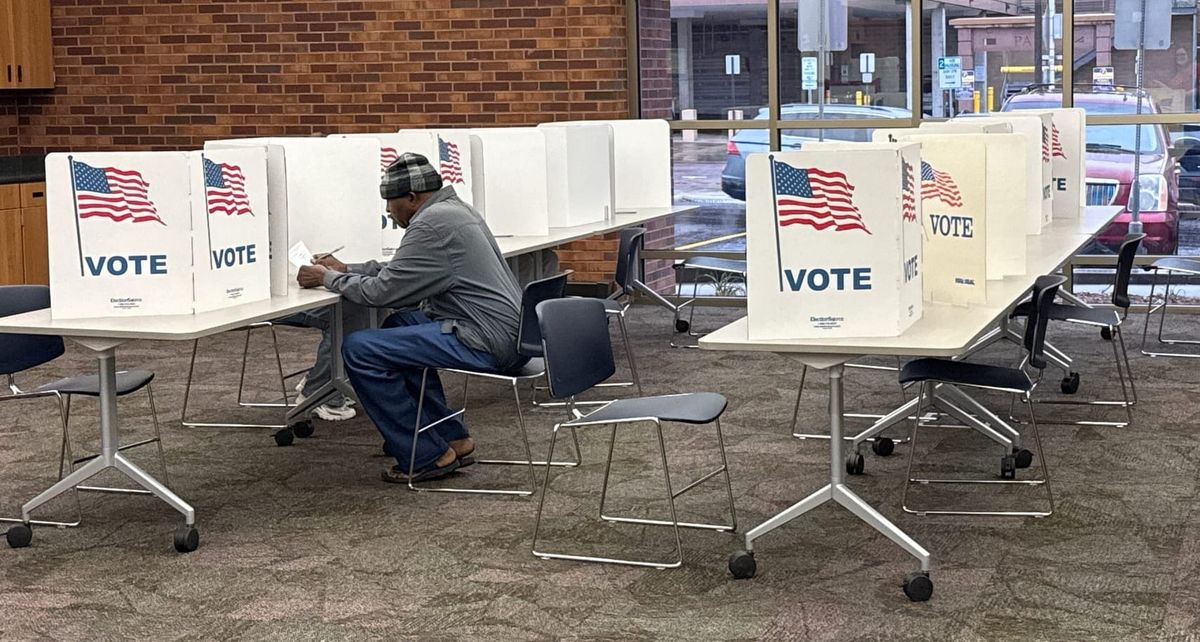
South Dakota’s general election on November 3, 2026, saw voter turnout drop to a historic low, with just under 50% of registered voters casting ballots. According to data from the South Dakota Secretary of State’s office, which dates back to 1964, this marks the lowest turnout percentage for a general election in the state’s recorded history. The figure is a stark drop from the nearly 60% turnout seen in the last midterm election in 2022 and falls even below the previous all-time low of 52% set in 2010. South Dakota News Watch reported that the state’s two most populous counties, Minnehaha and Pennington, both saw less than half of their registered voters participate.
A State of Disengagement
So, what caused this historic lull in civic participation? Jon Schaff, a professor of government and director of the Center for Public History and Civic Engagement at Northern State University in Aberdeen, offered one theory. In a state as heavily Republican as South Dakota, a lack of enthusiasm for the party’s candidates could be a factor.
Schaff said that he was wondering what had happened, noting that the state is pretty Republican and suggesting that a lack of inspiration from Republicans to vote could be a reason for the low turnout, potentially due to declines in approval for President Donald Trump and U.S. Sen. John Thune, who is currently serving as majority leader.
Julia Hellwege, an associate professor of political science at the University of South Dakota, echoed this sentiment, calling the turnout “exceptionally small.” She noted that the top races for governor and Congress were not “highly competitive,” which may have left South Dakotans of all political stripes less interested in participating. Hellwege also pointed to voter fatigue among Republicans after a competitive primary in June and a runoff for the governor’s nomination in July, while Democrats may have felt their votes held little weight in a state dominated by Republican officials.
A Tale of Two Counties, and a Lack of Ballot Fire
Oglala Lakota County had the lowest turnout in the state, with just 29% of registered voters casting a ballot. Todd and Ziebach counties, which also contain significant tribal lands, saw turnout rates of 37% and 36% respectively. These rural counties, home to the Pine Ridge, Rosebud, and Cheyenne River reservations, frequently struggle with turnout due to a scarcity of voting centers and unreliable transportation for many residents.
The two major metropolitan hubs, Pennington County (Rapid City) and Minnehaha County (Sioux Falls), also struggled, with turnout dipping below 50%. And we didn’t really have that this time,” Schaff said. South Dakota Searchlight reported that Hellwege also noted a lack of understanding about the proposed constitutional amendments may have kept some voters away.

Republicans Sweep, Democrats See Glimmers of Light
The low turnout came as Republicans swept all statewide office races. Governor Larry Rhoden earned his first election as governor, longtime prosecutor Marty Jackley headed to the U.S. House, and U.S. Senator Mike Rounds secured a third term. However, the election wasn’t a total loss for Democrats. The party gained four seats in the state Legislature, bringing their total to 12—the first time in over a decade that Democrats have gained ground in the Legislature. These pickups came from districts in the Sioux Falls metro area, including a flip in District 10.
Republicans maintain a supermajority in the Legislature, meaning the new Democratic seats are unlikely to result in significant policy concessions. Schaff noted that if you’re a Democrat, you can be excited that you added seats, but “you’re outnumbered 5 to 1 at least in the So. it’s not like, at this point, the Democrats have an effective minority that can actually gain concessions from the Republicans.”
Amendments Fail, Taxes Shift Locally
Voters also rejected two key constitutional amendments. Amendment L, which would have required a 60% supermajority to amend the state constitution, failed for a third time after similar votes in 2018 and 2022. Amendment I, which would have repealed expanded Medicaid coverage if federal funding were to disappear, also failed.
Rapid City School District residents overwhelmingly approved a $107 million bond with 67% of the vote, easily surpassing the 60% supermajority needed. The funds will be used for building security upgrades, renovations, and the construction of two new elementary schools—a major change for a city that had not passed a school bond in over half a century. However, in Brown and Codington counties, voters rejected measures that would have increased sales taxes to decrease property taxes. The proposed changes, stemming from state legislation SB96, were defeated with 56% and 60% of the vote respectively.
Worth a look

Mississippi Senate Race Too Close to Call Amid Reports of Voter Suppression
A Nail-Biter in Mississippi Mississippi is holding its breath. Nearly a day after the polls closed, the state’s...

Highs Gang Member Sentenced to 27 Years for Minneapolis Murder
Minneapolis is waking up to the reality of a 27-year prison sentence for a man at the center...

University Launches Food Drive for Community Pantries
It’s a quiet crisis happening in lecture halls and library carrels, a hunger that doesn’t take a holiday...

7 parishes helped Julia Letlow win Narrow Senate victory
How 7 Parishes Powered Julia Letlow's Narrow Senate Win There are two things I look forward to ahead...