
Spain’s Transport Minister Resigns Following Deadly High-Speed Rail Collision
Spain’s Transport Minister Oscar Puente has announced his resignation following a catastrophic high-speed train collision that claimed 69 lives. According to RTE.ie, Mr. Puente has not yet specified the exact date he will vacate his office, though he noted he had reached this decision following the October 28 disaster. He stated that a minister in a country like Spain cannot remain in office after two accidents of such severity occur in less than a year.
At least 68 people have died after a high-speed train crashed into the back of another stationary train in Spain. Sky's Lucy Marley explains what we know about the cause of the crash.https://t.co/NPlgOriAsg pic.twitter.com/RYjspv3Ndc
The crash, described by CBC as one of Europe’s deadliest rail disasters this century, occurred near the Urda station in Toledo. A service operated by the state-owned company Renfe slammed into the rear of a stationary train belonging to the private operator Iryo. This tragedy follows a previous high-speed collision in January that killed 46 people, marking the second such disaster involving these same two companies on the same line within nine months.
The scale of the carnage has been described by survivors as chaotic and violent. Dirk Llorens, an American resident of Madrid, told NBC News that he and his wife were on the stationary train when the impact occurred. He described being thrown violently over a table and witnessing a scene of total destruction where the roof opened and dust filled the air. Other passengers reported being thrown forward into their seats, breaking furniture during the impact, according to Cadena Ser radio via CBC.
System Failures and Contradictory Blame
While initial discussions often gravitate toward human error, the technical circumstances of the crash suggest a deeper breakdown in infrastructure oversight. Mr. Puente told CBC that the collision was triggered by what he called an “inexplicable” order from a central command center. He noted that while an automatic safety system had failed and halted all trains on a 63km stretch of track, the control center authorized the Renfe service to resume its journey while the Iryo train remained stationary. He emphasized that the train engineers were not to blame, suggesting the service may have been traveling at speeds as high as 200 km/h for that stretch of track.
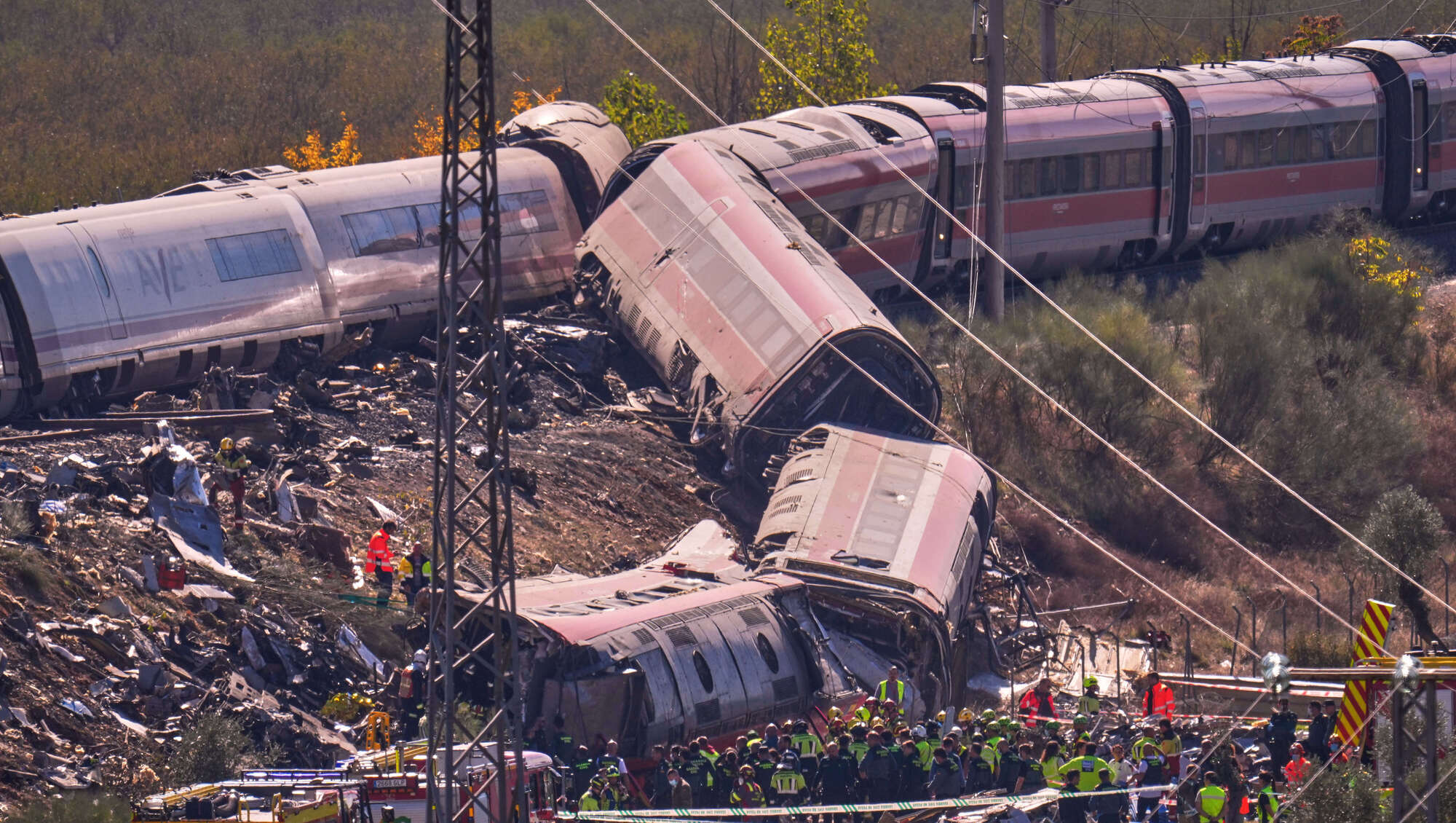
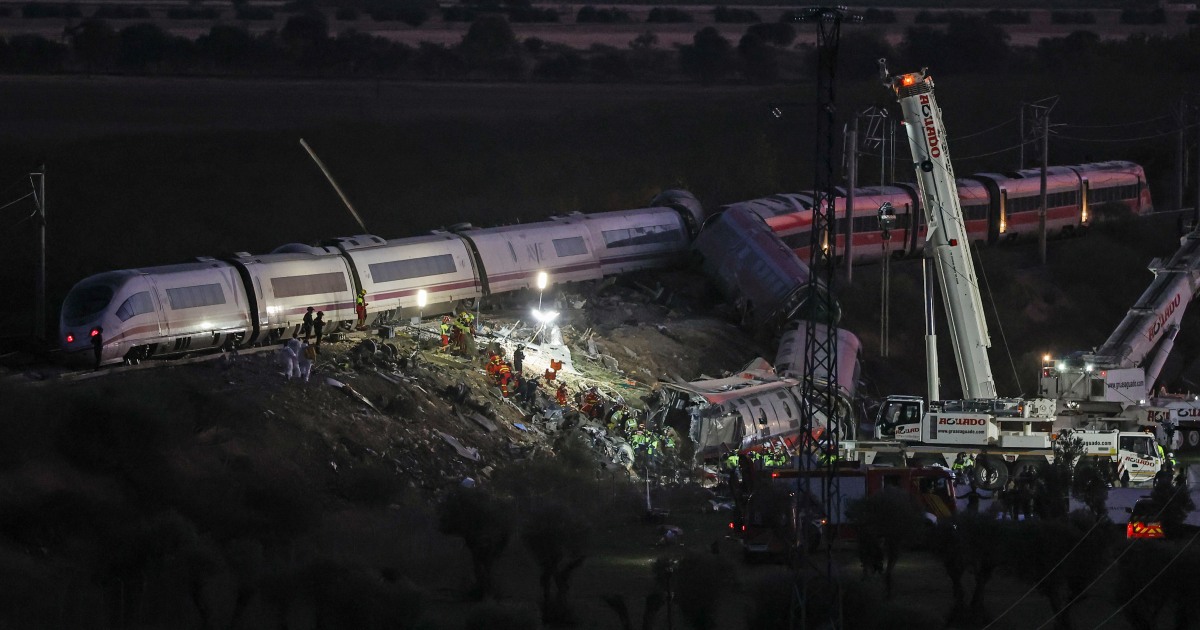
Labor representatives are challenging the focus on individual operators. Raquel Ayllon, a union leader at the state-owned infrastructure operator Adif, told TVE that critics are questioning human error too quickly while ignoring the central issue: the failure of the safety system. Furthermore, Joan Rodríguez, a spokesperson for Spain’s train workers’ union, told TVE that the liberalization and privatization of high-speed services may have outpaced the necessary upkeep of the lines, adding significant strain to the infrastructure.
The human cost of the collision is international in scope. The Irish Examiner reported that a legal body composed of police and forensics experts has identified 54 Spanish victims, along with citizens from France and Portugal. Among the deceased are former minister Fátima Báñez and train driver Antonio Acedo, according to political leaders cited by NBC News. Authorities are still working to identify victims, sometimes through individual body parts, as three reports for missing persons—involving Australian and Japanese citizens—remain active.
Comparative Impact of Fatalities in Spain
| Category/Year | Reported Fatalities | Source |
|---|---|---|
| Spain Road Accidents (2023) | 1,806 | EL PAÍS |
| Spain Rail System (2023) | 22 | EL PAÍS |
| January Rail Crash (2026) | 46 | RTE.ie |
| Urda Rail Crash (Oct 2026) | 69 | RTE.ie |
A Crisis of Public Confidence and Political Stakes
Beyond the immediate wreckage, the disaster has triggered a profound psychological shift in how Spaniards utilize their rail network. EL PAÍS reported that fear and uncertainty are now the dominant sentiments at Madrid’s Chamartín station. A special study by the 40dB institute, cited by EL PAÍS, revealed that almost half of rail passengers in Spain have already stopped using trains or are considering doing so. The Madrid–Málaga/Granada corridor has already seen a 61% drop in usage compared to 2025.
Psychological experts suggest this loss of confidence is tied to the lack of resolution regarding previous accidents. Fernández, a specialist cited by EL PAÍS, noted that while safety protocols often follow major disasters—such as those following the 2015 Germanwings crash or the 9/11 attacks—the failure to provide clear explanations for the January tragedy has prevented the public from regaining a sense of security.
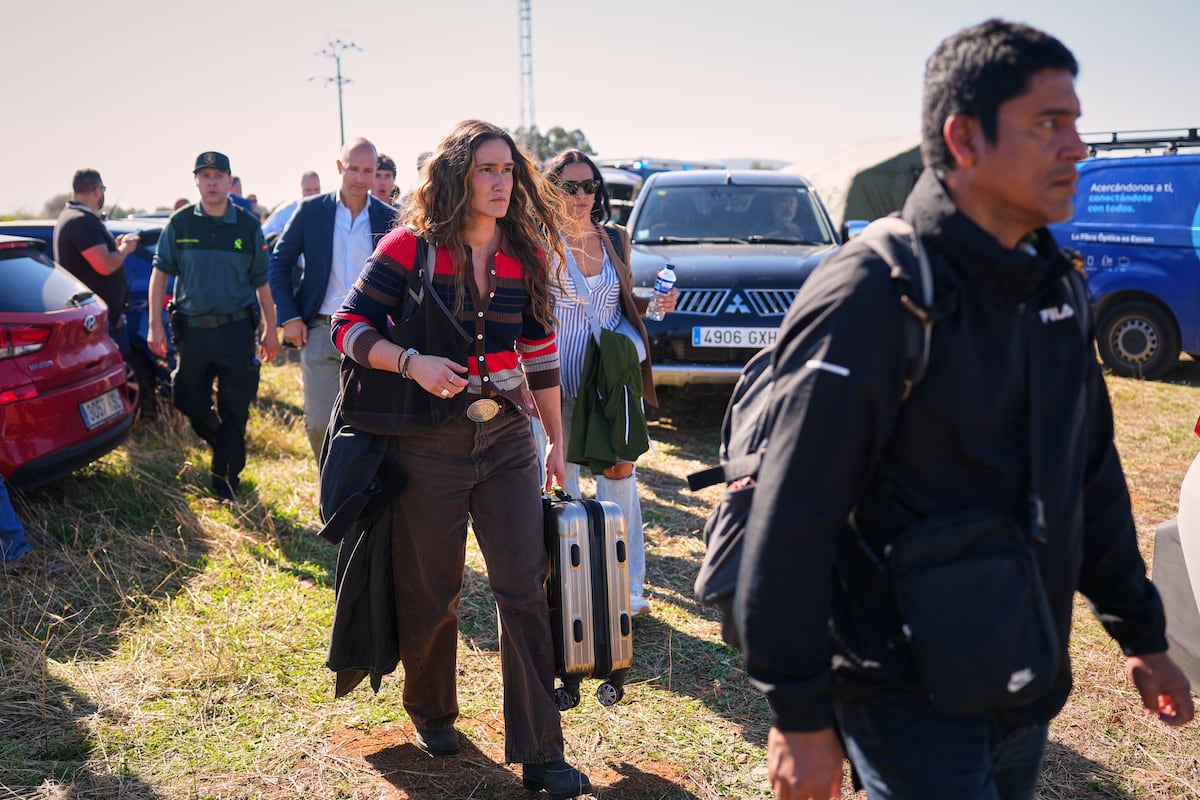
The timing of the resignation and the disaster places significant pressure on the Spanish government. The Irish Examiner noted that this tragedy occurs just one month before the November 29 general election, where Socialist leader Pedro Sánchez will attempt to defend his eight-year premiership amid unfavorable polling. While the government has declared three days of national mourning, the central question remains: whether the structural issues within the privatized high-speed network can be rectified before the next electoral cycle.
As forensics teams continue their work in Toledo, the investigation into the “inexplicable” command center decision remains the critical unknown. The public is left waiting to see if the promised measures to prevent future accidents will address the systemic failures identified by unions and the transport ministry, or if the rail sector faces a permanent decline in passenger trust.
Keep reading
- Laudato Si’ Movement Asia-Pacific Leaders Adopt 2030 Ecological Roadmap
- Multiple European Flights Targeted by Malicious Bomb Threat Hoaxes
- Measles Kills 1 to 3 in 1,000 Children; New York's First Death in 30 Years (daybreakwire.com)
- Spain’s transport minister Óscar Puente resigns after Urda train crash (archyde.com)

Laudato Si’ Movement Asia-Pacific Leaders Adopt 2030 Ecological Roadmap
Regional Climate Strategy Takes Root in Tagaytay City Environmental leaders from five Asian nations gathered in the Philippines...

Multiple European Flights Targeted by Malicious Bomb Threat Hoaxes
European Aviation Faces Security Surge Following Wave of Bomb Hoaxes A coordinated string of malicious bomb threats targeted...

Dutch Textbooks Underrepresent Caribbean Resistance Figures
Dutch History Textbooks Marginalize Caribbean Resistance Figures Indonesia's independence leader Sukarno appears 27 times in analyzed Dutch teaching...

Oman’s tourism sector is navigating a period of stagnation, with recent data revealing a slight
Oman Tourism Faces Headwinds as Visitor Numbers Dip Oman’s tourism sector is navigating a period of stagnation, with...