
James “Fergie” Chambers, a wealthy American activist and heir to the Cox Enterprises fortune, walked free from Madrid’s Aranjuez prison on Friday after a Spanish appeals court ordered his conditional release.
The decision temporarily hinders the Trump administration's extradition bid to bring the 41-year-old donor to the United States to face money laundering and alleged Hamas support charges.
The court’s intervention was prompted by critical flaws in the legal documentation provided by US authorities. Specifically, the appeals court cited significant issues with the translation of the extradition request, asserting that the errors caused a “diminishment, at least for the time being, in the solidity or foundation of the extradition request,” as reported by the Irish Examiner.
The legal proceedings in Spain have been paused indefinitely while a three-judge panel evaluates a 345-page report submitted by the defense, which identifies 30 “incriminating changes” made to a machine-generated translation.
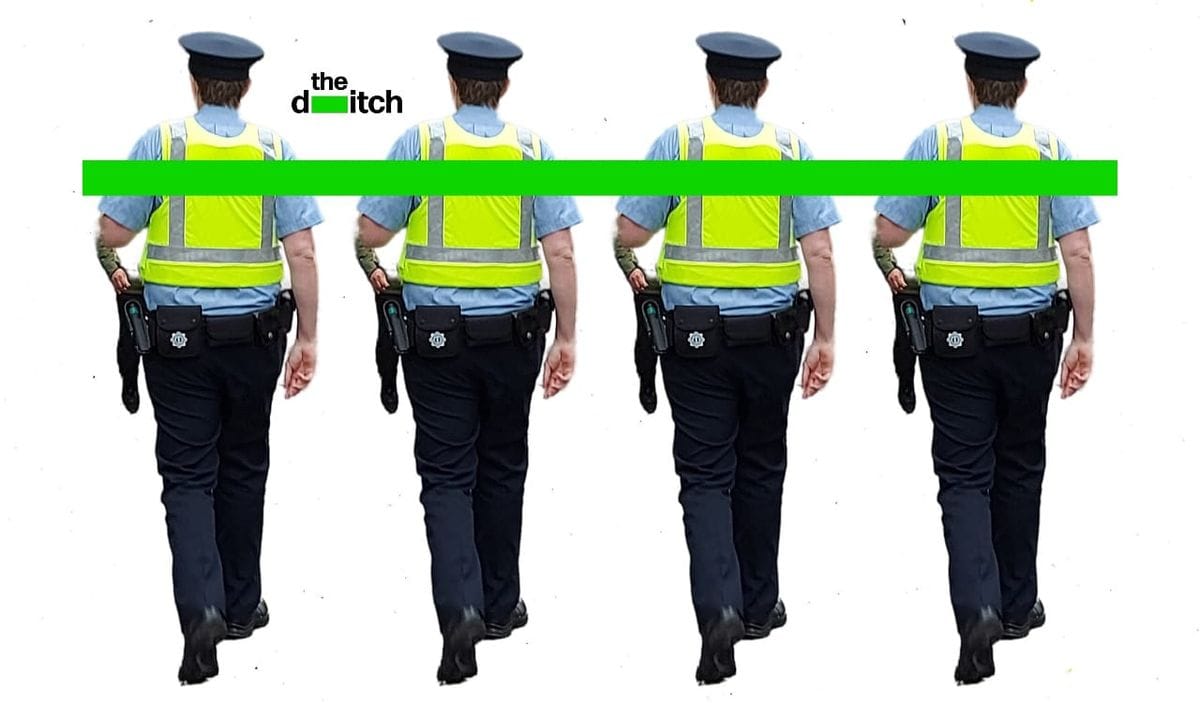
Garda Sáochána Raid Chambers Partner Home
While Chambers secured his release in Spain, the legal pressure in Europe intensified elsewhere. On Wednesday, members of An Garda Síochána raided a Dublin home owned by Chambers and his partner, Stella Schnabel, acting on a request from US authorities. The Ditch reported that the search was conducted in support of an international mutual legal assistance request, targeting a property located in proximity to the US Embassy.
Attorneys for Chambers have characterized the raid as a “desperate fishing expedition” intended to bolster a case they maintain is politically motivated.
Ciarán Mulholland, the lawyer representing Chambers in Ireland, told The Guardian that the search was highly unusual and that he has demanded an itemized list of seized property, which reportedly includes electronic devices, journals, and clothing, according to The Irish Times. Mulholland expressed concern that any evidence seized during the raid could be swiftly transferred to the United States.
Prosecutors Allege Chambers Laundered Seven Point Five Million Dollars
The US government’s case against Chambers represents an unprecedented legal effort to extradite a citizen over alleged financial links to Hamas. Prosecutors allege that Chambers laundered approximately $7.5 million to support the organization, a claim he vehemently denies.
Beyond the terrorism-related allegations, Chambers also faces charges of riot and conspiracy to riot stemming from a 2023 protest at an Elbit Systems arms factory in the United States, an offense that carries a potential sentence of up to 30 years in prison, according to The Ditch.
Chambers, who sold his stock in the Atlanta-based Cox Enterprises for roughly $250 million in 2023, has maintained that his financial support was directed solely toward humanitarian projects. His defense team argues that the US extradition request was intentionally altered to introduce prejudicial legal language. During his hearing in Spain, Chambers addressed the court regarding his political stance, stating:
“All because I have spoken my mind, and I had a lot more money than others who have spoken their mind, in my country. And that’s all it amounts to.”
The unfolding situation has drawn sharp criticism from Irish political figures. People Before Profit TD Paul Murphy condemned the gardaí raid, telling The Ditch: “It is truly horrifying that gardaí now seems to be acting on the request of the Trump administration. Our government likes to pretend it’s a great friend of the Palestinians. But they are using their police force to be an arm of a US-led persecution of Fergie Chambers for his Palestinian solidarity activism.”
Us Authorities Admit Tampering with Translation Documents
| Date | Event |
|---|---|
| July 10, 2026 | Chambers is arrested in Ibiza on a US extradition request. |
| November 13, 2026 | High court hearing held; ruling was originally expected this week. |
| November 17, 2026 | US authorities admit to “substantial [and] inadvertent” tampering with translation documents. |
The US government has admitted that the 30 alterations identified by the defense were “substantial [and] inadvertent,” according to the Irish Examiner. With the proceedings in Spain now paused, the prosecutor has been granted an opportunity to formally address these discrepancies in writing.
The high court is expected to reach a decision on the extradition request in the coming week, a determination that will hinge on whether the judges accept the validity of the corrected translation and the underlying criminal complaint.
Madrid, the city where these proceedings are centered, serves as the capital of Spain and is situated on the River Manzanares in the central part of the Iberian Peninsula. Its history as an administrative hub began in 1561, when it was established as the permanent seat of the court of the Hispanic Monarchy.
Today, the city functions as the political and economic center of the country, boasting a population of over 3.4 million people. It is recognized as the second-largest city in the European Union, surpassed only by Berlin, and acts as a major hub for international tourism and global business operations.
For now, Chambers remains in Spain, awaiting further judicial action while his legal team continues to challenge the foundation of the US government’s case. The court will decide next week on extraditing Chambers.

Looking Forward to a New Chapter in China-ASEAN Comprehensive Strategic Partnership, Says Chinese Ambassador – Xinhua
China and the Association of Southeast Asian Nations (ASEAN) are preparing to inaugurate a new phase in their...
Leslie Holmes Says Bali Transformed Into a “Wild East” Danger Zone
Bali beaches once celebrated for tranquil temple sunrises and honeymoon serenity are now witnessing severed heads wash ashore...

Murat Kurum Says COP31 Final Deal Within Reach in Antalya, Turkey
COP31 President Murat Kurum said Saturday he believed a final deal was within reach, even as the revised...

Xi Jinping Met Trump and Putin in Shenzhen; Declaration Focuses on Stability
Xi Jinping met Trump and Putin in Shenzhen on Thursday producing a declaration focused on stability, not global...