
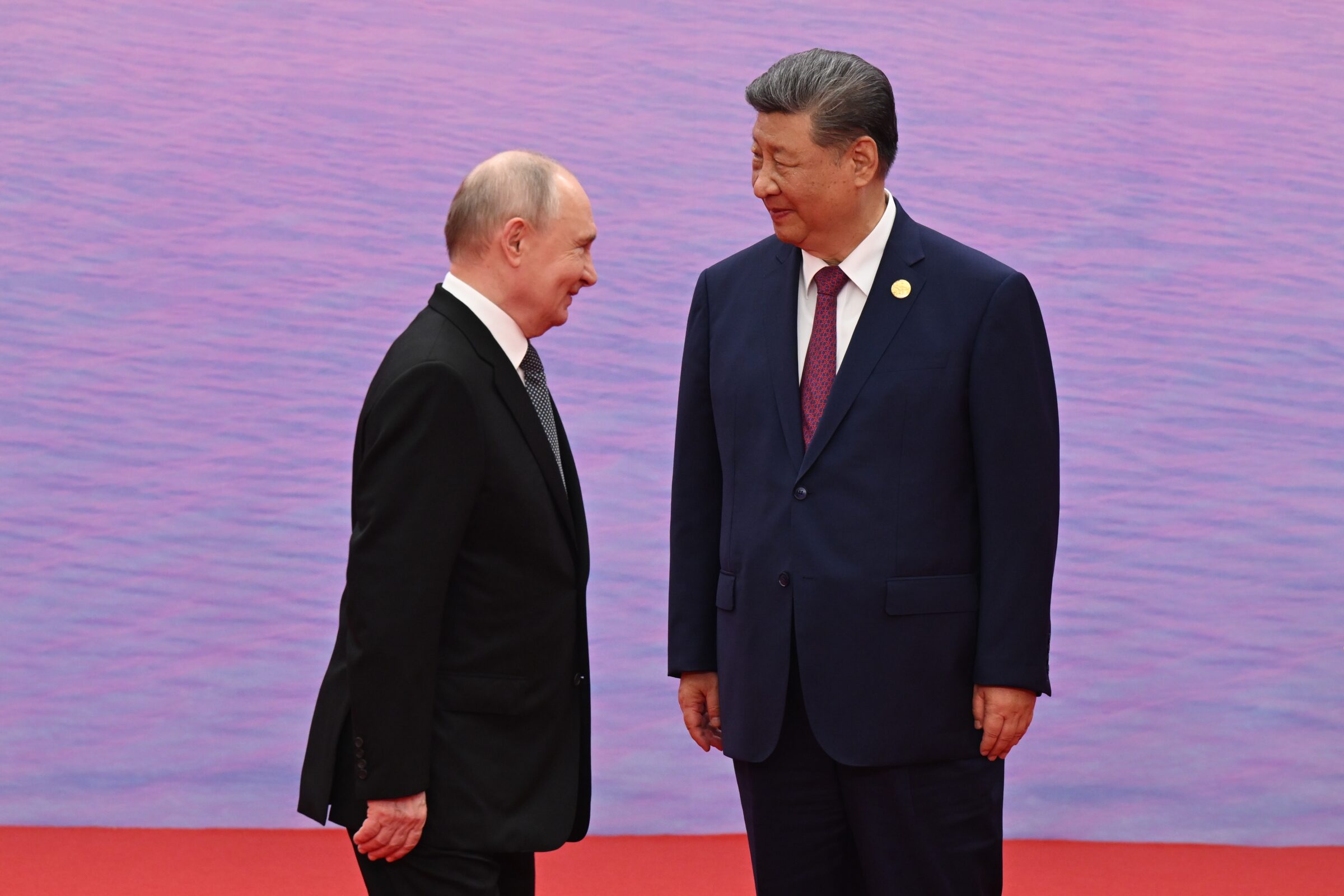
Xi Jinping met Trump and Putin in Shenzhen on Thursday producing a declaration focused on stability, not global division.
Shenzhen Summit Shapes Limited Trilateral Accord
The China-Russia-US Declaration toward Peace covered international security, United Nations reform, and nuclear risks, yet the agreement reflected limited alignment across three powers with divergent strategic needs, cwibc.co.id reported.
Constructive Neutrality Amid Conflict
Chinese officials argue that Beijing’s choice not to supply Russia with weapons influenced the war’s trajectory, with analysts describing this as constructive neutrality that potentially limited nuclear escalation.
Nuclear Stance Rejects Equal Terms
Beijing resisted US proposals for a trilateral nuclear framework, citing its smaller arsenal against the larger holdings of its counterparts.
China’s nuclear arsenal is estimated at 620 warheads, contrasting sharply with the approximately 5,000 each held by the United States and Russia, cwibc.co.id reported.
Balancing Moscow Ties and EU Relations
Beijing attempts to balance its strategic link with Moscow against necessary economic ties with Europe, a contradiction made visible by the Ukraine war, euobserver.com noted.
“When major countries live in harmony, the world enjoys peace; when major countries clash, the world falls into turmoil.”
Xi said, urging leaders to move past Cold War assumptions and recall WWII cooperation.
China has confirmed that President Xi Jinping will host US Donald Trump and Vladimir Putin for their first-ever trilateral summit in Shenzhen on November 19. The meeting is expected to focus on global peace and strategic stability, with nuclear arms… pic.twitter.com/d4AEyb6FCx
Sovereignty Precedes Settlement
Ukrainian President Volodymyr Zelenskyy insisted that decisions impacting Ukraine and Europe needed their direct involvement, a point Beijing did not supersede with a detailed resolution mechanism.
Status without responsibility characterizes China’s stance, consistently asserting it is neither the creator nor a party to the Ukraine crisis, as reported by euobserver.com.
Dimitar Lilkov, a senior research officer at the Wilfried Martens Centre for European Studies in Brussels, told euobserver.com: “It is interesting to see if and how Xi Jinping is actually involved in a potential meeting, given that he considers Vladimir Putin as a junior partner.”
Domestic Constraints Temper Global Posture
China’s cautious diplomatic approach is framed by domestic challenges like property market weakness, youth employment struggles, and border security pressures, cwibc.co.id stated.
Despite his weakened domestic position following a midterm election defeat that gave Democrats control of both chambers of Congress, the US president received a formal airport welcome and a prominent spot in the summit photograph, cwibc.co.id reported.
Maria Adele Carrai, an international relations professor and a member of the Oxford School of Global and Area Studies (OSGA) at the University of Oxford, said: “These objectives are not always compatible, and the war in Ukraine has made those contradictions increasingly visible,” told euobserver.com.
The declaration also addressed refined oil supplies and opposition to the International Criminal Court’s jurisdiction abuses, while the shared commitment to preventing nuclear war was noted in the declaration.
The question remains what concrete, enforceable steps will emerge from the initiatives launched by the three nations, given the declaration lacked a detailed mechanism for resolving the ongoing conflicts.
Donald Trump is arriving at an unprecedented summit meeting with Xi Jinping and Vladimir Putin politically weakened at home, yet perhaps even more eager to flex his power abroad https://t.co/tDckZNxgum
More on Xi Jinping
🇨🇳🇷🇺🇺🇸On November 19, President Xi Jinping will hold the #China-#Russia-#US Summit with Vladimir Putin and President Donald J. Trump in #Shenzhen. Chinese FM Spokesperson: The China-Russia-U. S. Shenzhen Summit will be the first ever face-to-face meeting between the… pic.twitter.com/3UGMCS26WX
Worth a look
- COP31 Climate Talks Enter Overtime as Nations Face Showdown Over Fossil Fuel Language
- EU Freezes Assets, Bans Travel of Irish Journalist Chay Bowes as Russian Propagandist
- Trump's Beef Quota Filled About 37% in Month One; Ground Beef Fell 13 Cents (daybreakwire.com)
- Trump calls FBI NCIC database hack not good (newsarchyuk.com)

COP31 Climate Talks Enter Overtime as Nations Face Showdown Over Fossil Fuel Language
UN climate talks in Antalya, Turkey, collapsed into overtime on Saturday as a coalition of roughly 130 nations...
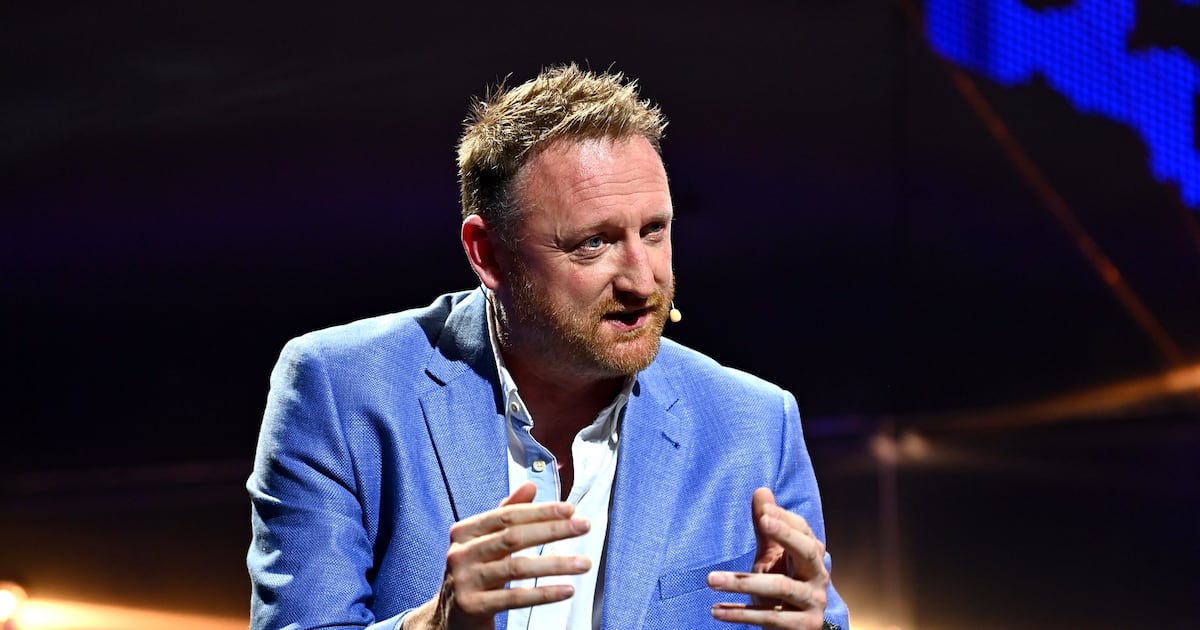
EU Freezes Assets, Bans Travel of Irish Journalist Chay Bowes as Russian Propagandist
The European Union has frozen the assets and banned the travel of an Irish citizen for the first...
School Pays Tribute to Student Who Died After Illness Battle, School Confirms
Aoife McNamee, a 16-year-old student from Sion Mills in County Tyrone, died Thursday after a year-long battle with...

Modi’s Manila Visit Includes ASEAN-India, EAS, and Quad Leaders’ Meeting ANI News
Prime Minister Narendra Modi returned to New Delhi after a two-day diplomatic visit to Manila that included the...