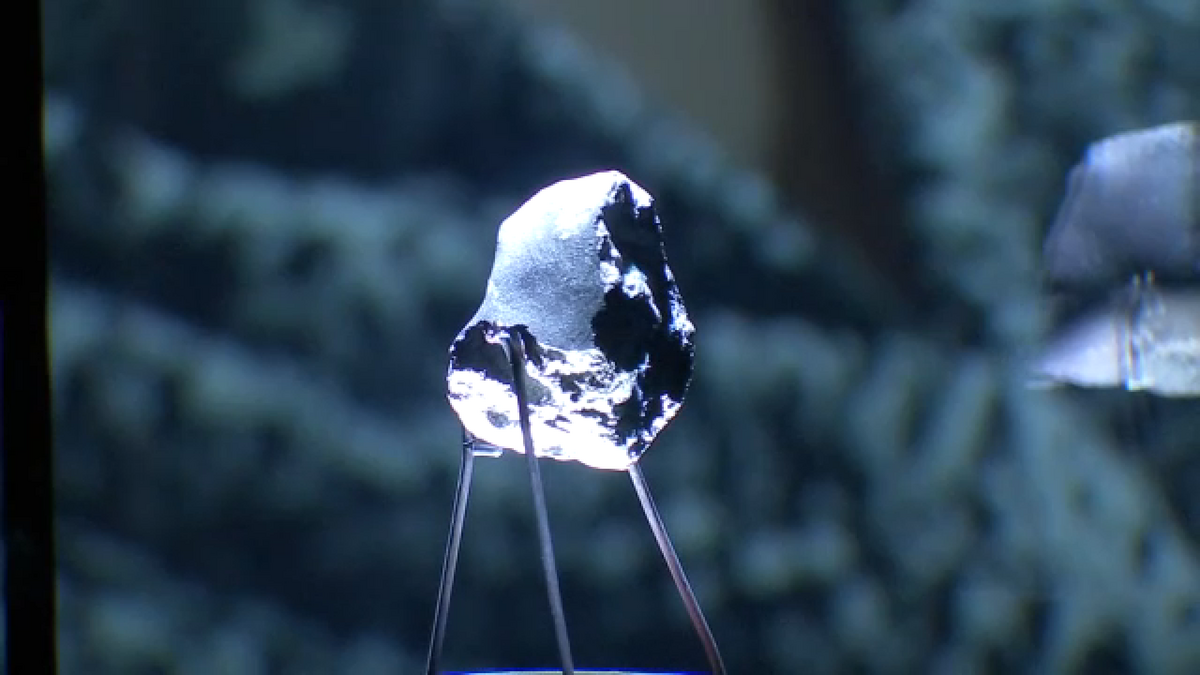
A 4.5 Billion-Year-Old Visitor Returns to Public View in Houston
“It’s a very old meteorite. If you think about it, the solar system wasn’t always here,” said Dr. Carolyn Sumners, Curator of Astronomy at the Houston Museum of Natural Science.
Meteorite that crashed through Spring-area home goes on display at Houston Museum of Natural Science https://t.co/ByVPBZQ2It
The space rock that famously crashed through the roof of a Spring-area home in March 2026 has officially transitioned from a local emergency to a scientific exhibit. As of November 7, 2026, the meteorite is on public display at the Houston Museum of Natural Science as part of the museum’s “Fall to Earth” exhibit, ABC13 reported.
The journey of this specific celestial object provides a rare look at the early formation of our cosmic neighborhood. According to Dr. Sumners, the material within the meteorite may actually predate the solar system itself, having been part of a pressure wave that caused various materials to coalesce in the distant past.
From Residential Impact to Scientific Study
The event that brought this rock into the headlines was a sudden and violent arrival. In March 2026, the meteorite struck a residence in the Spring area, punching through the roof and causing significant property damage. While the immediate impact was a matter of local safety and home repair, the aftermath quickly turned into a subject of intense scientific interest.

The scale of the event was notable; Live Science described the meteorite as being approximately the size of a cannonball. The impact occurred during a period when multiple “fireballs” were reportedly raining down across the United States, adding a sense of cosmic scale to the localized damage in Texas.
Beyond the museum’s display, the rock has also served as a subject for academic inquiry. Researchers from Rice University have been studying the meteorite to better understand its composition and the history it carries from deep space.
The Scale of Cosmic History
The significance of the meteorite lies in its age. Scientists estimate the rock to be roughly 4.5 billion years old. To put that into perspective, the exhibit allows visitors to trace the object’s incredible journey through the vacuum of space before its terrestrial landing.
For those interested in seeing the specimen, the Houston Museum of Natural Science has made the exhibit accessible, noting that it can be viewed for free in the museum store.
The arrival of such objects serves as a stark reminder of the constant, albeit infrequent, interaction between Earth and the debris of the solar system. While the Spring-area homeowner dealt with the immediate physical consequences of a roof breach, the scientific community gained a window into the era before our sun and planets fully formed.

Nashville man Carter Stevens generated $140,000 from dumpster diving
Carter Stevens, a 31-year-old Nashville resident, turned discarded waste into a six-figure revenue stream, generating approximately $140,000 in...

Milwaukee Brewers tender qualifying offer to Jake Bauers
Jake Bauers faces a massive payday decision following Brewers breakout The Milwaukee Brewers are staring down a critical...

New York Rangers face Seattle Kraken as Joonas Korpisalo returns
The New York Rangers face the Seattle Kraken on Friday, November 7, 2026, with goaltender Joonas Korpisalo set...

Virginia National Guard Soldiers Conduct Route Reconnaissance Training
Virginia National Guard conducts route reconnaissance at Fort Barfoot Soldiers from the Virginia National Guard completed intensive route...