
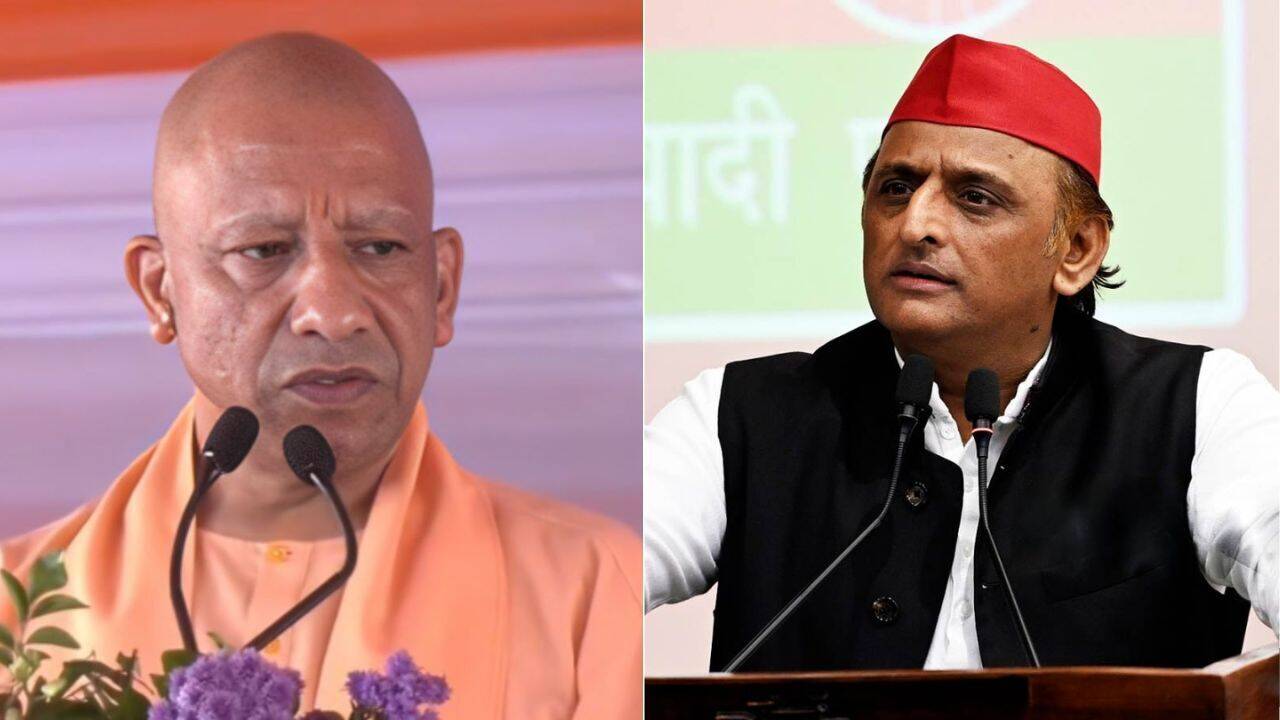
Ayodhya is bracing for a significant political and religious intersection on December 12, as Samajwadi Party (SP) chief Akhilesh Yadav prepares to visit the Ram Temple with his family. The announcement of this visit, which marks Yadav’s first trip to the temple since its consecration in January 2024, has triggered a sharp response from Uttar Pradesh Chief Minister Yogi Adityanath. Speaking during the 10th edition of Deepotsav on Saturday, Adityanath demanded that those responsible for past violence against devotees apologize to “Ram Bhakts” before entering the holy city, according to reports from Hindustan Times.
The friction centers on a dark chapter of Indian political history. Adityanath specifically referenced the events of October 30 and November 2, 1990, during the administration of Samajwadi Party patriarch Mulayam Singh Yadav, when police opened fire on karsevaks. While the Samajwadi Party has maintained that the government at the time acted to preserve law and order, the Chief Minister framed the upcoming visit as a matter of spiritual and moral accountability. He argued that those who “shed the blood of Ram Bhakts on the streets of Ayodhya” cannot simply wash away their past actions through a temple visit.
Historical grievances meet modern religious celebrations
The timing of these remarks coincided with a massive display of cultural resurgence in Ayodhya. During the Deepotsav celebrations, which saw over 30 lakh earthen lamps (diyas) illuminating 56 ghats along the Saryu River, Adityanath contrasted the city’s current prosperity with its previous state of neglect. ThePrint reported that the Chief Minister recalled the first edition of Deepotsav in 2017, noting that at that time, the state struggled even to meet government employees’ salaries. Today, he claimed, Ayodhya has been transformed into a global spiritual destination under the “double-engine” government.
#LiveAt11 | Ahead of the 2027 Assembly elections, CM Yogi Adityanath and SP chief Akhilesh Yadav are engaged in a political face-off. Akhilesh Yadav has raised 12 questions targeting the banking sector and the BJP-led government, while Yogi has defended his government’s record… pic.twitter.com/XVgO53E3z2
The political tension was heightened by the specific details of the Yadav family’s itinerary. While Adityanath did not name Akhilesh Yadav directly, his comments followed an announcement by former SP MLA Pawan Pandey, who confirmed that Akhilesh and his wife, Dimple Yadav, would visit both the Ram Temple and the Hanuman Garhi temple on December 12. The Times of India noted that Adityanath’s swipe was directed at leaders who he claims are now seeking “political mileage” from the very movement they once opposed.
The debate touches on more than just political optics; it is a clash over the identity of the city itself. Adityanath asserted that Ayodhya does not belong to any single political party or family, but is the land of Maryada Purushottam Shri Ram. He criticized the opposition’s past stance, noting that there was a time when even mentioning the name of Shri Ram in Ayodhya could result in police action.
The stakes of faith and political decorum
Beyond the historical grievances, the Chief Minister also took aim at the conduct of political figures during religious gatherings. He questioned whether certain leaders understood the proper decorum of a katha (religious narration), asking rhetorically if they viewed such events as a mushaira (an Urdu poetry gathering). This criticism suggests a deeper ideological divide regarding how religious spaces should be engaged by political actors.
The economic and social implications of Ayodhya’s transformation are significant. As the city expands its religious infrastructure, it is creating a massive secondary economy. According to Organiser, the influx of pilgrims has opened up widespread opportunities in several key sectors:
- Hospitality and guesthouses
- Transport and logistics
- Food and beverage services
- Handicrafts and local religious products
- Floral offerings and worship materials
While the BJP government highlights this as a “cultural renaissance,” the opposition views the sanctity of the temple as separate from political maneuvering. Pawan Pandey, representing the Samajwadi Party, argued that Akhilesh Yadav’s visit is “a matter of faith” and urged the BJP not to politicize religious devotion.
The security landscape for the December 12 visit is expected to be intensive. Given the high-profile nature of the visitors and the historical sensitivity of the site, local authorities are likely to mirror the heavy security presence seen during recent Deepotsav events, which involved over 2,500 police officers and specialized security forces.
As the December date approaches, the tension remains focused on whether the visit will be viewed as a gesture of personal faith or a calculated move in a long-standing political rivalry. The eyes of the state will be on the Ram Temple to see how these two competing narratives—one of historical atonement and the other of religious normalcy—will coexist on the sacred grounds.
Keep reading

Bepirovirsen Shows Durable Functional Cure Rates in Chronic Hepatitis B Trials
Bepirovirsen maintains functional cure rates through week 96 in hepatitis B trials Patients treated with bepirovirsen for chronic...

Seneca Valley Virus Turns Cold Neuroendocrine Tumors Hot
Dr. Chauhan tests SVV-001 virus to turn "cold" neuroendocrine tumors "hot" A new clinical approach is testing whether...

Mary Lou McDonald Calls for State Acquisition of Moore Street at Reclaim Moore Street Rally
“We will live in a united Ireland,” Sinn Féin leader Mary Lou McDonald declared to a crowd gathered...

Upadacitinib Shows Significant Repigmentation in Phase 3 Vitiligo Trials
For millions living with nonsegmental vitiligo, the medical landscape has long been characterized by a lack of systemic...