
“I fell in love with being a K9 officer,” said Springfield Police K9 Officer Eric Blair.
Blair was recently honored with the 2026 K9 Sgt. Sean Gannon Handler of the Year Award, a distinction recognizing law enforcement professionals who demonstrate exceptional leadership, dedication, and a commitment to the well-being of their canine partners, The Reminder reported.
The recognition highlights a career built on a childhood dream and a specialized bond that extends far beyond standard police work. During the ceremony held at the K9 PTSD Research Center in Bourne, speakers highlighted Blair’s impact on the field, noting both him and his retired partner, K9 Mr. Warner, and his current partner, K9 Flexx, received K9 Hero awards.
A legacy of advocacy and legislative change
Blair’s influence reaches beyond the patrol car and into the halls of the state legislature. He and his former partner, Mr. Warner, helped pass two Massachusetts laws to protect working animals.
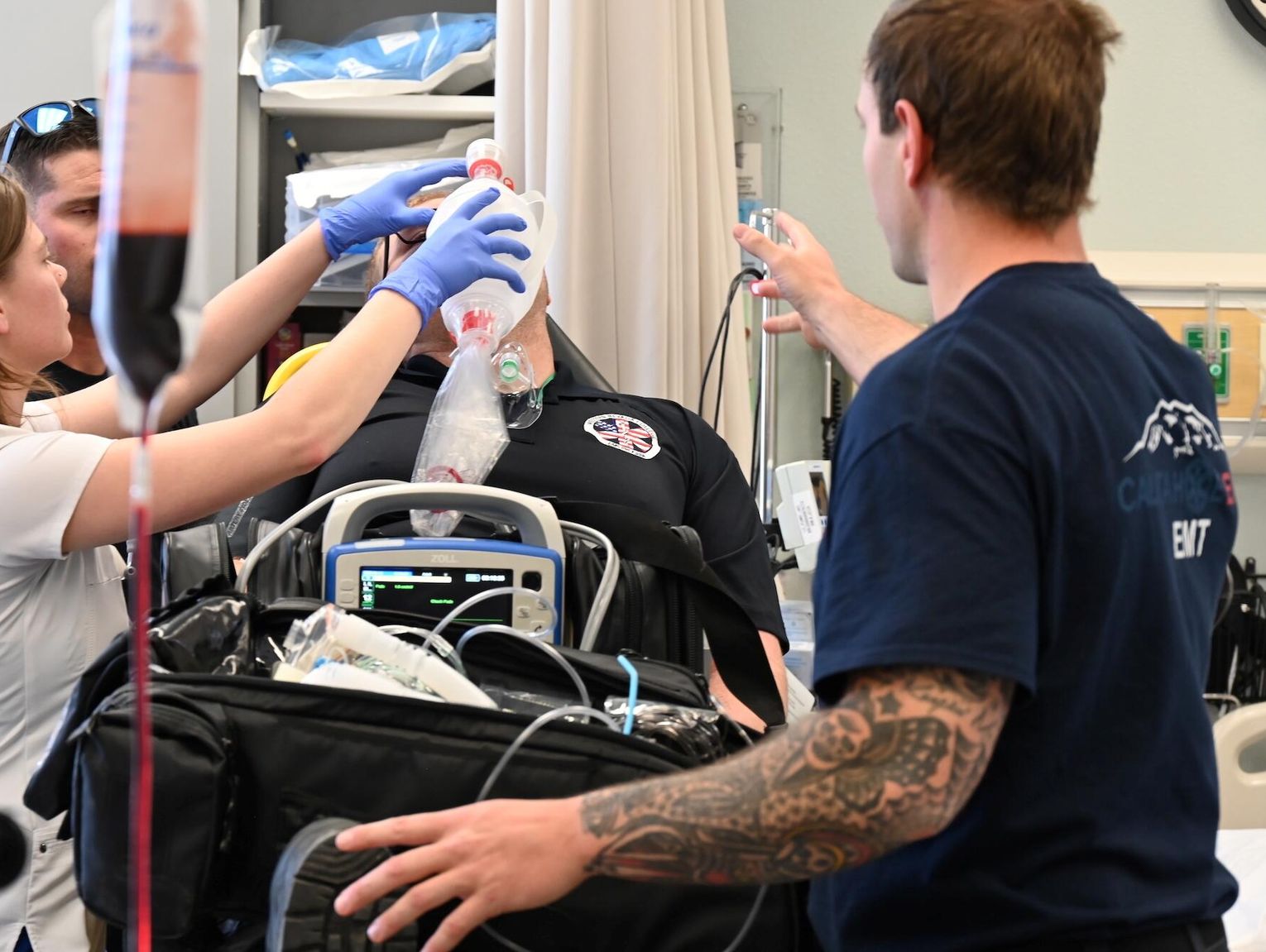
In 2022, they championed Nero’s Law, which enables Emergency Medical Technicians to provide basic life support treatment and transport for police K9s. This measure ensures that these highly trained assets receive immediate medical intervention during critical incidents. Additionally, Blair and Mr. Warner advocated for Dakota’s Law, which was passed in July 2026 to establish lifetime care benefits for police and military K9s at no cost to their handlers.
Mayor Domenic Sarno noted the importance of these efforts, describing the work done by Blair and his K9s as “instrumental” to the law’s success.
“I am deeply grateful to K9 Officer Blair, K9 Mr. Warner and K9 Flexx and all our brave and dedicated men and women and K9s in blue for what they do day in and day out to keep us safe,” said Mayor Domenic Sarno. Mayor Domenic Sarno
The push for these laws addresses a harsh reality in law enforcement: the high cost of veterinary care often leads to working dogs being put down prematurely upon retirement. “I see so many K9s that get put down early because their vet care is so expensive,” Blair said.
Changes in K9 units
While Blair’s individual achievements are being celebrated, the Springfield Police Department is managing a shrinking K9 presence. At the height of the program’s activity in 2016, the department employed 13 K9 officers. Today, that number has been reduced to just five.
The decline is driven by both budgetary decisions and recruitment challenges. Many retired or deceased K9 officers have not been replaced, as departments often view K9 handler positions as optional line items when seeking to trim municipal budgets. Blair said that the field is also seeing less interest from new recruits due to the intense responsibilities involved.
The role requires a level of commitment that traditional patrol positions may not demand. “You can’t just go on vacation, you have them to consider,” Blair said, noting that he is responsible for managing $130,000 worth of specialized equipment.
To maintain operational readiness, Blair and his partners must undergo rigorous maintenance. This includes twice-monthly training sessions to ensure their narcotics and patrol certifications remain current.
From Mr. Warner to Flexx
Blair’s journey with K9s began after he served nine years as a military police officer before joining the Springfield Police Department in 2010. His path to becoming a handler was not immediate; he applied twice and was told he needed more experience before his third application was finally accepted in 2014.
His first partner, a Belgian Malinois-German Shepherd mix named Mr. Warner, became the most decorated K9 in the history of the Springfield Police Department. Blair described the dog as a “battered war horse” who possessed a unique ability to switch between a high-intensity work mode and an affable personality during downtime.
In 2021, Blair began the search for a successor, eventually finding Flexx, a purebred Malinois. While Mr. Warner was known for his versatility, Flexx is characterized by an intense, singular drive for work. “If I throw a ball into the field, he’ll spend three hours looking,” Blair explained.
The effectiveness of these teams relies on a level of mutual trust that Blair describes as an “umbilical” connection through the leash. He said that the job requires a thick skin and a deep understanding of canine behavior.
“You’ve got to learn to work as a team. You’re going to get bit — a lot. They’re going to test you,” Blair said. “You got to trust the K9. If that dog doesn’t trust you and you don’t trust them, that bond’s never going to be there.”
Looking toward the future of his career, Blair expressed a desire to remain in the K9 unit for as long as his drive remains intact.
“I hope I get one more dog that’ll take me to the end of my career. When I lose that drive, I’ll hang it up,” Blair said.
No. 9 Tennessee Faces Texas A&M in Crucial SEC Road Matchup
No. 9 Tennessee faces a critical road test against Texas A&M this Saturday at 3 p.m. Eastern Time....

Oregon Progressives Gain Power to Push Wealth Tax and Policy Shifts
Oregon progressives roughly doubled their presence in the House and Senate during last week's election as the Democratic...

Why Beating Michigan Is the Only Nonnegotiable Left for Ohio State
In a column for Land-Grant Holy Land, a contributor argues that while Ohio State has three games remaining...

Proposed SNAP Rule Changes Could Impact Nevada Families and Retailers
Federal regulators are moving to tighten how families qualify for food assistance, a decision that could strip nutrition...