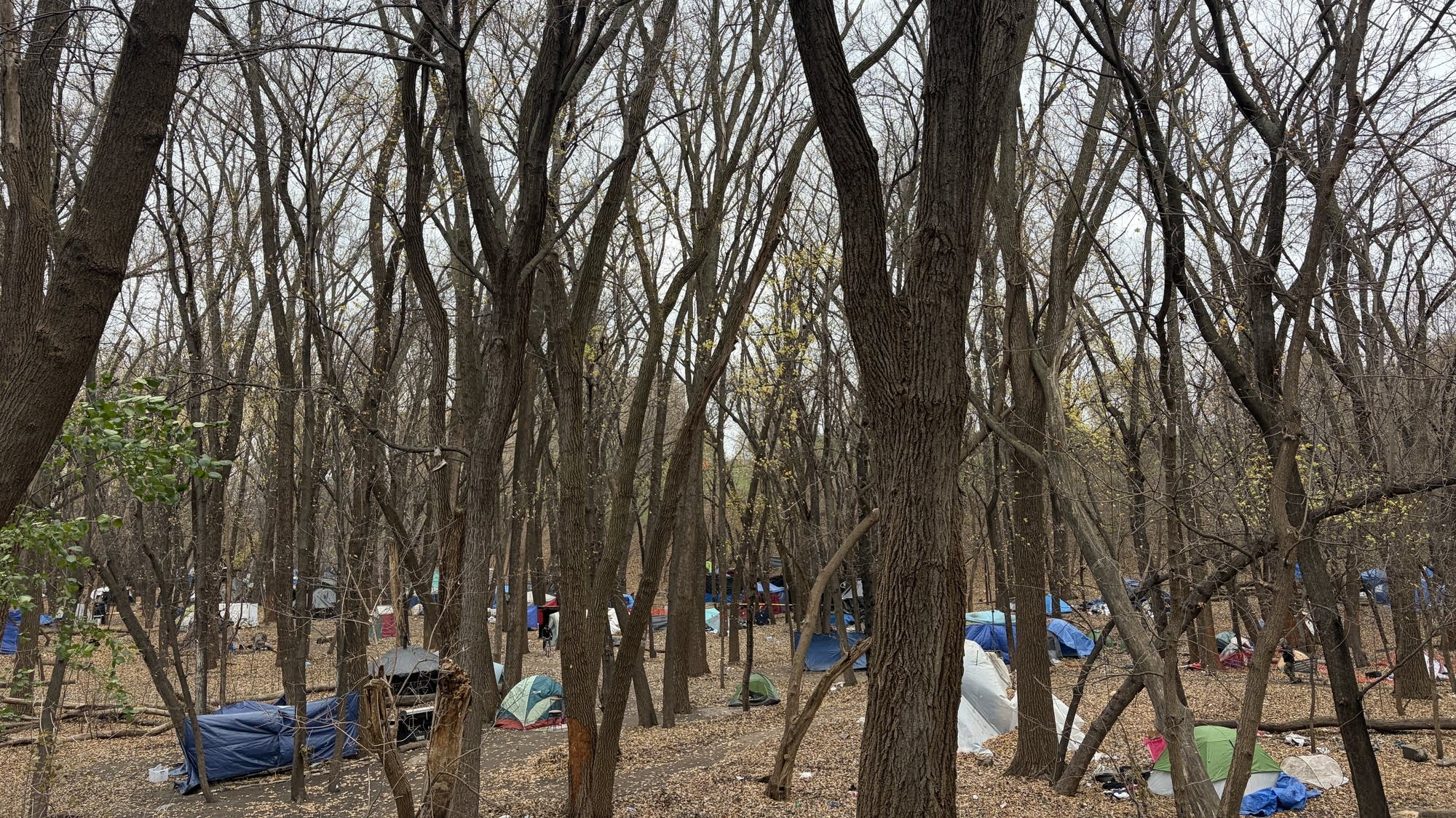
St. Paul Mayor Kaohly Her announced Thursday that the city will clear its two remaining large homeless encampments by mid-December, setting closure dates of Dec. 8 for the L’Orient site and Dec. 15 for the Randolph camp, MPR News reported.
The decision ratchets up a strategy Her unveiled in July to shut down three major encampments by year’s end. The first, at Pig’s Eye Park, was cleared on Aug. 5. That operation pushed many residents into the Randolph site — known locally as Shepard — a wooded expanse near the Mississippi River that sits atop contaminated soil, according to city officials and MPR News.
“The city of Saint Paul is responsible for the public health and safety of individuals staying at an encampment, residents in the surrounding areas, and the first responders,” Her said Thursday. “To keep public safety, to keep the public safe and accessible, encampments will be closed citywide.”
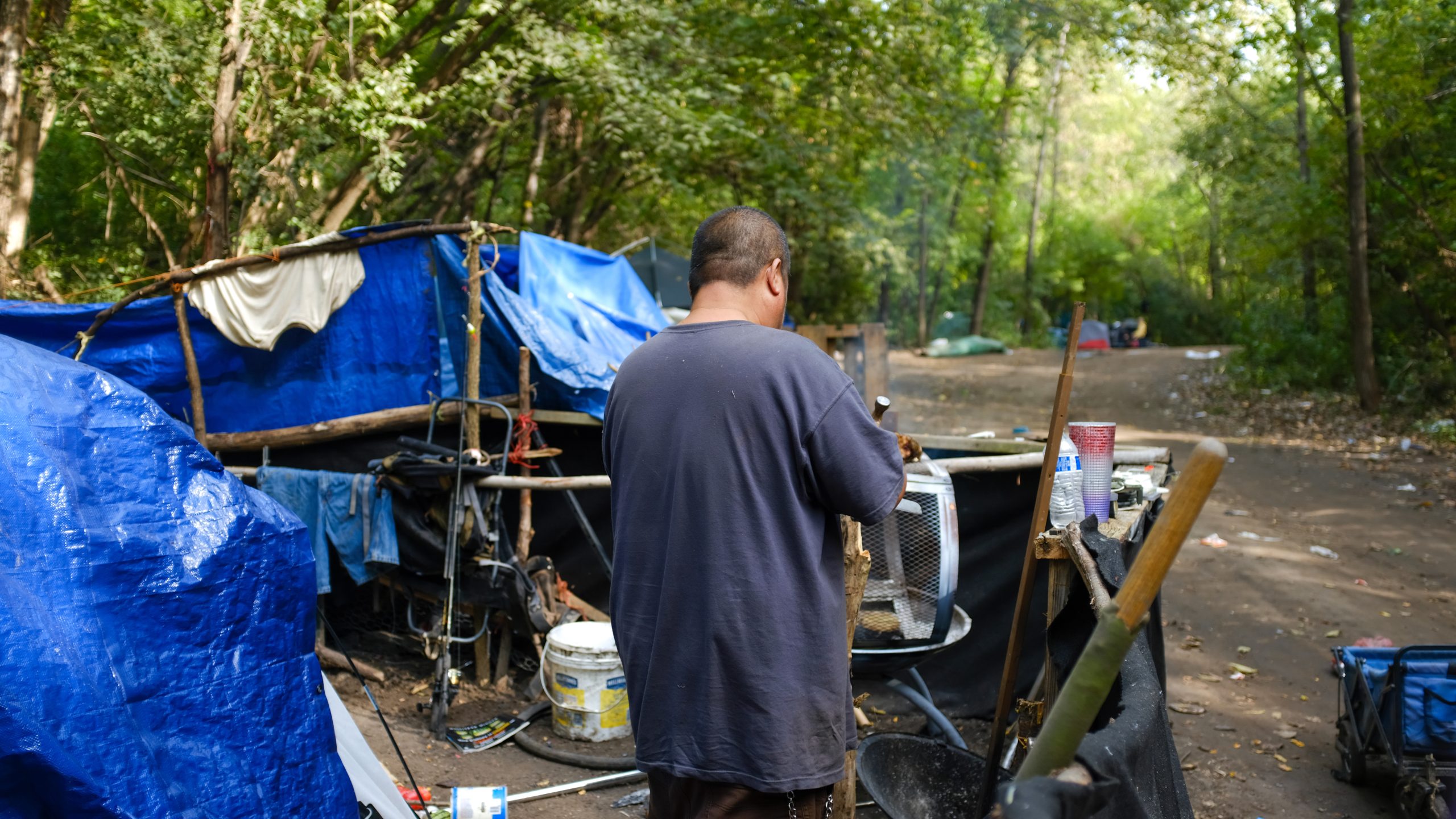
Officials and residents disagree on encampment population
City officials estimate 230 to 250 people live across the two sites; volunteers and camp residents put the number closer to 400, MPR News reported. The gap highlights a persistent challenge: no single count captures everyone sleeping outside.
Her framed the closures as a humanitarian necessity, citing worsening safety conditions, fire risks as temperatures drop, and the environmental hazard at Randolph. Police Chief Axel Henry echoed that language. “This has never been, nor is it now, an enforcement effort – it’s a humanitarian effort,” Henry told reporters.
What changes after Pig’s Eye
Her acknowledged the August clearing was imperfect. “Behind this plan is months of honest reflection on Pig’s Eye by staff who cared enough to ask hard questions about what we got right and what we didn’t,” she said.
The city is deploying a “navigation minibus” starting Thursday to connect residents with shelter, treatment, and housing options on site, MPR News reported. Ramsey County has expanded shelter capacity, and Her is proposing budget amendments to redirect $1.6 million from downtown housing conversion projects toward intensive beds for people with serious mental health and substance use needs, plus $150,000 for a long-term shelter study, MPR News reported.
Baker said the city believes there will be “space for people to go indoors if they want to go indoors,” but could not confirm how many low-barrier beds will be available by the closure dates. He said the county is poised to open additional warming spaces.
Research warns of mortality spikes
A University of Minnesota study published in JAMA Network Open found that overdoses spiked after encampment closures in Minneapolis, MPR News reported. When pressed on how St. Paul would mitigate similar risks — especially with residents losing heat sources in winter — Baker said officials “respect the research” and “brought public health to the table” through the county, but offered no specific protocols, MPR News reported.
“We could legally go down and write tickets and arrest people all day long. But I don’t think anybody in our community or anybody in this city believes that that’s the way to solve this problem.”
Pushback from the council and the camps
Council Member HwaJeong Kim called the plan a costly displacement. “Encampment evictions have failed all of us, whether you live in a house or in a tent,” Kim said in a statement. “People need housing, not bulldozers and fences.”
At Randolph, residents described a mix of fear and resignation. Zofia Wasienski, 31, told the Star Tribune she would rather the city continue helping people exit without a hard deadline. “All that does is add anxiety for residents,” she said.
Joe Ramos, who has Section 8 housing lined up, said he isn’t worried for himself but asked for compassion. Joe Nelson, serving hot food at the camp Thursday, argued shelters are not a substitute for housing. “A tent is an abode, it’s a home,” Nelson told the Star Tribune.
Regional pressure and next steps
Her said solving the crisis requires a statewide approach and noted she has discussed the issue with Governor-elect Amy Klobuchar, whose campaign pledged to build 100,000 homes. Henry warned officers have authority to prevent new encampments from forming, particularly in perilous locations, and said the city intends to enforce anti-camping ordinances.
Kaohly Her became St. Paul’s 56th mayor in 2026, the first woman and first Asian American to hold the office. Born in Laos in 1973, she arrived in the United States as a Hmong refugee at age four and grew up in Appleton, Wisconsin.
Before entering elected office, she spent 15 years in investment and finance, directed the Hmong women’s organization Hnub Tshiab, and served as policy director for former Mayor Melvin Carter. In the Minnesota House from 2019 to 2025, she authored the End Child Marriage Bill, which raised the legal marriage age to 18 without exceptions, and served as majority whip from 2021 to 2022.
The L’Orient camp near Maryland Avenue closes Dec. 8. The Randolph camp near the river closes Dec. 15. Ramsey County’s shelter expansion announcement is online. The University of Minnesota study on encampment closures and overdose risk is published in JAMA Network Open.
Keep reading

Coach Minter: Marlon Humphrey Deactivated for Panthers Game After Podcast Comment
Baltimore Ravens cornerback Marlon Humphrey was sent home from the team facility Thursday and will be inactive for...

West Virginia Falls 85-72 to No. 1 Florida in Players Era Third-Place Game
West Virginia dropped the third-place game of the Players Era 8 Tournament to top-ranked Florida 85–72 on Thursday...

New Mexico AG Seeks Court Order Requiring CYFD Compliance Before Sending Minors Abroad
"Not only did CYFD fail to act in the best interest of the child in this case, but...
Bennett, Bricklin & Saltzburg Seeks No-Fault Paralegal in New York
Bennett, Bricklin & Saltzburg LLC is hiring a full-time litigation paralegal and legal assistant for its New York...