
Garden City Debates St. Paul’s Landmark Plan Costs Versus Demolition
Discussions surrounding the historic St. Paul’s building in Garden City have involved deferred maintenance and questions regarding the property’s future costs and preservation. In a recent opinion piece published by the Garden City News, Village Trustee Richard Catalano argued that the village’s proposed $10 million Landmark Plan offers a far more fiscally responsible path than a competing $32 million demolition and park proposal.
The debate centers on an iconic, roughly 48-acre property acquired by Garden City residents and trustees back in 1993 for about $7.3 million. While that land has appreciated significantly, the structural fate of the massive 100,000-square-foot Main Building has eluded consensus for over thirty years.
Weighing the Numbers: $10 Million Versus $32 Million
Critics of the current Board of Trustees often frame their opposition around containing village debt. Yet Catalano points out a striking financial contradiction in those arguments. Supporters of razing the structure to build a park advocate for a project exceeding $32 million in costs. That approach requires more than three times the borrowing needed for the targeted $10 million Landmark Plan.
The Landmark Plan takes a strictly defined approach. It does not commit the village to expensive interior renovations, adaptive reuse, or the $35 million mothballing plan floated in a 2025 survey. Instead, the scope is strictly limited to stabilizing the roof and exterior of the historic structure, addressing decades of wear while establishing a hard $10 million spending limit.
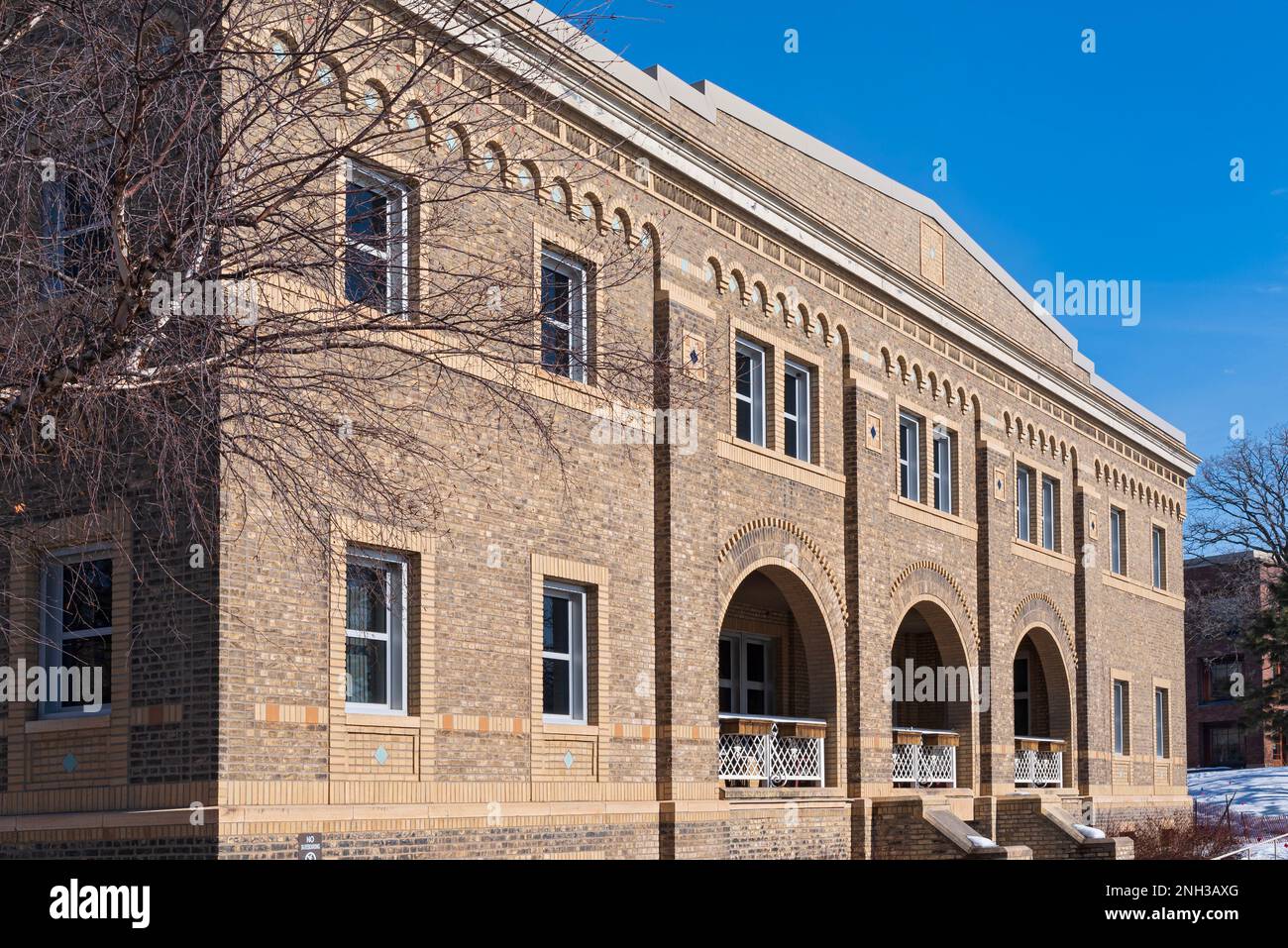
Meanwhile, the history of the site shows a long line of abandoned reuse concepts. According to historical records provided by Garden City, NY, the St. Paul’s School closed in 1991, leading to the village’s 1993 acquisition primarily for its playing fields rather than a concrete plan for the Main Building. Over the subsequent decades, exploratory committees evaluated everything from relocating Village Hall and a municipal court to establishing a continuing care retirement facility. High retrofit costs and legal hurdles consistently derailed those ambitious proposals.
Inconsistencies in Referendum Demands
The fiscal debate is mirrored by a political one regarding public votes. During the 2026 Village election, proponents of the demolition and park project argued that a bond referendum was unnecessary because voters understood where candidates stood on the issue. Now, those same voices insist that a public referendum is vital for the $10 million Landmark Plan, even though the CAP candidates ran openly on supporting it.

Catalano notes that this debate risks losing sight of the broader architectural and civic identity tied to the property. Comparing St. Paul’s to the Cathedral of the Incarnation, the trustee emphasizes that residents do not need to personally use a historic building to value its contribution to the village’s character.
Community members and local businesses have already begun stepping forward with private donations of money, materials, and services. Village leadership hopes this grassroots generosity can form the foundation of a long-term philanthropic effort, sparing taxpayers the full burden of preserving an irreplaceable piece of local heritage as the village looks toward the next thirty years.
Keep reading

What Albany International (AIN) Said on Its Q3 Earnings Call – Yahoo Finance
Albany International reported record third-quarter revenue, lifted by a renegotiated helicopter contract and strong performance in its Engineered...

Through the boroughs: How the New York City Marathon became a citywide tradition … – amNY
The TCS New York City Marathon is celebrating its 50th year, marking a massive historical milestone for one...

How to Choose a Cosmetic Dentistry Provider in Albuquerque
Choosing a cosmetic dentistry provider in Albuquerque requires looking beyond promotional photographs to evaluate clinical experience, oral health...

The Advance Group has leased 93,728 square feet of industrial space at Port South in Carteret
The Advance Group has leased 93,728 square feet of industrial space at Port South in Carteret, consolidating its...