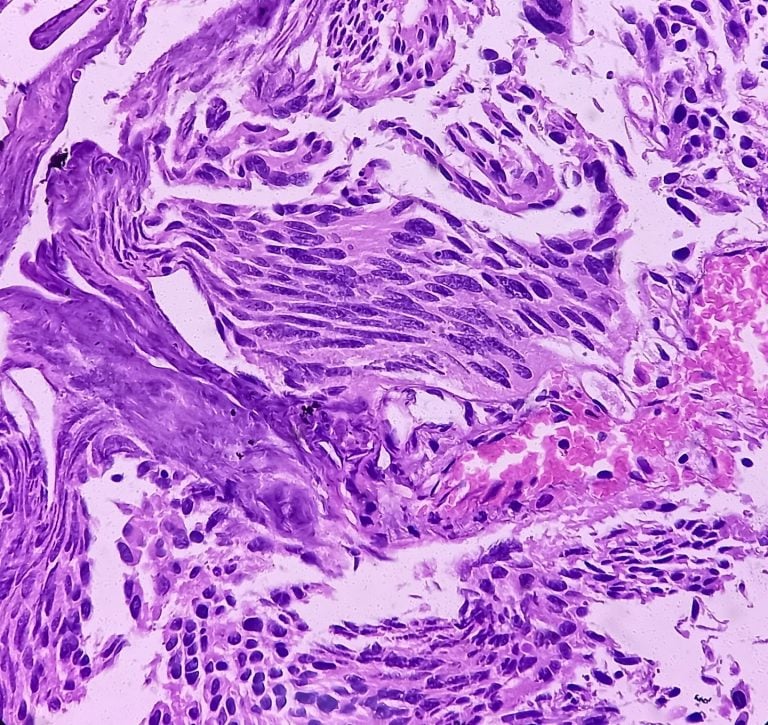
Researchers at Stanford Medicine and the VA Palo Alto Health Care System have developed a non-invasive urine test called uRARE-seq that measures cell-free RNA to diagnose bladder cancer and predict treatment responses. Published in Nature Medicine, the test correctly identified 95% of localized bladder cancer cases in a study of 683 samples.
A liquid biopsy approach developed by researchers at Stanford Medicine and the VA Palo Alto Health Care System analyzes cell-free RNA shed into urine instead of relying on traditional DNA tests. Described in a study published in Nature Medicine, the method detects bladder cancer and provides insights into how a tumor is likely to respond to chemotherapy or immunotherapy before treatment begins.
Testing Urine RNA to Bypass Cystoscopy
About 85,000 people in the United States are diagnosed with bladder cancer each year, and monitoring the disease has traditionally required cystoscopy, an invasive procedure where an endoscope is threaded into the bladder to look for suspicious tissue.
While blood and urine liquid biopsies have increasingly targeted tumor DNA, the bladder presents diagnostic hurdles because normal bladder lining cells often accumulate mutations that overlap with actual tumors, a phenomenon known as the field effect. DNA tests can mistake these bystander mutations for cancer unless clinicians first sequence a patient’s tumor and normal tissue to establish a baseline.
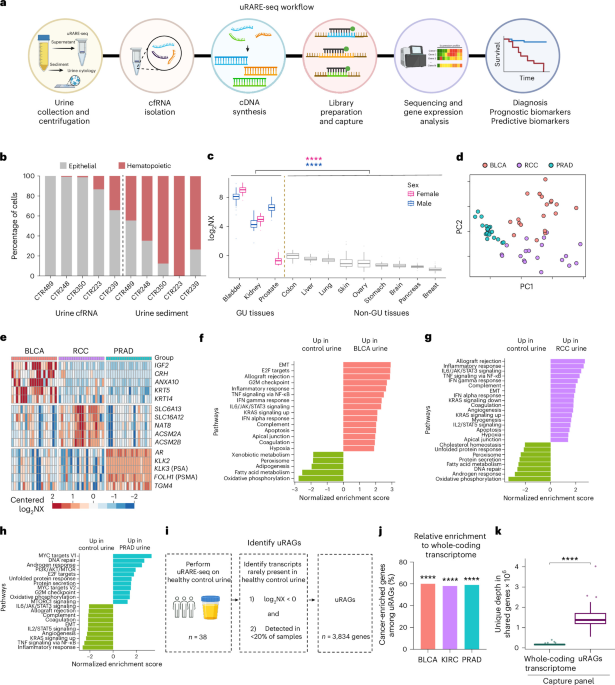
Because RNA reflects overall gene activity rather than individual mutations, the approach does not require matched tumor samples.
“For DNA-based, tumor-informed approaches, you need to know exactly what the tumor’s mutations look like to track disease. RNA doesn’t have that problem. You’re looking for a biological signature of disease, not an exact likeness, and urine is a noninvasive way to accurately detect and track bladder cancer.”
Ash Alizadeh, professor and senior study author
Measuring uRARE-Seq Accuracy in a 683-Sample Study
Designing the RNA-based test presented technical hurdles because RNA molecules in urine are fragmented and relatively rare.
Researchers adapted a genetic sequencing method originally designed for RNA in blood plasma and constructed a custom gene panel to identify RNA messages that are uncommon in healthy urine but abundant in genitourinary tumors.
When applied to samples from patients with bladder, kidney, and prostate cancer, uRARE-seq tracked tumor biology closely and successfully distinguished low-grade from high-grade bladder cancer. In an evaluation encompassing 683 urine samples from patients and healthy volunteers, the assay demonstrated high diagnostic accuracy.
- Correctly identified 95% of people with localized bladder cancer.
- Correctly cleared 90% of individuals who did not have the disease.
- Outperformed standard urine cytology and a comparable DNA-based urine test.
- Identified residual disease left behind after surgical intervention and immunotherapy.
Predicting Patient Responses to BCG Therapy
The study found that patients who subsequently responded to BCG exhibited pre-treatment urine RNA messages rich in genes involved in T-cell and immune-signaling activity, while non-responders showed signs of rapidly dividing tumor cells. Utilizing this data, researchers developed a biomarker capable of predicting whether tumors favored immunotherapy or second-line chemotherapy.
Max Diehn, co-founder and scientific advisor of Resero Bio, noted that bladder cancer management involves making consequential decisions with incomplete information, such as determining tumor aggressiveness, predicting response to BCG, and assessing residual disease after treatment.
The research received funding from the National Institutes of Health, alongside support from the Stanford ACED Canary Fellowship, the Cui Scholar Graduate Fellowship, the Tobacco-Related Disease Research Program, the Virginia and D.K. Ludwig Fund for Cancer Research, and an SDW/DT Philanthropic Gift. Several authors have disclosed ownership interests or advisory roles with Resero Bio, a Stanford spinout exclusively licensed to commercialize the RARE-seq platform across multiple solid tumor types.
Worth a look

King’s College London and ZOE Seek 250,000 Volunteers for Bowel Cancer Study
Researchers at King’s College London and ZOE are recruiting 250,000 UK volunteers for the PROSPECT-UK study to investigate...

Severe Iron Deficiency Anemia Linked to Duodenal Ascariasis in Elderly Male
Profound iron deficiency anemia can occasionally stem from parasitic infections such as hookworm or ascariasis rather than typical...

Online Nutritional Counseling Reduces Alcohol Intake in Adults With MCI
Structured nutritional counseling delivered online in group sessions significantly reduces alcohol intake among older adults living with mild...

Uganda Launches Nationwide Measles Vaccination Campaign for Children
Uganda launched a five-day nationwide measles-rubella vaccination campaign on Thursday targeting nearly 7.9 million children aged nine months...