A new study published in Science Advances reveals that oak trees continue to absorb carbon dioxide through photosynthesis well after their seasonal wood growth ends. This decoupling suggests that forests may store less carbon in long-lived wood than many climate models currently predict, complicating expectations for how ecosystems will respond to rising atmospheric carbon dioxide levels.
Disconnection Between Photosynthesis and Wood Growth
For decades, climate models have operated on the assumption that if a tree is photosynthesizing, it is also growing. Researchers at the Lamont-Doherty Earth Observatory, part of the Columbia Climate School, found that this is not the case. In a study analyzing 137 oak forest sites across the eastern United States and California, the team discovered that wood production often ceases by mid-summer, even as the trees continue to capture carbon from the atmosphere until October.
“Right now, most models assume that if you have photosynthesis, you have growth. We find that’s not the case,” said lead author Mukund Palat Rao, an ecoclimatologist at the State of the Planet. “Just because there is more photosynthesis might not necessarily mean more tree growth in the future.”
This decoupling challenges a long-standing paradigm in forest ecology. Historically, carbon sequestration models—the mathematical frameworks used by scientists to estimate how much CO2 the biosphere can remove from the atmosphere—have utilized “carbon fertilization” as a primary driver. This theory suggests that as atmospheric CO2 concentrations rise, trees will exhibit higher rates of photosynthesis, leading to increased biomass and larger, denser forests. By demonstrating that carbon uptake and structural growth are not always synchronized, the study introduces a critical nuance to these projections.
Regional Variations in Carbon Uptake
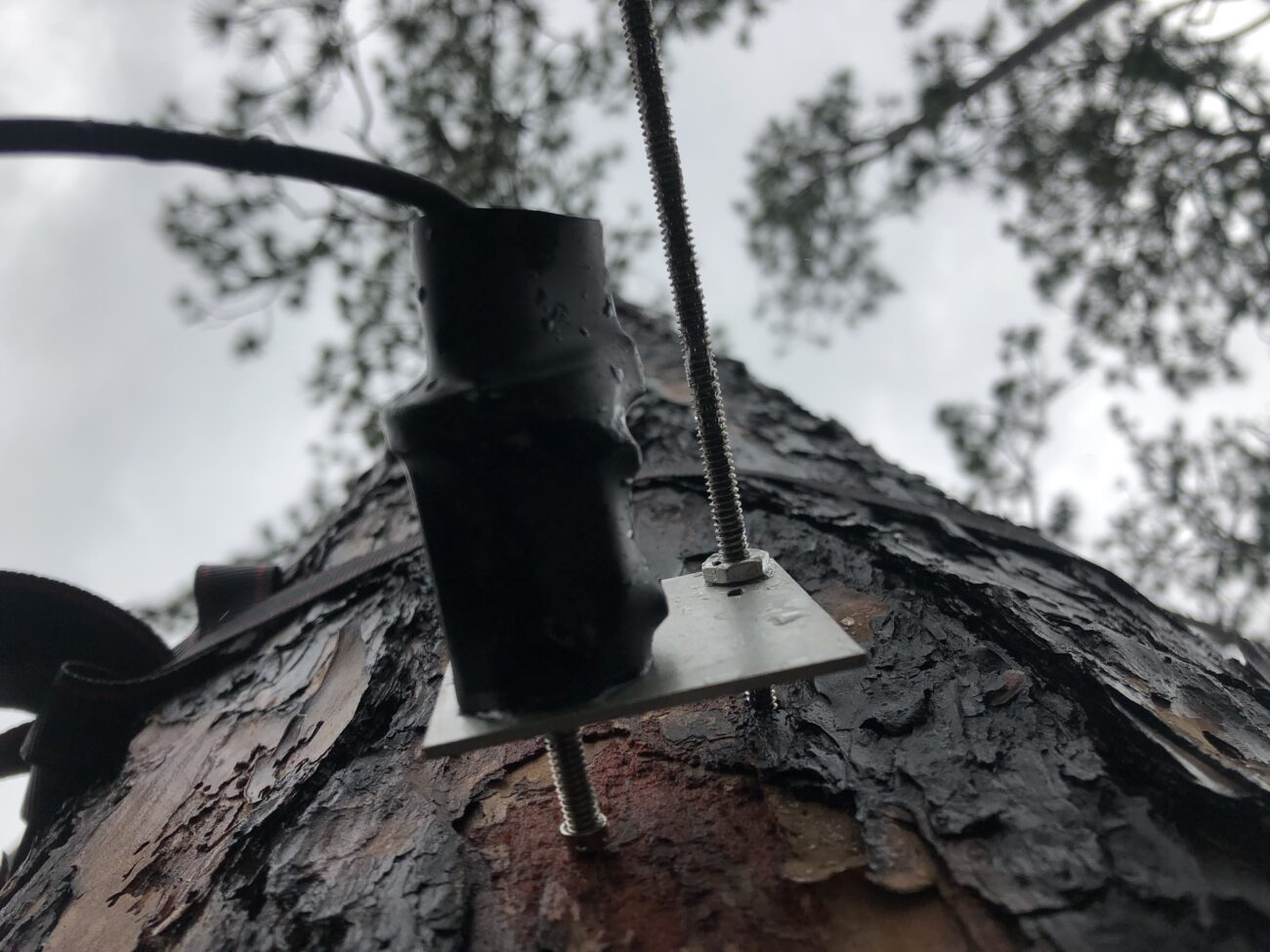
The research team utilized a combination of satellite imagery, canopy-level CO2 sensors, and trunk-mounted dendrometers—devices that track minute changes in tree diameter—to monitor growth rhythms. In the eastern United States, oak trees typically added new wood from May through July, yet roughly 36 percent of their annual carbon assimilation occurred after that growth had stopped. As reported by Earth.com, the pattern in California was seasonally shifted but equally distinct: growth generally ended by August, with 26 percent of annual carbon uptake occurring afterward.
The researchers noted that the biological mechanism behind this split relates to water pressure. “The moment you have dry and hot conditions, growth activity stops pretty instantly while photosynthesis seems to continue at a slightly decreased rate,” Rao explained. Because tree growth requires internal water pressure to expand cells, drought conditions can halt the formation of wood even when the tree is still capable of converting sunlight into sugars.
The Mechanics of Carbon Partitioning
To understand the implications of this discovery, it is necessary to distinguish between how a tree “spends” the carbon it acquires. When a tree pulls CO2 from the air, it uses the energy to create glucose. This carbon is then partitioned into different biological compartments. Wood production is a form of long-term storage, sequestering carbon in cellulose and lignin that can remain locked away for decades or centuries. Conversely, carbon used for metabolic maintenance, leaf respiration, or the secretion of sugars into the rhizosphere to support fungal networks is transient. This carbon is often released back into the atmosphere relatively quickly through decomposition or respiration.
The study highlights that by mid-summer, the energy priority of the oak tree shifts. Even if the leaves remain green and productive, the tree may prioritize cellular repair or the storage of non-structural carbohydrates—sugars kept in reserve for the following spring—rather than the construction of new woody tissue. This shift means that while the forest remains an active carbon sink, the “quality” of that sink in terms of long-term atmospheric removal is significantly altered.
Implications for Global Carbon Sinks
The finding carries significant weight for climate forecasting. When trees convert carbon into woody biomass, that carbon can remain stored for decades, centuries, or even millennia. However, carbon absorbed after the growth phase is often directed toward shorter-lived processes, such as producing leaves, fueling metabolic maintenance, or feeding soil microbes. According to The Guardian, if forests direct more carbon toward these transient uses rather than long-term wood storage, the capacity of land-based carbon sinks may be lower than current models estimate.
This has profound implications for global policy. Many international climate mitigation strategies rely heavily on the assumption that forests will naturally increase their carbon storage as CO2 levels rise. If the “growth ceiling” is reached earlier in the season due to water stress, the net amount of carbon removed from the atmosphere each year may plateau, regardless of how much additional CO2 is available for photosynthesis.
The study also highlights that this decoupling is most pronounced during years marked by extreme climate variability—periods of alternating wet and dry extremes—which are expected to increase in frequency due to climate change. As ScienceBlog.com notes, this adds a layer of uncertainty to projections that assume a direct, linear relationship between increased atmospheric CO2 and expanded forest carbon sequestration.
Uncertainties and Future Research
While the study provides a clear observation of the photosynthesis-growth gap in oaks, the researchers emphasize that many questions remain regarding other species and ecosystems. The team is now investigating whether this phenomenon is universal across different forest types. “Understanding how photosynthesis and growth are linked is very important from the perspective of understanding how forests will store carbon over long time scales,” said Rao. As the scientific community continues to refine these models, the reliance on carbon fertilization effects—the theory that more CO2 will automatically lead to larger, more carbon-dense forests—is facing increased scrutiny.
Future research will likely focus on whether species with different water-use strategies—such as conifers or tropical trees—exhibit similar patterns. The scientific community is currently evaluating how these findings can be integrated into Earth System Models (ESMs), which are the complex simulations used by intergovernmental bodies to forecast global temperature shifts. By identifying the biological thresholds where growth stalls, researchers hope to improve the accuracy of these models, ensuring that climate projections better reflect the physiological constraints of the world’s forests.
Find more reporting in our News section.
Worth a look

Abiy Ahmed Sworn In as Prime Minister With Focus on Red Sea Access
Prime Minister Abiy Ahmed was sworn into a new five-year term on Monday, October 5, 2026, following his...
Pope Leo XIV Rejects Death Penalty as Attack on Human Dignity
Pope Leo XIV has rejected the death penalty as an attack on human dignity, posting on X that...

SpaceX Launches 21 U.S. Space Force Satellites After Delay
Following a five-day delay from an earlier countdown abort, a SpaceX Falcon 9 rocket successfully launched 21 data...

Queen Camilla Recalls Secret Teenage Reading of Lady Chatterley’s Lover
Queen Camilla has revealed she secretly read Lady Chatterley's Lover under her pillow by torchlight as a teenager...