
Indonesia’s Supreme Court has overturned the acquittal of Major (Ret.)
Isak Sattu, sentencing the former liaison officer of Kodim 1705/Paniai to five years in prison for his role in the 2014 Bloody Paniai tragedy. The November 10, 2026, ruling changes the pattern of gross human rights trials in Indonesia, which had previously ended without lasting convictions.
The case stems from a December 8, 2014, incident in Enarotali, Paniai Regency, where security forces opened fire on a crowd, killing four young people and leaving at least 17 others injured.
The Supreme Court’s decision in case No. 12000 K/Pid.Sus-HAM/2026 effectively quashes the December 8, 2022, verdict from the Makassar Human Rights Court. That earlier trial had cleared Sattu of all charges, a result that sparked widespread condemnation from victims’ families and human rights advocates.
The Supreme Court panel, chaired by Prof. Dr. Yanto, found the first and second charges against the former liaison officer of Kodim 1705/Paniai to be proven. Beyond the five-year prison sentence, the court mandated financial compensation for the victims.
The court ordered payments of IDR 250 million for each person killed, IDR 210 million for each seriously injured victim, IDR 115 million for each moderately injured victim, and IDR 75 million for each lightly injured victim.
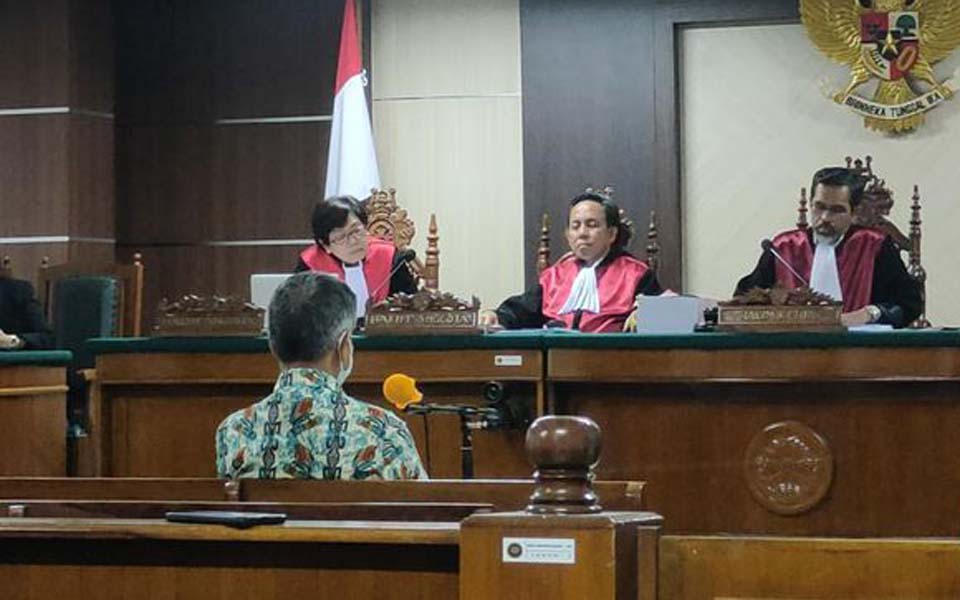
For many in West Papua, the Paniai case has long served as a test of whether state violence against Papuans can be addressed through courts. The path to this verdict was protracted; court records indicate that although the case file was transmitted from Makassar in January 2023, it was not officially registered at the Supreme Court until September 7, 2026. Once registered, the panel reached its decision within 54 days.
This development stands in contrast to previous judicial outcomes in Indonesia. Before this ruling, every gross human rights trial in Indonesia had ended without a lasting conviction.

The administrative process is currently ongoing, with the Supreme Court’s case-tracking portal noting that the full ruling is being prepared by the panel.
The Supreme Court’s decision remains a defining moment in the legal history of the region. It stands as an instance in which a conviction for a gross human rights violation has been secured in such a trial.
Keep reading
- Awake Brain Mapping Refines DBS Lead Placement Beyond Imaging
- CT Radiomics Predicts Outcomes After Brainstem Haemorrhage – EMJ
- Measles Kills 1 to 3 in 1,000 Children; New York's First Death in 30 Years (daybreakwire.com)
- Human Rights Watch Calls for Rejection of France’s “Vandals Pay” Bill (archyde.com)

Awake Brain Mapping Refines DBS Lead Placement Beyond Imaging
Awake brain mapping can reveal information that changes deep brain stimulation lead placement beyond what imaging alone would...
CT Radiomics Predicts Outcomes After Brainstem Haemorrhage – EMJ
In the high-stakes environment of emergency neurology, clinicians often have mere minutes to predict the trajectory of a...

Sunflower Children’s Hospice Construction to Begin in Castlebar
Construction work on the first children’s hospice outside Dublin is expected to begin in January 2027, changing how...

Samsung Galaxy A18 5G Surfaces in Bluetooth Database
Samsung is preparing to expand its device lineup with the upcoming Galaxy A18 5G, which has surfaced on...