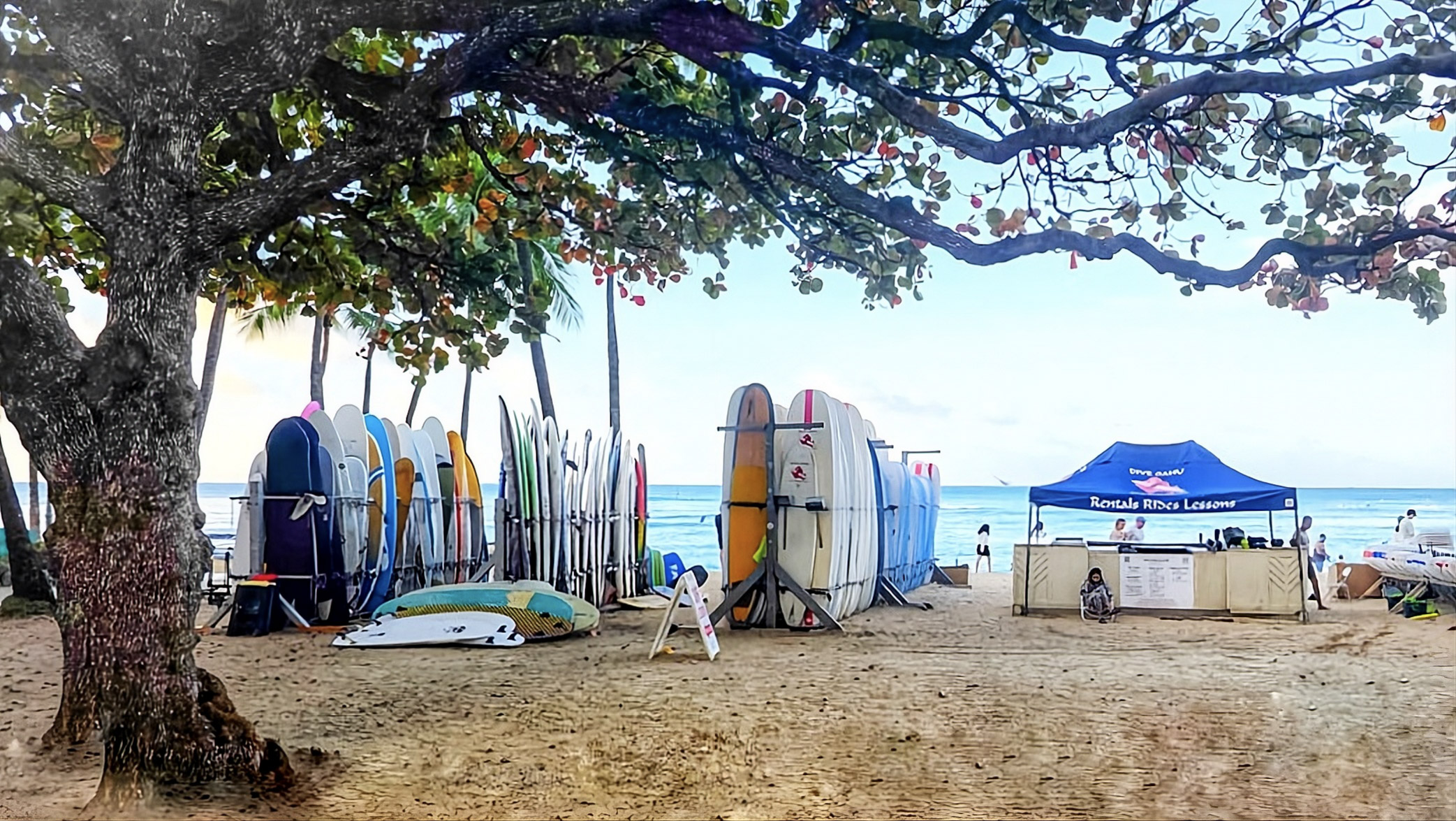
Surfers in Hawaii often fear heavy wipeouts or collisions with coral, but a rare spinal cord injury can occur without a single fall.
This condition, known as surfer’s myelopathy, may develop simply from spending too much time lying face down with an arched back while waiting for waves, Beat of Hawaii reported.
The danger became personal for Brock Kelly, a 24-year-old fitness entrepreneur from Mississippi, who was injured while surfing during a work trip on November 6, 2026. Kelly was diagnosed with the condition, which left him paralyzed from the waist down, according to a statement from his family.
While Kelly’s specific experience remains unconfirmed—it is unclear if he was a beginner or at a particular beach—his case highlights a medical phenomenon that researchers at Honolulu’s Queen’s Medical Center have been tracking for more than 20 years. The injury is exceptionally rare, but for those who contract it, the consequences are life-altering.
The mechanics of a spinal stroke
Researchers suspect the injury happens when prolonged arching of the back interrupts blood flow to the spinal cord, creating a situation similar to a spinal stroke. This risk is particularly high for beginners who spend much of their lesson paddling or waiting for waves rather than riding them.
Unlike experienced surfers who tend to sit upright on their boards between sets, novices often remain on their stomachs with their upper bodies raised.
A 2025 study involving Queen’s Medical Center and the University of Hawaii examined 11 patients who developed symptoms during or shortly after their first surf lesson. Of the ten patients who provided detailed positioning histories, seven had spent more than 45 consecutive minutes lying face down with their backs arched.
The physiological link is striking. One patient in that 2025 study had imaging that showed blood flow through an artery supplying the spinal circulation actually disappeared when the back was hyperextended.
Data regarding the frequency of this condition remains sparse. In a Hawaii Department of Health presentation, Dr. Stacy Brown of Queen’s Medical Center explained that fewer than 100 cases have been described in medical literature over roughly two decades.
Patterns seen in novice surfers
The clinical progression of the injury is often rapid and follows a specific pattern. A 2012 study published in Neurology reviewed 19 patients treated for the condition over a decade, finding that every single one was a novice surfer. In fact, 17 of those patients had never surfed before the incident.
The onset typically begins with sudden lower back pain, which can quickly escalate into numbness and paralysis in both legs within 10 to 60 minutes. Because the initial ache can feel like a simple muscle strain from paddling, many people may not realize the severity of the situation until it is too late.
| Study Year | Primary Institution | Key Finding |
|---|---|---|
| 2012 | Queen’s Medical Center | 19 patients reviewed; 17 were first-time surfers |
| 2017 | Medical Review | Symptoms can also begin while attempting to stand |
While most research focuses on the arched-back position, a 2017 medical review said that symptoms have also begun while patients were attempting to stand up on their boards, suggesting that repeated back movements might also play a role.
Recognizing the warning signs
The distinction between a sore back and a medical emergency is thin. For some, the pain subsides once they reach the shore, but for others, the loss of sensation is immediate and permanent.
In a Department of Health educational video, a man named Brandon described his experience in 2021, noting that he developed sharp back pain while surfing. Although the pain initially faded after he reached land, he subsequently lost all sensation below his waist.
Medical researchers advise that anyone attempting an unfamiliar physical activity should stop immediately if they experience new back pain rather than trying to “push through” the discomfort. If symptoms like tingling, leg weakness, or difficulty urinating appear, emergency medical evaluation is necessary, even if no fall or collision occurred.
Recovery is highly unpredictable. While some patients regain neurological function, others face lasting paralysis or bladder issues. The severity of the initial injury is considered a primary predictor of the outcome, and no specific treatment has been proven to guarantee a return to full function.
Not all surf operators are currently providing specific warnings about this risk, though some have begun integrating it into their safety protocols. For example, Lahaina Surf Shack includes a mention of surfer’s myelopathy in its liability waivers, advising students to sit on their boards while waiting for waves and to leave the water if they feel any tingling or weakness.
For those booking a first lesson in areas like Waikiki, instructors can be asked about proper positioning between waves and what specific symptoms should trigger an immediate exit from the water.
Keep reading

$50 Million Investment to Upgrade Maine State Parks, WABI Reports
A $50 million investment is funding upgrades and improvements at state parks across Maine, WABI reported Thursday. State...

Louisiana Basketball Postpones UNC-Wilmington Game Due to Injuries, Illness
Louisiana basketball has postponed its nonconference game against UNC Wilmington scheduled for Saturday. The school announced Thursday that...
Democrat Cindy Holscher Wins Kansas Governor Race Over Ty Masterson
Democrat Cindy Holscher has been elected as the next governor of Kansas, defeating Republican Ty Masterson to maintain...

Mizzou Cross Country Teams Head to NCAA Midwest Regional
Mizzou cross country teams travel to Ames, Iowa, on Friday, Nov. 13, to compete in the NCAA Midwest...