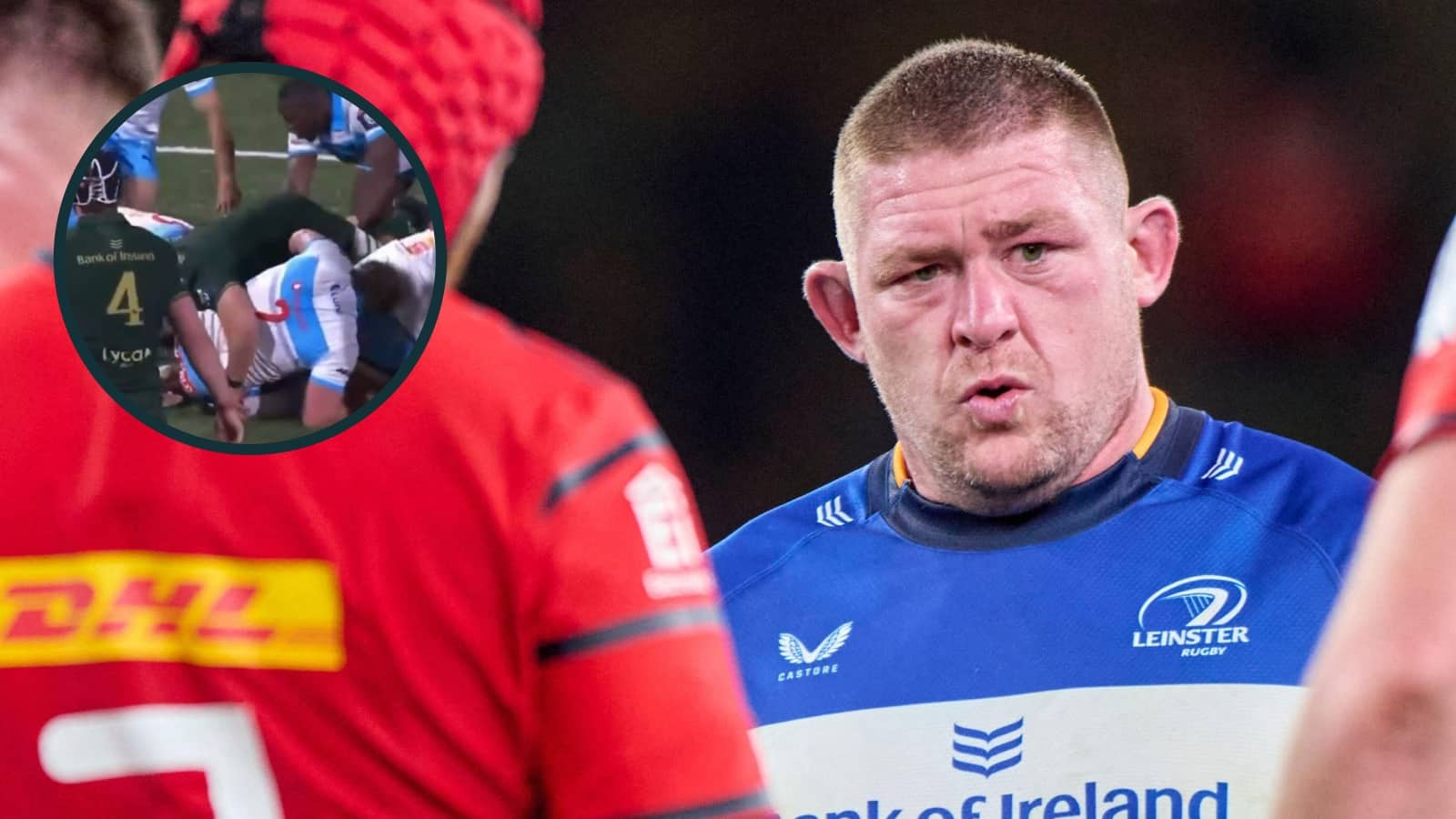
Tadhg Furlong was cleared of foul play, and the decision has sparked controversy in Ireland and South Africa. The Ireland and Leinster tighthead prop was unanimously cleared of foul play by a disciplinary panel last week after being cited for allegedly grabbing Gavin Coombes’ testicles during Leinster’s 24-18 win over Munster in Dublin, Planet Rugby reported. The verdict lands at a moment when rugby’s disciplinary machinery is under scrutiny from South Africa, where Jan-Hendrik Wessels received an eight-week ban last season for a strikingly similar incident — a contrast that has fueled accusations of a two-tier standard, and that former head of Irish referees Owen Doyle now insists is more nuanced than the outrage suggests.
Here is what happened, plainly. During the first half of the URC derby, Coombes reported the alleged incident to referee Andrew Brace, but TMO Colin Stanley could not find conclusive video evidence to sanction Furlong on the spot. Citing commissioner Peter Ferguson subsequently cited the prop, and the case went before a judicial tribunal that, Planet Rugby reported, took the guts of a full working day before unanimously dismissing the charge and concluding Furlong had not committed an act of foul play.
Doyle’s Defence: Why the Panel Couldn’t Convict
Writing in his Irish Times column, Doyle defended both the citing decision and Coombes himself, then laid out the line of defence that he believes made a conviction nearly impossible.
“One potential defence would have been for Furlong to deny the charge, and to state that any contact was inadvertent and completely unintentional… Without clear evidence to the contrary, and putting aside the emotion involved, the tribunal would have found it hard to convict; a verdict which may well have seen everybody heading to the Four Courts,” Doyle wrote, as Planet Rugby reported.
The distinction matters because it frames the panel’s decision not as an exoneration of intent but as a failure of proof — Doyle noted that while the video of Furlong’s action on Coombes “looked damning, nobody could actually see whether or not there was testicle-grabbing.”
Doyle was equally firm that Ferguson “would have been negligent not to cite” once he saw what everyone else saw, and that Coombes “shouldn’t be criticised” for reporting it. SA Rugby magazine carried the same column substance, noting the panel’s dismissal came after the long deliberation and that the written judgment’s full detail is unlikely to become public.
Wessels vs. Furlong: The Retaliation That Changed Everything
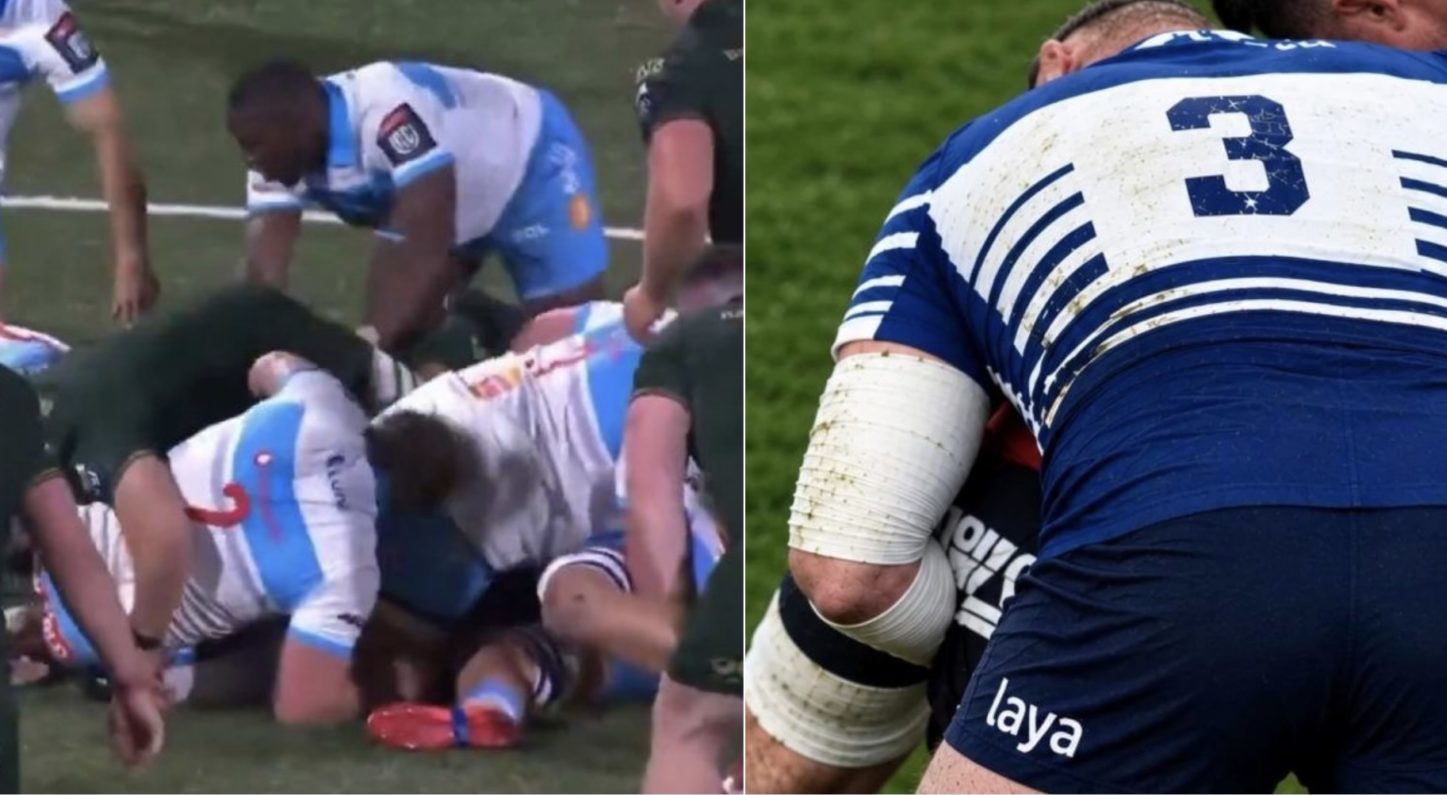
Last season, Bulls and Springboks forward Wessels was suspended — SA Rugby magazine reports a nine-week ban later reduced to eight — after an alleged similar incident involving Connacht flanker Josh Murphy, despite the absence of clear video evidence. Murphy was initially red-carded for punching Wessels in immediate retaliation, though that red card was later rescinded after adjudication found it did not reach the threshold. Doyle argues that Murphy’s instant reaction is precisely what separates the two cases.
“On that alone, the probability that something nasty occurred seemed beyond reasonable doubt, which in Furlong’s case it wasn’t.”
Murphy’s reaction – what all of us would have done – was later adjudicated not to have reached the threshold for red, which was rescinded.”
he wrote, per Planet Rugby. In other words: in the Wessels case, the victim’s immediate violent response functioned as corroborating evidence; in Furlong’s, no such corroboration existed.
A Breakdown Technique the Game Doesn’t Need
On health and safety grounds, he argued, rugby’s lawmakers should specifically outlaw “the practice of putting an arm between an opponents legs, in proximity to the groin region, in an effort to lift or destabilise the player.”
“It’s a clearing out technique which the game does not need.”
he wrote, as both Planet Rugby and SA Rugby magazine reported.
What This Means for the Disciplinary Landscape
The Furlong verdict now sits alongside the Wessels ban as two contrasting cases. As Joe Naughton put it, “If the player is cited now, it’ll be little consolation to Munster,” while Furlong was cleared after the disciplinary panel found no conclusive video evidence.
Disclaimer: The analytical insights and data provided in this article are for informational and entertainment purposes only and do not constitute medical advice or sports betting recommendations.
2. Tadhg Furlong (Ireland) On 29 October 2026, an independent disciplinary committee cleared Furlong following an allegation by Munster's Gavin Coombes involving a similar incident. He received no suspension. pic.twitter.com/XwigXxVyLA
More on Tadhg Furlong
Keep reading
Emery’s demands clash with United’s structure as Carrick’s fate hinges on Villa match, per report
Manchester United's 3-2 victory over Roma on Tuesday night ended a shambolic nine-game winless run, but TEAMtalk reported...

Cornish Pirates Aim for Top Six After Crucial Away Win at Rotherham
The Cornish Pirates dismantled Rotherham Titans 40-21 at Clifton Lane on Sunday, running in six tries to claim...

CD38-Targeted ImmunoPET Scan Detects Hidden Multiple Myeloma
If we are going to cure multiple myeloma, we need two things, said C. Ola Landgren, M.D., Ph.D.,...
British tennis player Jodie Burrage shares death threat message: ‘I hope you kill yourself
More than 12,000 abusive posts and messages were sent to female tennis players on social media last year,...