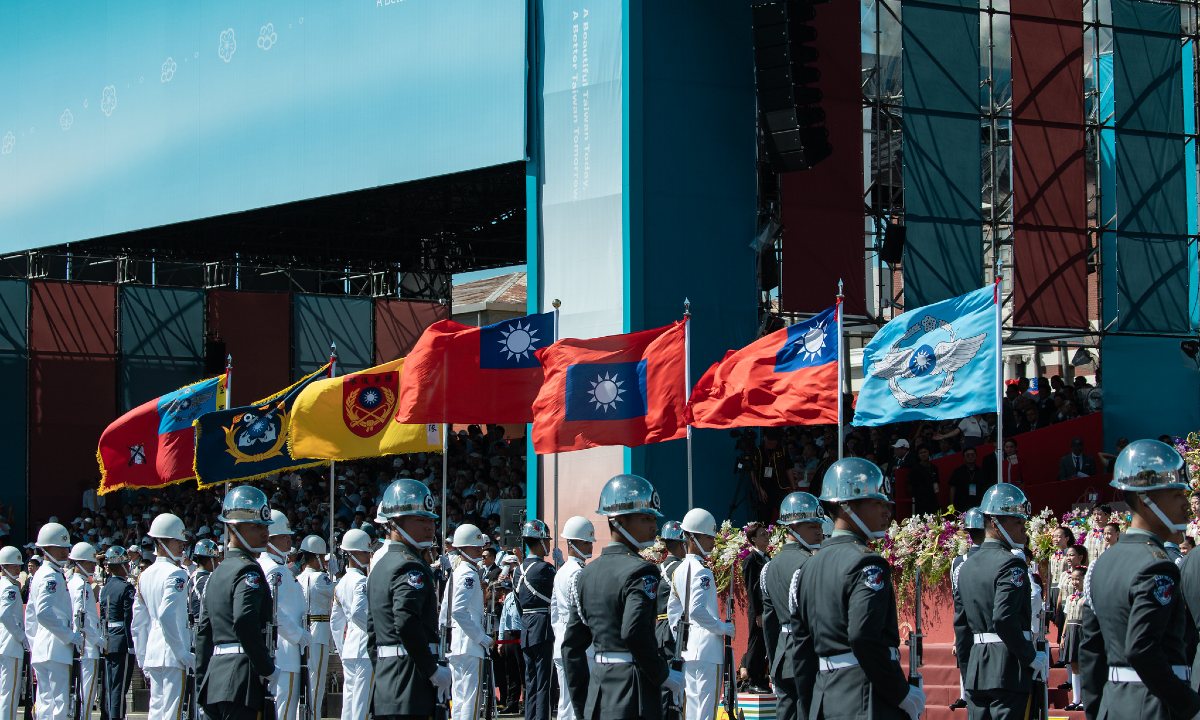
Inspired by battlefield lessons from Ukraine, Taiwan is accelerating plans to deploy a multi-layer drone “hellscape” strategy to deter a potential Chinese amphibious invasion, integrating autonomous systems and low-cost attack fleets as U.S. allies and Ukrainian defense manufacturers forge new production partnerships across Asia.
For years, military strategists wrestling with the defense of Taiwan have looked across the 180 kilometers of the Taiwan Strait and confronted a grim logistical reality. A traditional U.S. carrier group operating from distant regional bases would struggle to block an invasion force backed by overwhelming Chinese military might. Indo-Pacific Command leaders proposed a creative operational concept: turn the strait into an unyielding obstacle course of uninhabited systems designed to exhaust and destroy an invading fleet before it ever reaches the shore.
That concept has moved rapidly from whiteboard strategy to active defense planning, spurred heavily by the unconventional maritime tactics used by Ukraine against Russian forces in the Black Sea. Now, the intersection of U.S. strategic design, Ukrainian wartime innovation, and an escalating military spending surge across Asia is reshaping how democratic allies plan for the defense of the island.
The Four Tiers of the Unmanned Hellscape Concept
Operational planners break down the strategy into four distinct defensive layers designed to inflict maximum attrition on an invading Chinese People’s Liberation Army Navy fleet. According to defense analysts outlining the framework, the operation begins deep in the strait and continues right up to the beaches of Taiwan, creating a multi-layer robotic defense that frustrates an amphibious assault.
- The over-the-horizon outer layer: Utilizes long-range one-way attack drones, antiship cruise missiles, and maritime drones to disrupt enemy ships in the earliest stages of an operation.
- The muddy middle layer: Deploys sea mines to canalize Chinese ships into predictable paths targeted by myriad aerial drones, including loitering munitions.
- The final run to the shore: Leverages shorter-range missiles, rockets, and drones targeting the narrow approaches required for landing craft.
- The beach landing layer: Employs a first-person-view drone wall to complement Taiwanese artillery bombarding any forces that successfully establish a beachhead.
Together, this synchronized approach is intended to present Beijing with an operation so costly that leaders would be deterred from ordering an invasion.
Ukrainian Drone Makers Target Asian Defense Markets
The tactical success of autonomous vessels and loitering munitions in Eastern Europe has created a booming market for Ukrainian defense firms seeking partnerships in East Asia. In April, the CEO of Ukrainian drone producer UFORCE flew to Tokyo to pitch Japanese officials and defense contractors on building thousands of drones for regional self-defense, according to Reuters reporting.
“Our drone and counter-drone efforts started relatively late, and initially we were trying things out as we went along.”
Lt. Gen. Huang Wen-chi, director general of strategic planning for the Taiwanese Defense Ministry
Those efforts have shifted dramatically over the past two years as Taiwan accelerates its asymmetric capabilities. During the annual Han Kuang military exercises, Taiwanese troops practiced using drones for reconnaissance while military planners trained forces to neutralize incoming enemy aerial systems, The New York Times reported from Taipei. Former Japanese defense minister Itsunori Onodera told reporters that Tokyo welcomes cooperation with Kyiv to acquire equipment that is actually demonstrating effective power
.
Stockpile Shortfalls and the Challenge of Modern Scale
Despite the strategic elegance of a robotic defense, military analysts caution that current acquisitions fall short of the sheer scale required for a prolonged conflict.
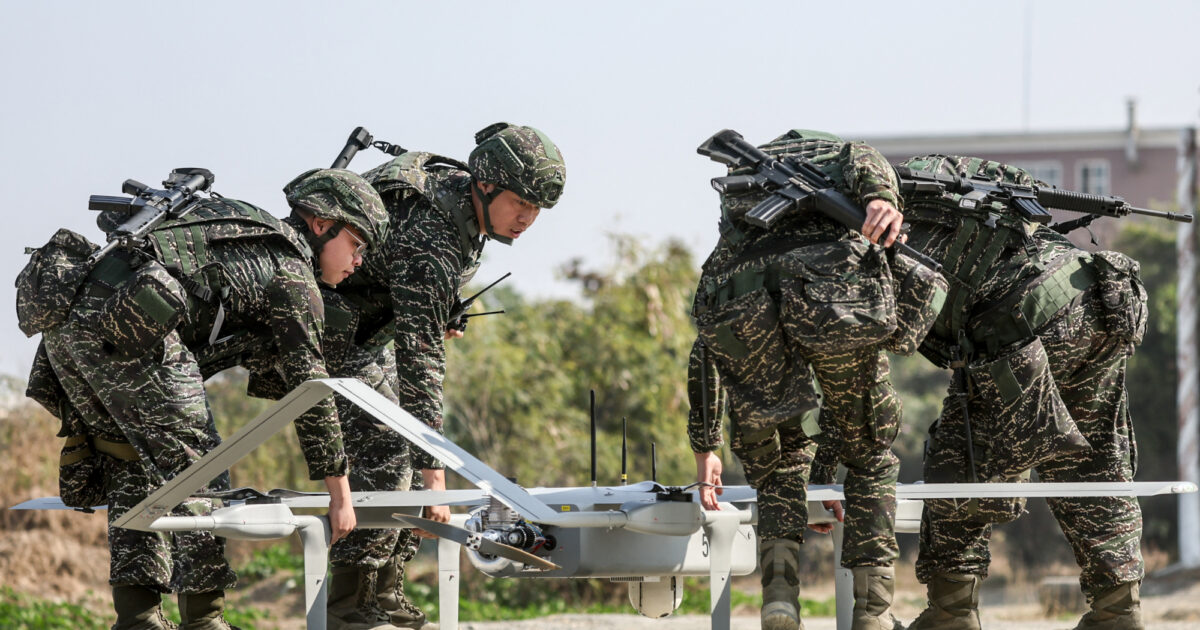
Furthermore, raw inventory numbers present a stark operational challenge. Following a recent U.S. sale to Taiwan of more than 1,000 kamikaze drones—including Anduril’s Altius-600M and AeroVironment’s Switchblade-300 systems—naval analysts note that stockpiles could vanish within days. As usni.org, Ukrainian forces fighting along a 600-mile front line expend approximately 10,000 drones per month, suggesting that a modern high-intensity strait conflict would burn through thousands of unmanned systems daily.
Bridging Gaps Across the Island Chain
As defense contractors continue exploratory talks in Tokyo and maintain cautious dialogues regarding Taiwan, the broader question remains whether industrial production can scale fast enough to turn concept into reality before geopolitical tensions boil over.

Keep reading

Western European Societies Unwilling to Fight Russia Directly
As military tensions rise, Eastern European governments face an increasingly stark contradiction as they manage security guarantees, the...

Global Theatrical and Digital Release Announced for NAZA
The acclaimed documentary NAZA is scheduled for theatrical distribution in cinemas across more than 50 countries, followed by...

US Mortgage Rates Top 7% For First Time in 20 Months
U.S. mortgage rates have climbed above 7 percent for the first time in 20 months, driven by surging...

Ethiopia And Tigray Accuse Each Other Of New Offensives Shattering Peace Deal
The escalation shatters the 2022 peace agreement that ended a devastating two-year conflict in the northern Tigray region.