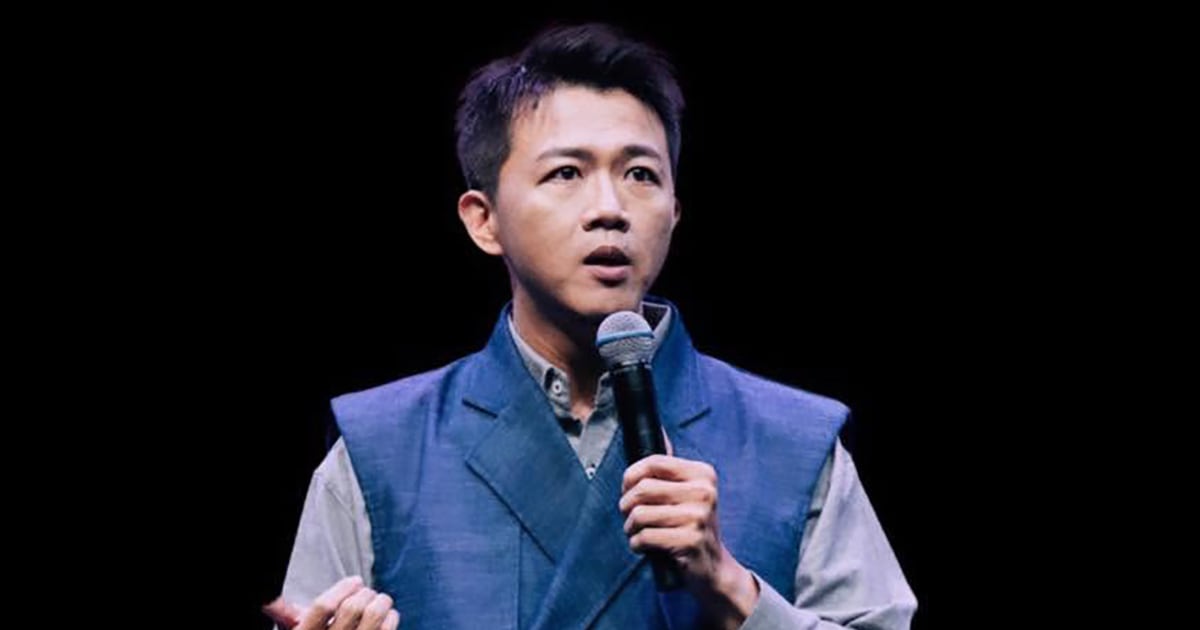
Taiwanese comedian Huang Yi-hao is playing to full houses at Taipei’s Two Three Comedy Club weeks after prosecutors said a staged car crash aimed to break his limbs and silence his act.
Prosecutors charged five men in October with deliberately crashing into Huang’s vehicle on orders from a handler in China who used the alias “K” and paid about 450,000 New Taiwan dollars ($13,900) to injure him badly enough that he could no longer perform. Huang escaped with light injuries. His solo shows have sold out since the attack, and he now performs with a police escort.
- Prosecutors say five men were paid ~$13,900 to stage a crash and disable Huang Yi-hao
- Huang links the attack to a routine mocking Xi Jinping and comparing him to Winnie the Pooh
- Taiwan labels the case “transnational repression”; Beijing calls it a DPP fabrication
- Huang’s solo shows are selling out; he performs under police protection
Chiu Shao-Chou, commissioner of Taiwan’s Criminal Investigation Bureau, described a pattern of escalating harassment: verbal abuse, paint-throwing, property damage, and now a staged car crash. “There's a trend of increasing severity, and that's something we have to take seriously,” he said. Authorities treat such cases as national-level threats and coordinate with immigration, the coast guard, and U.S. agencies on similar incidents involving Taiwanese nationals overseas.
China’s Taiwan Affairs Office dismissed the “transnational repression” label as a lie fabricated by Taiwan’s ruling Democratic Progressive Party to promote independence and win elections. Regarding the Yaita assault, the office said the Hong Kong man acted out of “righteous indignation” and called it an ordinary public-security incident.

It denied any involvement in the attack on Huang. President Lai Ching-te countered that transnational repression is a tool to erode trust in Taiwan’s democracy, citing disinformation, social division, and incitement of group hatred alongside direct election interference.
The Mainland Affairs Council, which handles cross-strait relations, said it would seek to strengthen the Anti-Infiltration Act to punish such acts. Chiu said catching perpetrators before they leave Taiwan is a top priority and that police will also investigate Taiwanese collaborators.
Matt Brazil, a fellow at the Jamestown Foundation in Washington, called the recent attacks a “big step beyond” the usual pressure of naval patrols and warplane incursions.
He warned that anyone in Taiwan who speaks out against Xi and the Chinese Communist Party could be a target. “(It) shows that Beijing may be turning toward a more militant stance in acting against its critics (in Taiwan). If successful, the party may expand such tactics elsewhere,” he said.
Huang performs at Two Three Comedy Club on Linsen North Road in Taipei’s Zhongshan District. Since the attack, his shows have sold out. “Xi Jinping is my comedy muse,” Huang said, adding that he feels no hatred toward his attacker. He has no plans to perform in China and knows of other comedians who had shows canceled in China and Taiwan after collaborating with him.
The question now is whether the strengthened Anti-Infiltration Act will deter future operations or simply push them further underground — and whether the sellout crowds represent defiance, curiosity, or both.
Keep reading
NYT: American Mahjong Eclipses Chinese Origins, Sparking Cultural Friction
The rising popularity of American mahjong has sparked cultural friction as the game—which features distinct rules and tiles—increasingly...

Trump, Xi, and Putin Held Trilateral Talks in Shenzhen on Thursday
Donald Trump, Xi Jinping, and Vladimir Putin held historic trilateral talks in Shenzhen, China, on the sidelines of...

“But right now, I would do it again, even tomorrow,” said Ismael Ox, the Para-taekwondo athlete
But right now, I would do it again, even tomorrow, said Ismael Ox, the Para-taekwondo athlete who lost...

Rutte Calls Russian Missiles in Poland a Grave Violation
Two Russian Kh-101 cruise missiles and a jet-powered drone crashed inside Poland early Friday during Moscow's largest aerial...