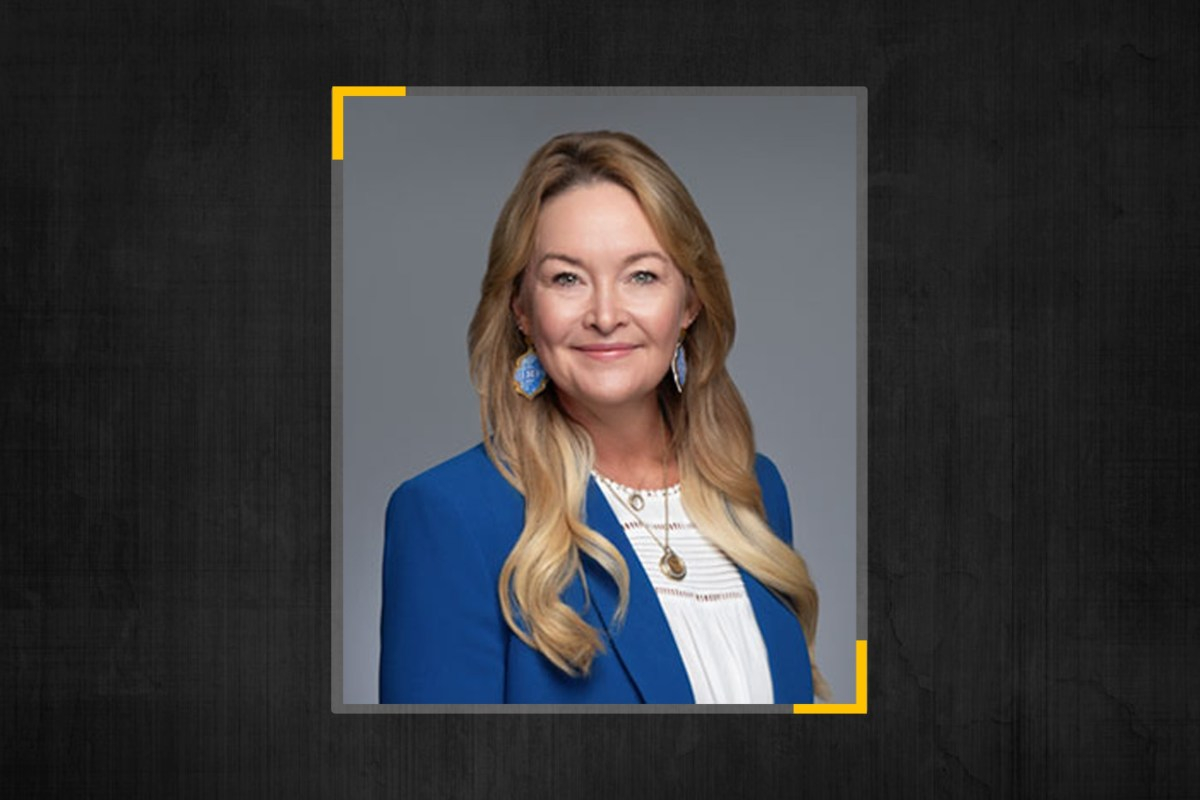
Former Texas Juvenile Justice Department Executive Director Shandra Carter resigned on Oct. 23 after being asked to “resign or be terminated,” following scrutiny over $34,000 in state-paid international travel that included a $900-a-night stay at an ABBA-themed luxury hotel in Stockholm, records obtained by The Texas Tribune show.
Carter, who led the agency since 2022 on a $237,802 salary, stepped down about two months after the Tribune began asking questions about her travel. On the day she resigned, she messaged a colleague that she had to decide that day whether to resign or be fired, though she did not say who issued the directive, Houston Public Media reported.
In a letter to Board Chair Manny Ramirez and the governor’s office the same day, she wrote that “concerns regarding this travel may have contributed substantially to the decisions about my employment.”
Europe trip cost $9,000 with luxury hotel stays
The 12-day Europe trip in June cost Texas taxpayers about $9,000. Carter stayed three nights at the Backstage Hotel Stockholm, which averages $900 a night — roughly three times the $293 nightly maximum the U.S. State Department sets for federal employees in that city, Houston Public Media reported.
She flew into Copenhagen two days early “to acclimate to time difference and be better prepared,” her itinerary reads, spending about $1,200 at a 5-star hotel with a “junglefish pool” before taking an early-morning train to Växjö, Sweden, where she provided training at a forensic psychiatric hospital.
Five days later, she traveled to Helsinki, Finland, for an International Association of Forensic Mental Health Services conference, accompanied by Deputy Executive Director Evan Norton. Norton’s travel cost about $6,000, about a third less than Carter’s.
Carter took an overnight ferry on the Tallink Silja Line, selecting the third-most expensive “Commodore Balcony” cabin at roughly $1,300. She told the Tribune she personally upgraded and only asked the state to reimburse $421, “consistent with the amount I identified in writing before the trip.”
Carter claimed maximum meal allowances daily
Carter claimed the maximum daily meal allowance for every day of the Europe trip, totaling about $1,700, including on conference days when lunch was provided and on the ferry that included breakfast. Norton claimed only his actual meal costs, which totaled less than $800.
The Comptroller’s Office rules state the maximum should not be claimed unless actual costs meet or exceed it. Carter signed vouchers certifying the amounts were her actual expenses but told the Tribune she did not recall how they were calculated and that a staff member prepared the paperwork with guidance from Emily Anderson, the deputy director of finance and operations.
Internal messages show Anderson approved the Stockholm hotel after Carter said she could only find hostels with shared bathrooms as alternatives. “If this is the only lodging you can find that is not hostel style — it’s not reasonable to make you pay for a portion of the expense,” Anderson wrote in April.
Carter also consulted ChatGPT to identify the cheapest route to Helsinki; the chatbot advised a train from Växjö to Stockholm then a ferry, but she encountered peak-season pricing.
“I ended up with a more expensive room,” she told a staffer in a May 14 Microsoft Teams message. “Girl, I am too old for sharing a bathroom with strangers! But yes, please make me audit proof!” Records show she never reimbursed the state.
Australia trip informed new juvenile facility design
Carter also traveled to Australia for six days in September for about $8,800, part of nearly $34,000 in state-paid international travel between July 2025 and September 2026. That trip, along with visits to South Dakota, Oregon, and Nebraska, was intended to inform the planning and design of two new juvenile facilities in Brazoria and Ellis counties — a combined $304 million capital investment funded by the Legislature in 2023.
The agency broke ground last month; the facilities are set to add about 200 beds by 2029. Carter told the board in August that the executive team had spent “literally almost 3,000 hours trying to figure out the perfect design.”
Travel scrutiny follows staffing crisis and lockdown
The travel scrutiny came as the department grappled with chronic staffing shortages due in part to “insufficient pay” and a multiday lockdown of youth facilities Carter imposed after an assault against a juvenile correctional officer. The department manages five youth prisons housing about 740 children and three reentry centers.
Interim Executive Director Sean Grove has ordered a review of travel policies and asked the Office of Internal Audit to review executive staff travel. “These reviews will strengthen oversight and improve processes regarding agency travel,” spokesperson McKenzie Garrett said. Garrett added the trips produced “meaningful professional relationships and knowledge-sharing opportunities” and led to Texas being asked to help lead an international special interest group on juvenile justice rehabilitation.
Governor’s office and board response
Carter said in her resignation letter that she had informed her adviser in the governor’s office about the European travel. The governor’s office did not respond to requests for comment about what officials knew or whether they played a role in her departure. Ramirez also did not respond to a request for comment, Houston Public Media reported.
Jana Jones, the agency’s general counsel and chief ethics officer, defended Carter in a message one day before the resignation. “This is ridiculous,” Jones wrote. “We have documentation of every decision…and those were reasonably made within the context of traveling internationally. No one (especially a female) wants to have to walk down the hall to use a common bathroom…particularly in a foreign country where she is even more vulnerable to be attacked or robbed!! That is an extremely reasonable (and safe) decision.”
Texas law does not cap lodging for state employees traveling abroad and allows reimbursement of actual costs, but requires agencies to choose arrangements that are “the most cost-effective considering all relevant circumstances.” The Texas Workforce Commission, by contrast, requires its governing board to discuss and approve all foreign travel for the executive director before departure, according to a February 2026 policy.
The Tribune requested only executive staff travel details, so it remains unclear how many other staff attended the Helsinki conference or what their travel cost.
Worth a look

Kentucky Committees Weigh Resilience Office, Election Security, Certificate-of-Need Changes
Kentucky lawmakers are weighing a statewide resilience office, election security upgrades, and changes to certificate-of-need rules after interim...

Brandon Opens First Roundabout; Federal ARPA Funds Helped Finance It
Brandon opened its first roundabout Tuesday at the intersection of West Holly Boulevard and South River Park Avenue,...

No. 3 Florida Survives Scare vs. Milwaukee; Golden Demands Better Effort
No. 3 Florida survived a 76-67 scare against Horizon League opponent Milwaukee on Tuesday night at the O'Dome,...

Topeka Thanksgiving Openings: Dillons Until 3 p.m., Blue Moose Buffet, Free Community Meal, Restaurant & Fast-Food Hours
All Topeka Dillons locations will welcome customers until 3 p.m. on Thanksgiving, though their pharmacies will remain shut....