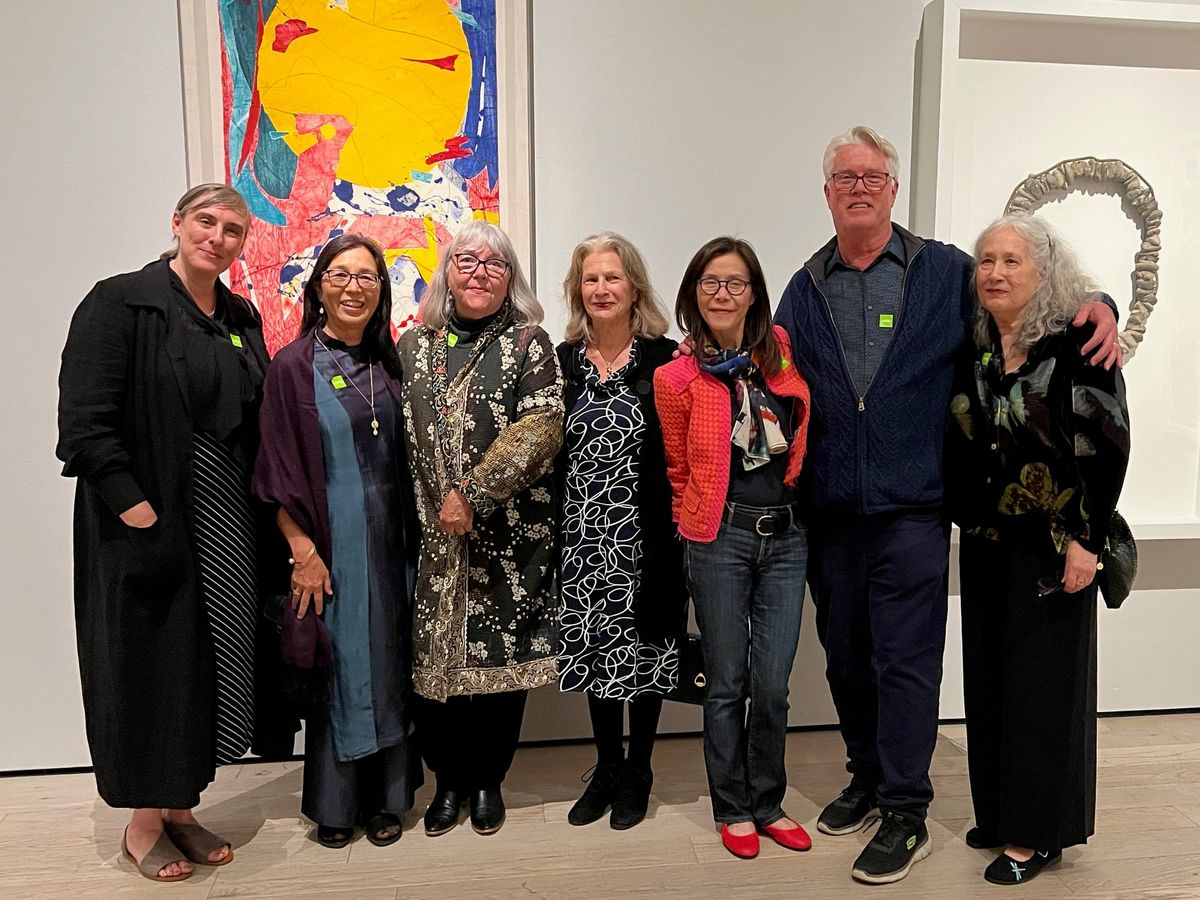
“Choosing trustees can be difficult, and they may not necessarily be family members,” said Joe Oliveira, sole trustee of the Nathan Oliveira Estate.
The predicted $80+ trillion Great Wealth Transfer is colliding with the opaque mechanics of visual-art estates, where vague instructions and family dynamics routinely stall legacy planning for years.
The $80+ Trillion Catalyst
The scale of the coming intergenerational handoff — $80+ trillion moving over two decades — has turned artist estates from niche legal curiosities into a systemic wealth-management challenge. Unlike financial portfolios, these assets carry dual valuation: IRS fair-market numbers and irreplaceable cultural capital. The Sam Francis case remains the cautionary benchmark.
When he died in 1994, the estate comprised over 1,000 artworks, multiple businesses, extensive real estate, ten cars, and a herd of cattle. His will funded a “Sam Francis Museum” but defined neither its mission nor its operations. With four children from five marriages, the resulting disputes consumed nearly five years before the Sam Francis Foundation stabilized.
The Bottom Line
- Probate avoidance is non-negotiable: A revocable trust moves assets to heirs in months, not years, and shields inventory details from public record.
- Inventory precedes strategy: Most heirs have no catalog; without one, galleries, appraisers, and the IRS will not engage.
- Structure dictates tax status: An artist-endowed foundation (AEF) is a tax-exempt charitable entity; the estate itself is not — conflating them triggers compliance failures.
Inventory: The Hidden Liquidity Trap
“In my experience, most heirs have no idea what they have,” said Stuart A. Chase, former museum director and estate advisor. “You can’t do anything without a catalog. You can’t approach anyone.”
Chase recommends CatalogIt, a low-cost digital tool that captures works, ephemera, and provenance in a single exportable file. The gap between physical reality and documented record is where value evaporates. Uncataloged works cannot be insured, appraised, or placed in museum collections. They become illiquid by default.
Appraisal: The IRS Gatekeeper
A qualified appraisal — detailed reports covering artist, title, date, dimensions, medium, provenance, condition, and valuation methodology — is the prerequisite for filing Form 706 and establishing stepped-up cost basis for heirs. Deborah Gerstler Spanierman, certified appraiser and art advisor, stresses engaging “qualified and trustworthy allied professionals: appraisers, archivists, estate and foundation attorneys to handle the estate tax filing.” The IRS rejects generic valuations; penalties for substantial undervaluation reach 40 percent of the underpayment.
Estate vs. Foundation: A Structural Fault Line
Christine Vincent, managing director of the Aspen Institute’s Artist-Endowed Foundation Initiative, draws a hard line: “Artists’ estates and Artist-Endowed Foundations (AEFs) are entirely different things. Artists’ estates are typically operated by private individuals and, as such, are not tax-exempt charitable entities. AEFs are tax-exempt charitable organizations with a mission to benefit the general public.”
An estate may evolve into an AEF under a surviving spouse’s plan, but an AEF can never revert to a private estate. Foundations typically hold copyright, trademark, and personality rights — assets that generate licensing revenue to fund public programs.
Storage, Conservation, and the Cost of Neglect
“Know how to properly store works on canvas and paper in temperature-controlled spaces, and insure them to avoid any future or potential loss,” said Jamieson Grillo, sole trustee of the Estate of John Grillo.
Conservation triage is immediate: identify works needing urgent stabilization, those requiring future treatment, and — critically — those that should be deaccessioned or destroyed. Every conservation report must travel with the work to galleries and auction houses; gaps in the chain of custody depress hammer prices.
Gallery Power: Organization as Currency
Galleries with pre-existing relationships often seek continuation, but estates shopping for new representation face a seller’s market.
Hollis Taggart, gallery owner, frames the dynamic bluntly: "The more organized an estate is, the more likely a gallery will be to take on the heavy lifting of representing that estate." He demands a clear vision and a complete inventory list upfront — "so the gallery knows right up front what the estate holdings are, and how big a project is involved." Disorganized estates lose negotiating power on commission splits, exhibition schedules, and primary-market placement.
Museum Placement: The Gifting Exhibition Model
Museums reject donations routinely — storage constraints and curatorial fit limit acceptance. Patti Smith, art collections manager at Stephenson Ceramics Studio, advocates a “gifting exhibition” strategy. She developed one for the Richard Wilt estate (1915–1981), documenting a cohesive body of work, displaying it commercially, then inviting target institutions to select pieces before the remainder went to market.
“Since there was demand for purchasing the work, once the museums made their selections, the work was offered up for sale, and 100% of the proceeds went to the Richard Wilt Foundation at the University of Michigan Stamps School of Art and Design,” she said. The model converts curatorial access into liquidity for the charitable vehicle.
Digital Presence: The Low-Cost Legacy Multiplier
A baseline website — biography, timeline, image gallery, contact — serves appraisers, dealers, and researchers while surfacing lost works. Mary Clare McKinley of the Richard Diebenkorn Foundation treats Instagram as a research distribution channel: “When estates and foundations harness the power of social media, it can be a brilliant tool for education, legacy and community building.”
The foundation’s posts highlight scholar discoveries, support museum shows, surface archival finds, and propose new visual connections. The marginal cost is near zero; the reach exceeds any printed catalogue raisonné.
Image Rights: Revenue vs. Access
The Center for Art Law frames the tension: estates must “protect an artist’s work by exercising exclusive rights over them, and to disseminate their artwork to the public to establish a lasting legacy.” Licensing agencies like Artists Rights Society manage clearance and enforcement. Recently, some estates have relaxed enforcement, calculating that broad digital visibility outweighs marginal licensing fees — a strategic pivot with no settled precedent.
Auction Benchmarks: Public Price Discovery
Auction results remain the only transparent price signals. Wendy Battleson, senior vice president at Bonhams, sets the threshold: “Auction houses, in general, are looking for an estate with an established record of sales at relatively high values (five to six figures minimum), ideally sold publicly. We also look at the amount of inventory available in order to continue to tell the artist’s story over a period of time.”
Private dealer sales leave no comparable trail; estates without public benchmarks negotiate in the dark.
Sam Francis’s five-year settlement is the baseline, not the outlier. The wealth transfer arrives whether the catalog is ready or not.
Disclaimer: The information provided in this article is for educational and market analysis purposes only and does not constitute financial, investment, or legal advice. Always consult with a certified financial professional before making investment decisions.
Worth a look

Kansas Needs Win Over No. 10 BYU to Keep Bowl Hopes Alive
Kansas needs a win Saturday against No. 10 BYU to keep its bowl hopes alive, The University Daily...
Eventbrite: Philadelphia Trading Card Con Set for July 23-25 With Treasure Chest Drawing, Live Breaks, Trade Night
Registration is live for the 2027 Philadelphia Trading Card Con, a three-day event scheduled for July 23 through...
South Carolina Department of Revenue Publishes 2027 County Tiers; Six Counties Shift
South Carolina's Department of Revenue published the 2027 county tier designations on Friday reshuffling the incentive map for...

Court Halts Army Plan to Detonate Five Tons of Bomb-Making Material in Iowa
A federal appeals court halted the U.S. Army’s plan to blow up five tons of unstable bomb-making material...