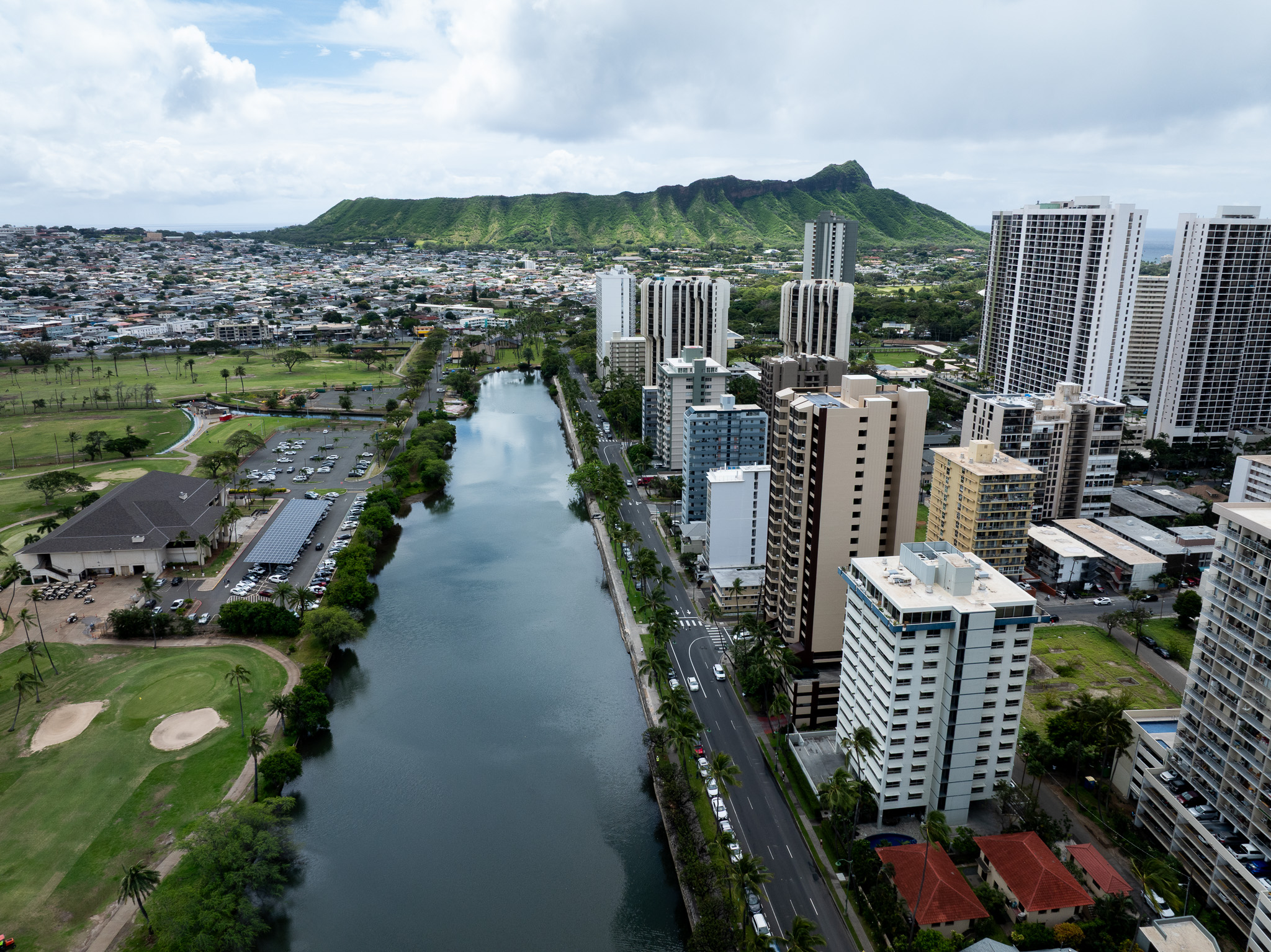
Honolulu should treat the Ala Wai Canal not as a single flood-control project, but as an integrated watershed and canal modernization project, civilbeat.org reported. Built in the 1920s to drain Waikīkī’s wetlands and make development possible, the waterway was never originally designed as a modern flood-control system.
Nearly a century later, the surrounding area has changed beyond recognition. Waikīkī functions as a major tourism engine, Mōʻiliʻili and McCully are heavily urbanized districts, and stormwater running off the Ko‘olau slopes still has to find an outlet when intense rains hit the island. The most pressing danger is severe flood risk.
The Single-Outlet Vulnerability
A major storm in the Ala Wai watershed could channel water rapidly through narrow stream channels straight into the canal. Yet the waterway features only one ocean outlet, located at the Ala Wai Boat Harbor. A second outlet originally contemplated during the canal’s early planning stages was never completed, leaving the entire system with limited operational flexibility when large volumes of water arrive quickly.
These risks are historical and empirical rather than hypothetical. The 2004 Mānoa flood damaged the University of Hawaiʻi campus and destroyed irreplaceable library materials. Just two years later, a major sewer line rupture triggered a 2006 sewage spill that sent millions of gallons of wastewater pouring directly into the canal.
King tides have also exposed a geometric flaw in the waterway’s design. The mauka side of the canal sits lower than the makai side, leaving Mōʻiliʻili and nearby communities far more vulnerable to overtopping than Waikīkī.

Evaluating the U.S. Army Corps of Engineers Plan
For more than two decades, the U.S. Army Corps of Engineers has studied the Ala Wai flood problem. Its current flood-risk strategy relies heavily on structural floodwalls, including barriers around the canal itself, selected upstream locations, and the Ala Wai Golf Course detention basin. That plan is data-driven, backed by extensive hydrological modeling, and reflects the practical reality that structural protection is necessary.
However, floodwalls alone fail to resolve the broader challenges facing the watershed. While they may mitigate flood damage, they do not address chronic water quality issues, sedimentation, long-term maintenance needs, aesthetic impacts, or the structural vulnerability of relying on a single ocean outlet. Furthermore, the proposed walls have drawn community concerns regarding obstructed views, restricted public access, impacts on canoe paddling, and the risk of shifting flood dangers from one neighborhood to another.
Toward an Integrated Watershed Strategy
Addressing the full scope of the hazard requires a comprehensive, multi-layered approach. First, engineers must redesign floodwalls to account for Mōʻiliʻili’s specific exposure, raising the mauka canal bank where hydraulic analysis warrants it and implementing targeted upstream walls at recognized bottlenecks such as Woodlawn Drive.
Second, officials should seriously evaluate constructing a second canal outlet near Kapahulu Avenue. Reviving this concept in modern form would restore lost operational redundancy, help move water out faster during severe storms, and allow sections of the existing canal to be isolated and upgraded during future maintenance without shutting down the entire drainage network.
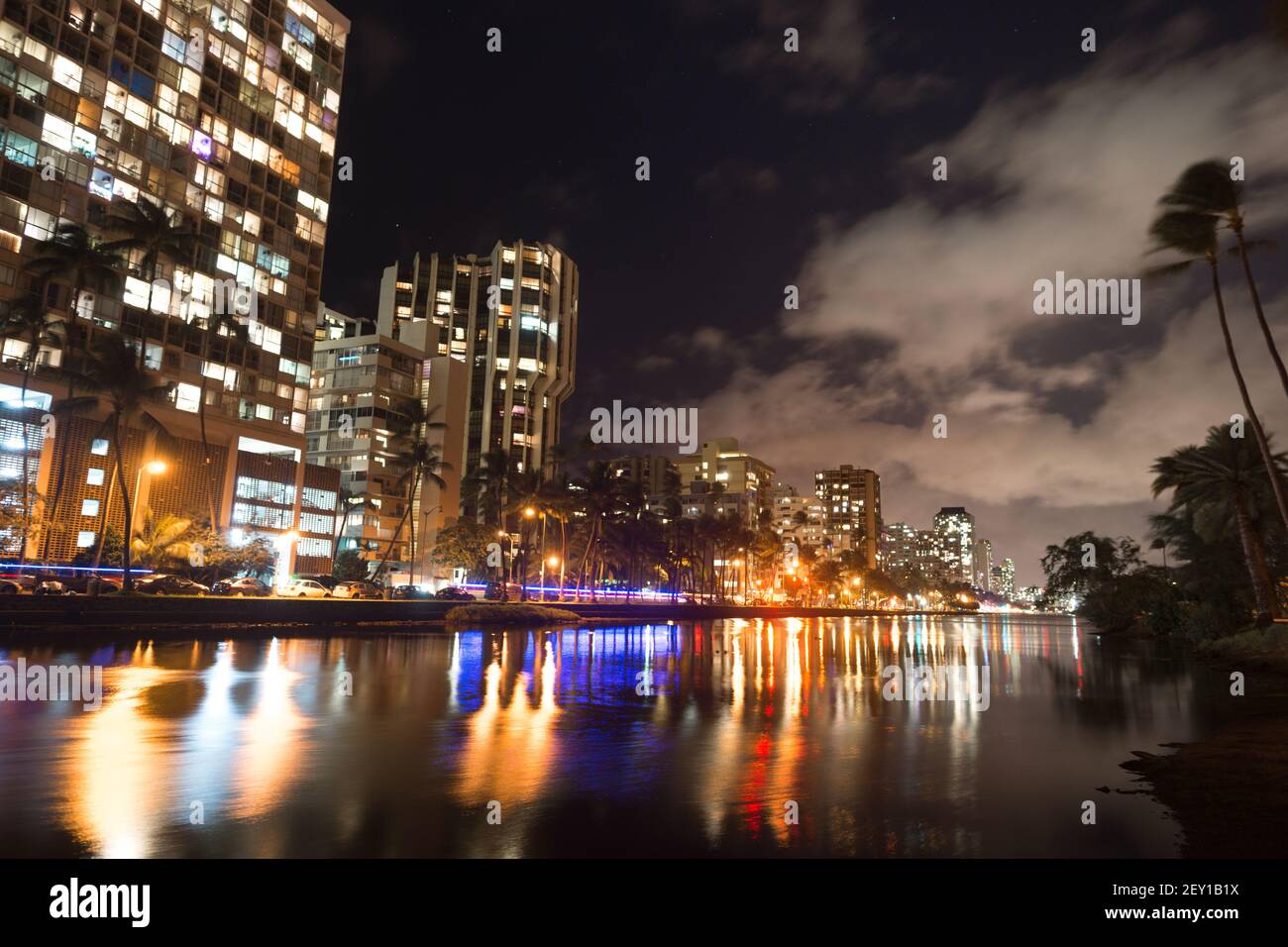
Third, structural modernization of the aging canal walls must accompany drainage improvements. Once a second outlet provides isolation capability through cofferdams, contractors could excavate accumulated sediment, repair or replace degraded walls, and line the bottom with stable surfaces like concrete to reduce the frequency of expensive maintenance dredging.
Fourth, flood mitigation must link directly with water quality restoration. The Ala Wai carries sediment, nutrients, bacteria, and debris toward the ocean daily. Biological interventions such as the Genki Ala Wai Project—which utilizes “Genki Balls” containing beneficial microorganisms to reduce sludge—deserve stable scientific monitoring and formal support, building on volunteer efforts seen as recently as May 2024 when local participants welcomed members of the Haneda Malama Project from Japan Airport Building Co. Ltd.
Additionally, upper watershed management must be treated as critical infrastructure.
Taxpayers face a stark comparison: the cost of proactive, comprehensive investment versus the catastrophic economic disruption of a severe flood across Waikīkī, Mōʻiliʻili, McCully, and Mānoa.
Keep reading
As Above, So Below Distillery | Santa Fe Spirits – New Mexico Magazine
Magic, Botanicals, and High-Rye Bourbon in Santa Fe Caley Shoemaker never expected a surplus of neighborhood fruit to...

Amick Farms expands South Carolina footprint with new Edgefield County operations
Amick Farms Invests $54.78 Million to Build Trenton Hatchery Amick Farms is expanding its South Carolina footprint with...

Log in | Nevada Portal
A Centralized Digital Hub for Case Management Litigants, attorneys, and the public now have access to a centralized...

SNHU Men’s Soccer Claims NE10 Regular Season – Northeast 10 Conference
Southern New Hampshire University has secured the No. 1 seed in the Northeast 10 Men's Soccer Championship for...