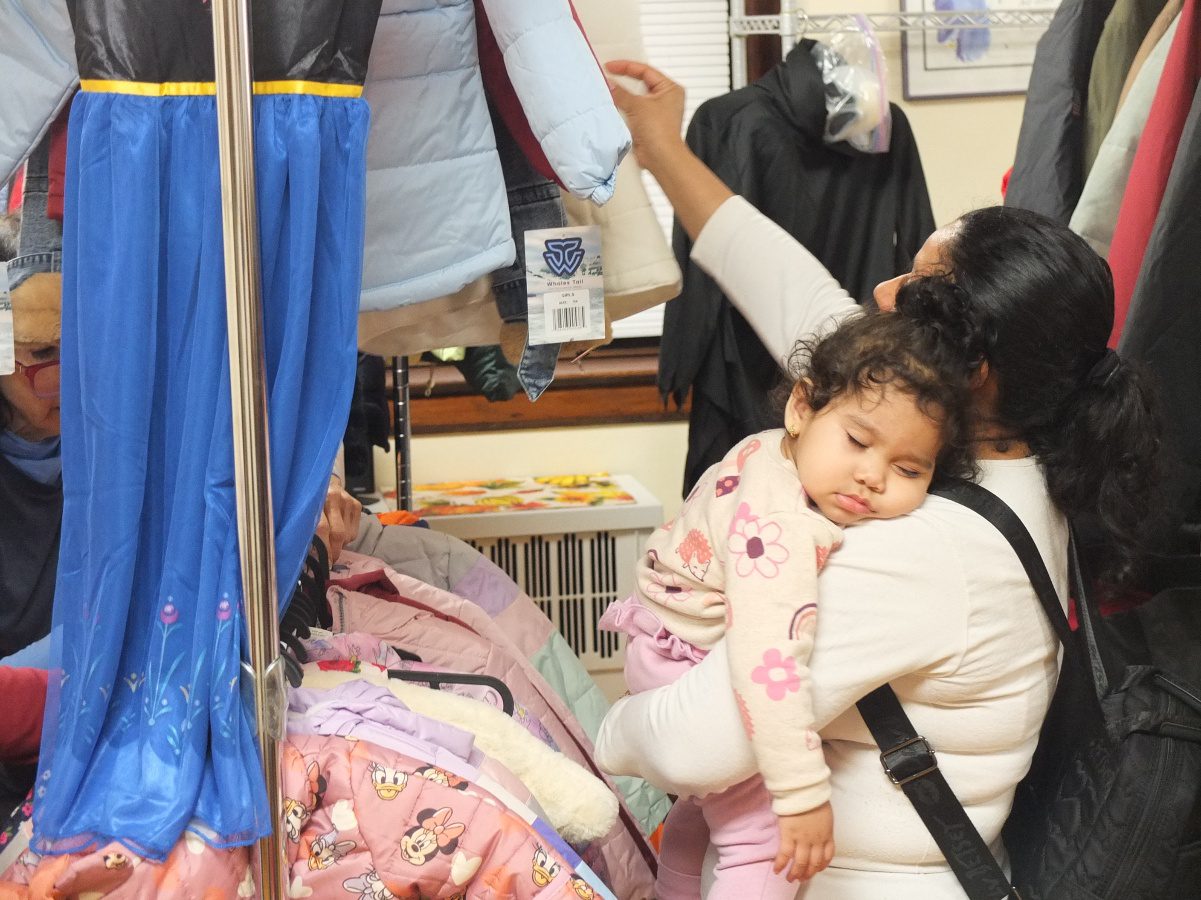
As temperatures begin to drop across northern New Jersey, a significant community effort has provided a vital safeguard for hundreds of families. The Mercy House, a ministry under the Archdiocese of Newark, successfully distributed more than 600 new and gently used winter coats during a three-day outreach event held late last month. The initiative, which spanned Jersey City, Newark, and Elizabeth, aimed to address a fundamental gap in seasonal readiness for residents facing economic hardship.
The logistics of the operation required a massive coordination of local resources. Between October 26 and October 28, the ministry facilitated a system where attendees could select one adult coat and up to two children’s coats, supplemented by essential winter accessories like hats, gloves, and scarves. For many families, the event also served as an early holiday touchpoint, with organizers providing Halloween candy and costumes to help children celebrate the season.
The Human Stakes of Seasonal Poverty
The necessity of this giveaway highlights the ongoing struggle for families who find basic winter apparel to be a significant financial hurdle. When a household is forced to choose between utility bills or groceries and the cost of quality winter clothing, the latter is frequently deferred. Cheryl A. Riley, director of The Mercy House, emphasized that the ministry routinely encounters individuals who lack even a single coat.
“This giveaway is essential because, each year, we meet people who need winter clothing, including many who don’t own a coat. Our goal is to help families stay warm throughout the winter. Anyone still in need of assistance is welcome to visit us. We’re always here to help.”
The economic reality for many in Bergen, Essex, Hudson, and Union counties—the region served by the Archdiocese—remains complex. According to data provided by the Archdiocese of Newark, the organization serves a diverse population of 1.3 million Catholics across these four counties. The Mercy House, established in 2018, has evolved from a simple clothing distribution center into a multifaceted hub that provides everything from nonperishable food and baby supplies to furniture and career-seeking support.
Volunteer Coordination and Community Infrastructure
The scale of this event was made possible through a broad coalition of institutional and individual support. While the Archdiocese provided the organizational framework, the labor was powered by a network of educational and religious institutions. Students from Seton Hall University, Mount St. Dominic Academy, and Roselle Catholic High School were on the ground, assisting community members in selecting appropriate items. Behind the scenes, volunteers from the Felician Sisters, St. John the Apostle School, and Oak Knoll School of the Holy Child managed the critical tasks of sorting and organizing the influx of donations.
This model of “civic stitching”—where university and parochial students engage directly with local poverty—is a common feature of New Jersey’s social safety net. By leveraging these partnerships, The Mercy House maintains a low-overhead operation that focuses on direct distribution rather than administrative expansion. It is a practical application of community-led welfare, serving as a buffer for families who might otherwise fall through the cracks of broader government social service programs.
Looking Ahead to the Thanksgiving Distribution
The conclusion of the coat drive marks only the beginning of the ministry’s winter preparation. As the calendar moves toward late November, the focus shifts to food security. The Mercy House has already scheduled its annual Thanksgiving Turkey Giveaway, which will follow a similar regional rotation: November 17 in Newark, November 18 in Elizabeth, and November 19 in Jersey City.
For those who missed the October distribution, the ministry maintains an open-door policy. The recurring nature of these events—moving from winter gear to holiday food support—demonstrates the predictable, cyclical nature of the needs faced by the community. While these distributions provide immediate relief, they also underscore the persistent demand for basic resources as the region enters the colder months.

Mistrial Declared in Cheyenne Attempted Murder Trial of Adrian Maggos
Mistrial Declared in Cheyenne Street Shooting Case The four-day trial of Adrian Maggos ended in a sudden, quiet...

Milwaukee Brewers face decision on William Contreras extension
William Contreras is set to earn $15.5 million in 2027, and with his contract approaching free agency in...

Six Men Indicted in Lowcountry Marijuana and Cocaine Conspiracy
Six Men Indicted in Federal Drug Conspiracy Case Federal prosecutors have unsealed a sweeping indictment against six men...

Lynchburg Nursing Home Named Top Small Facility in Virginia
The Drinkard Health Care Center in Lynchburg has secured the top spot on Newsweek’s 2027 list of America’s...