
Maryland Governor Wes Moore dedicated a new bronze memorial in Annapolis on Nov. 1, changing how the state chooses to represent its history.
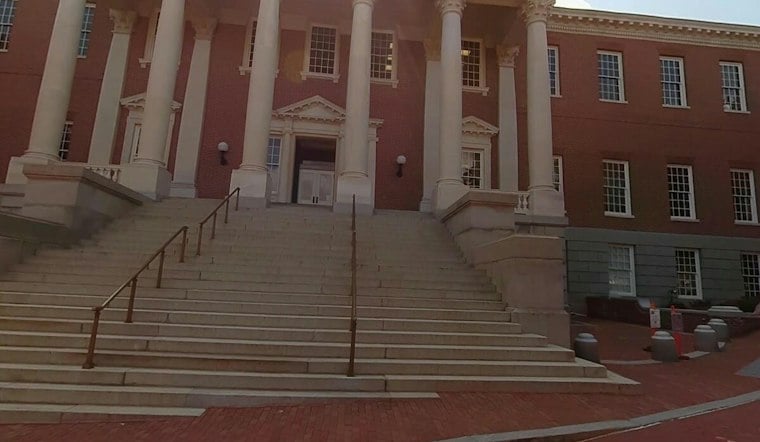
The statue, titled “Black Patriots: The Pursuit of Transcendent Liberty,” replaces a previous monument of Roger Brooke Taney, the former U.S. Supreme Court chief justice. Taney was a figure who famously argued before the Civil War that enslaved Black people could never be free citizens, a legacy that stood in direct opposition to the ideals of the nation.
The new artwork by Branly Cadet depicts Cpl. Thomas Carney carrying the wounded Capt. Perry Benson to safety, a moment of shared struggle from the American Revolution.
This change in Annapolis serves as a quiet but profound contrast to a much larger, more controversial project currently stalled just 36 miles away. While Maryland leaders used their authority to remove a symbol of exclusion, President Donald Trump is seeking to use his to build a massive 250-foot-tall triumphal arch near Arlington National Cemetery.
The scale of the proposed arch would dwarf international landmarks like the Arc de Triomphe in Paris and the Monumento a la Revolución in Mexico City.
The motivations behind the president’s arch have shifted several times. According to The Banner, the project was initially described as a personal endeavor, later framed as a tribute to the 250th anniversary of the Declaration of Independence, and eventually presented as a ceremonial entrance to the capital and a security perch for drones and snipers. On Veterans Day, the president claimed the structure was intended to honor the military.
The project remains in limbo as a judge reviews various legal challenges. These objections have been filed by veterans, Arlington County, the District of Columbia, and the Kennedy family. One of the primary concerns involves the physical impact of the structure; as designed, the arch would cast a shadow over the cemetery and the eternal flame at President John F. Kennedy’s grave.

In Annapolis, the process of replacing the Taney statue was more deliberative. Former Governor Larry Hogan removed the Taney monument in 2017 during a broader movement to address misplaced Confederate-era iconography. Following that removal, state House leaders spent years designing a replacement that reflected a more accurate historical narrative.
The presence of the Carney and Benson statue sits alongside a diverse array of Maryland history. The State House grounds host memorials to various figures, including:
- George Washington, who surrendered his military commission nearby.
- Frederick Douglass and Harriet Tubman, who fought for freedom in different eras.
- The first Black Supreme Court justice.
- Naval Academy graduates killed in the Global War on Terror.
The decision to move from a figure like Taney to the “Black Patriots” monument highlights the inherent power involved in memorialization. It is the power to decide who belongs in the American pantheon and which stories are worthy of bronze and granite.
The Carney and Benson statue captures a specific moment in 1781 known as “Acts of Agency,” where the two men worked together to survive a battlefield in South Carolina. While the new monument corrects a historical oversight by honoring 150 Black Maryland soldiers who were previously ignored, it also shows how long the state waited to acknowledge their contribution.
Whether the arch in Arlington is built or blocked, the debate reveals a fundamental tension in American civic life. Memorials are rarely just about the past; they are statements about the present and the values of those currently holding the power to build them.
- Michaela Lattimore and Brihanna Gary Earn CUNYAC Weekly Honors
- University Hospitals Opens $39 Million Cancer Center in Ohio
- Honoring Dolores Huerta: The Legacy of a Civil Rights Icon and the Power of Sí Se Puede (archyde.com)
- US judge strikes down Trump visa policy limiting foreign students to four years (newsarchyuk.com)

Michaela Lattimore and Brihanna Gary Earn CUNYAC Weekly Honors
John Jay secured its first win of the season with an 85-83 double-overtime victory against Cedar Crest, according...

University Hospitals Opens $39 Million Cancer Center in Ohio
University Hospitals opened a $39 million advanced cancer care center at University TriPoint Medical Center in Lake County...

Billings SCHEELS: Gear, Games and a Ferris Wheel Under One Roof – Billings365
At 220,000 square feet, Billings SCHEELS opened as Montana's largest all-sports store, bringing dozens of specialty shops, an...
Where Catfish Go In The Winter – World Atlas
Catfish survival during winter depends on their specific species and local water conditions. While some varieties, like blue...