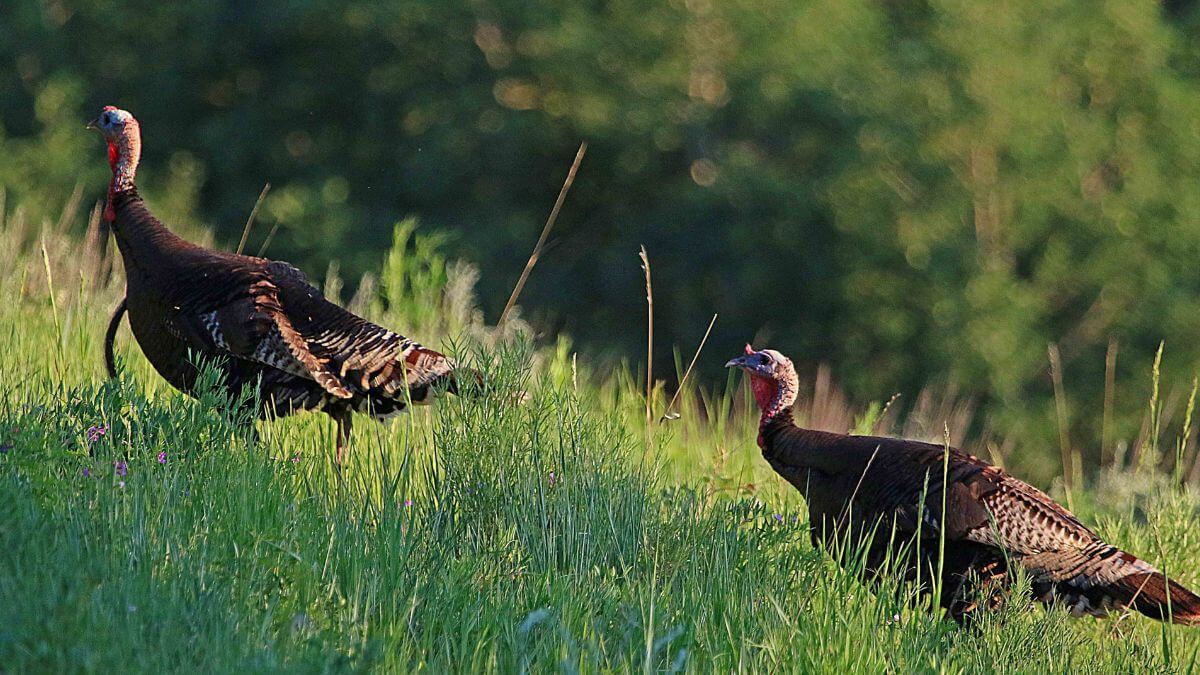
Between 25,000 and 35,000 wild turkeys now roam Utah’s foothills and farmlands, a stark contrast to the period following the arrival of European settlers when no wild turkeys could be found in the state.
Historical and archaeological evidence, including petroglyphs, pictographs, turkey bones, and blankets made from turkey feathers, shows that Native Americans and turkeys once coexisted in Utah. No one is sure what caused the disappearance of the birds prior to the arrival of early settlers.
“Based on historical and archeological evidence, it’s clear that Native Americans and turkeys coexisted in Utah,” said Heather Talley, DWR upland game coordinator.

Following a failed reintroduction effort in the 1920s, the comeback began in the 1950s when biologists with the Utah Department of Fish and Game successfully relocated Merriam’s wild turkeys from Colorado and Arizona to southern Utah.
State agencies rebuilt the population further through creative trades, such as a December 1994 swap where Utah paid Kansas 6,000 rainbow trout—costing 100 fish apiece—to receive 60 wild Rio Grande turkeys released at three sites in central Utah with the help of volunteers from the National Wild Turkey Federation. Over the years, birds were also brought in from Wyoming, Texas, South Dakota, Oklahoma, and other states.
Utah is home to two subspecies, the Rio Grande and the Merriam’s, which hybridize where both exist. Merriam’s turkeys feature whiter tail feather tips and tend to live at higher elevations, while Rio Grandes are more common, favor lower country like cottonwood river bottoms and streamside areas with oak brush, and display more tan or buff edges on their tails.
“Turkey populations have fluctuated in recent years, due to drought conditions for multiple years and then the severe winter conditions in 2022-23,” Talley said.
Fall and winter present optimal viewing periods for wildlife observers because flocks migrate toward lower elevations. Cache County’s Blacksmith Fork Canyon hosts dozens of birds at the Hardware Wildlife Management Area as one of the most accessible locations for public sightings.
Wildlife officials report that winter and spring precipitation remains vital for maintaining successful brood rearing conditions across the herds. Visitors traveling up the canyon often spot flocks along the roadway even before reaching the management facility.
It remains unconfirmed what specifically caused the original disappearance of wild turkeys from the state prior to the arrival of European settlers.
Related reading
Stover & Crouch Highlights West Texas Weather Risks and Insurance Advice
A wind-driven grass fire can run faster than six miles an hour across West Texas dry country, according...

Turkey Fryer Fire Destroys Lincoln Home; Four People, Pets to Be Relocated
A Thanksgiving Day fire sparked by turkey fryers destroyed a southeast Lincoln home, leaving four people and four...
DoorDash Says Sweet Potatoes Top Wisconsin Orders; Campbell’s Survey Names Stuffing Favorite
Sweet potatoes reign supreme in Wisconsin according to app orders, but residents say stuffing is their true favorite...

New York Comedy Club Group Rules: Deposits, Minimums, Seating
Planning a group outing to New York Comedy Club involves navigating specific club policies regarding seating, minimums, advance...