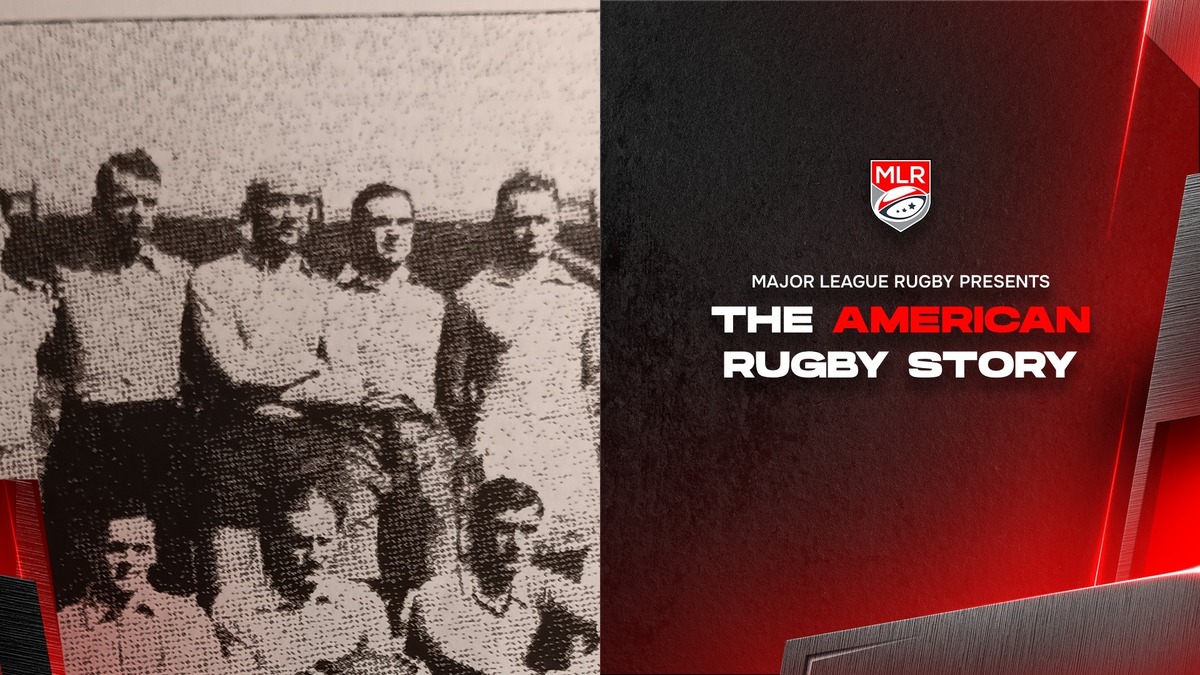
Rugby found its footing in the United States on February 4, 1930, when a group of expatriates met in Manhattan to form the New York Rugby Football Club.
This gathering at the offices of James Hunter & Co. on Water Street established the first urban organization in the country dedicated exclusively to the sport.
The club’s formation wasn’t just a local sporting event; it was the birth of a template for American rugby. By adopting a strictly amateur British model, the NYRFC set the standard for every city club that would follow in its wake. This movement connected international traditions with American sports, and the club was listed in the U.K.'s Rugby Union directory with Woodley's contact information.
“Rugby is an incurable disease. I wrote letters to the sports editors of the NY Times and the NY Herald-Tribune inviting interested parties to contact me if they wanted to play. I ordered a ball from the city's Spalding's store, which had to obtain one from London,” founder Thomas Wood said.
The struggle for players and pitch
Starting a club from scratch in 1930 required more than just enthusiasm. Albert Woodley, the club’s secretary, said that the young organization needed everything from playing members and opponents to actual grounds. The initial roster reflected the club’s international roots, drawing heavily from the British Commonwealth.
The membership in the 1930-1931 season showcased a diverse, global makeup:
| Country of Origin | Number of Members |
|---|---|
| England | 9 |
| Scotland | 6 |
| ANZAC | 5 |
| Ireland | 5 |
| USA | 3 |
| South Africa | 3 |
| Canada | 2 |
Among the most notable figures were George Pfann, a Cornell All-American and Rhodes Scholar, and P.S. De Q. Cabot, who had been capped as a scrum half for New Zealand in 1921.
The club’s first match took place in early April 1930 against the Philadelphia Marines, a team that had picked up the game while stationed in Shanghai, China. That match, held on Staten Island, drew 1,500 spectators for a spirited 0-0 draw, as noted by the New York Times.
A renaissance across the East Coast
The momentum generated by the NYRFC quickly spread to the “Big Three” universities. In 1930, rugby saw a revival at Harvard, Princeton, and Yale, largely driven by British graduate students. Harvard’s Athletic Association even granted the club permission to play matches inside Harvard Stadium that March, where they faced Princeton in front of 5,000 people. While Harvard lost that first contest 6-3, they later defeated Syracuse 14-6 in May.
Princeton’s undergraduates also utilized the sport as a spring alternative, eventually defeating both Harvard and Yale twice in 1931. One of those students, Harry Langenberg, would later go on to found the Missouri Rugby Football Union in 1933 and the St. Louis Ramblers RFC in 1948.
As the NYRFC grew, it moved through various metropolitan venues, playing at Thompson Stadium before settling at another site. By the late 1930s, the club had reached the heights of the Polo Grounds. The club’s influence solidified in 1934 when it assumed leadership of the newly formed Eastern Rugby Union.
Decades later, the spirit of these early clubs continued to evolve. In January 1973, the New York Athletic Club looked to formalize its own rugby presence, a move that had been suggested years earlier but lacked the right timing. Unlike the expatriate-heavy beginnings of the 1930s, the NYAC effort focused on building a Sunday side to accommodate players already committed to other clubs.
The challenges of maintaining a pitch remained a constant theme in the sport’s history. When the NYAC team prepared for a match in April 1973 against the Old Blue Thirds, they faced a heavy downpour. The club had to resort to manually laying sod over concrete shot putting rings to create a playable surface at Travers Island.
The NYRFC’s rise in the 1930s transformed Manhattan into a media hub for the sport, with eleven daily newspapers providing full column reporting and photography.

Update Your Contact Information and Location Preferences
Mutiny Presents is bringing Sammy Virji to Salt Lake City on March 6, according to listings on Edmtrain....
Mayor Mamdani Announces 16 Judicial Appointments to NYC Criminal and Family Courts
Mayor Zohran Kwame Mamdani announced 16 judicial appointments and reappointments to New York City’s Criminal and Family Courts...

Vermont Minimum Wage to Increase by 49 Cents in January
Vermont’s minimum wage floor is set to shift upward on January 1, moving from $14.42 to $14.91 per...

Student Writer Shares Experience with Imposter Syndrome
In a recent column for the Her Campus at Northeastern chapter, a student writer recounts her personal transition...