
Community Committee for Social Action launched picket lines Dec. 19, 1958, at Kline’s, Jones, Peck’s, Macy’s and Emery, Bird, Thayer.
The Twin Citians, a club of Black women professionals founded in 1943, had limited its civic work to “the discretion of the membership,” according to its constitution.
That changed after Gladys Twine, a 31-year-old elementary teacher, kept raising the humiliation of being barred from department store tearooms. “We got accustomed to being segregated and we just accepted it,” Twine told The Kansas City Star in 1994. “I didn’t want to accept (being segregated) any longer.”
Ruth Kerford, the club president, was radicalized when her young daughter Lisa cried for food at Macy’s and Kerford had to take her across the street to a dime-store lunch counter where the child ate standing up.
“The only way that Ruth could get food for the child was to take her from Macy’s across the street to Kresge’s or Woolworths and buy a hamburger or a hot dog, and the kid would have to stand up and eat,” recalled Fletcher Daniels, a CCSA organizer, in a 1976 interview.
In September 1958, Kerford tested Macy’s tearoom herself and was refused service. The CCSA sent letters to all five store managers and printed protest stickers for charge-account bills; 500 letters reached the stores. Management at Peck’s and Macy’s each said they would integrate only if the other stores did the same. The president of Jones Store told a CCSA delegation, “We know that you’re gonna raise sand for a little while, but it’s typical of your people to raise sand for a while and then it’ll die out.”
The CCSA voted to boycott. Handbills read, “They stopped riding in Montgomery. Let’s stop buying in Kansas City.” Picketing began Dec. 19, 1958, in temperatures that fell to five degrees above zero. “Long underwear was the thing,” said Sylvia Gaitan, who was five at the time and the daughter of charter member Janet Kaiser. Julia Hill, later the first woman elected president of the Kansas City NAACP, led the picketing committee.
Black shoppers redirected spending to Sears, Roebuck and smaller retailers. “My mother and father informed us that all of our clothes were going to come from Sears and Roebuck,” said Pamela Denton, who was 12 at the time. Franklin’s father shuttled pickets from Ebenezer AME Church in a six-passenger Cadillac. The Kansas City Call published a weekly “CCSA Honor Roll” naming participants and donors, and noted the Gates Bar-B-Q station wagon ferrying volunteers.
William Gremley of the Human Relations Commission had warned against direct action, urging private talks with the Merchants’ Association, but Rev. Arthur Marshall replied: “This group has attempted to negotiate in a fair way, and it is now necessary to take overt action.”
If they walked in Montgomery, surely we can stop buying in Kansas City,” replied Rev. Arthur Marshall, according to the Global Nonviolent Action Database at Swarthmore College and libcom.org. Mayor H. Roe Bartle met with store managers but no progress followed. Picketing continued after the holidays.
In 1943, The Twin Citians organized as a club of Black women professionals whose constitution limited civic work to “the discretion of the membership.”
Charter member and first President H. Gertrude Whitley Bardwell, a Lincoln University graduate and teacher, helped steer the club from social gatherings into direct-action leadership during the 1957–1959 desegregation campaign.
Worth a look

Seattle Among 20 Proposed U.S. Host Cities for 2031 Women’s World Cup
FIFA awarded the 2031 Women's World Cup to a four-nation bid including the United States, where Seattle is...

Southeastern Louisiana Opens 2026 Cancun Challenge vs. Northern Colorado in First Meeting
Southeastern Louisiana will open the 2026 Cancun Challenge against Northern Colorado on Tuesday at 11:30 a.m. CST at...

Sartén Kitchen & Bar Opens at New Denū Hotel & Spa in Phoenix
Sartén Kitchen & Bar opened inside the new Denū Hotel & Spa at 1 E. Adams St. in...
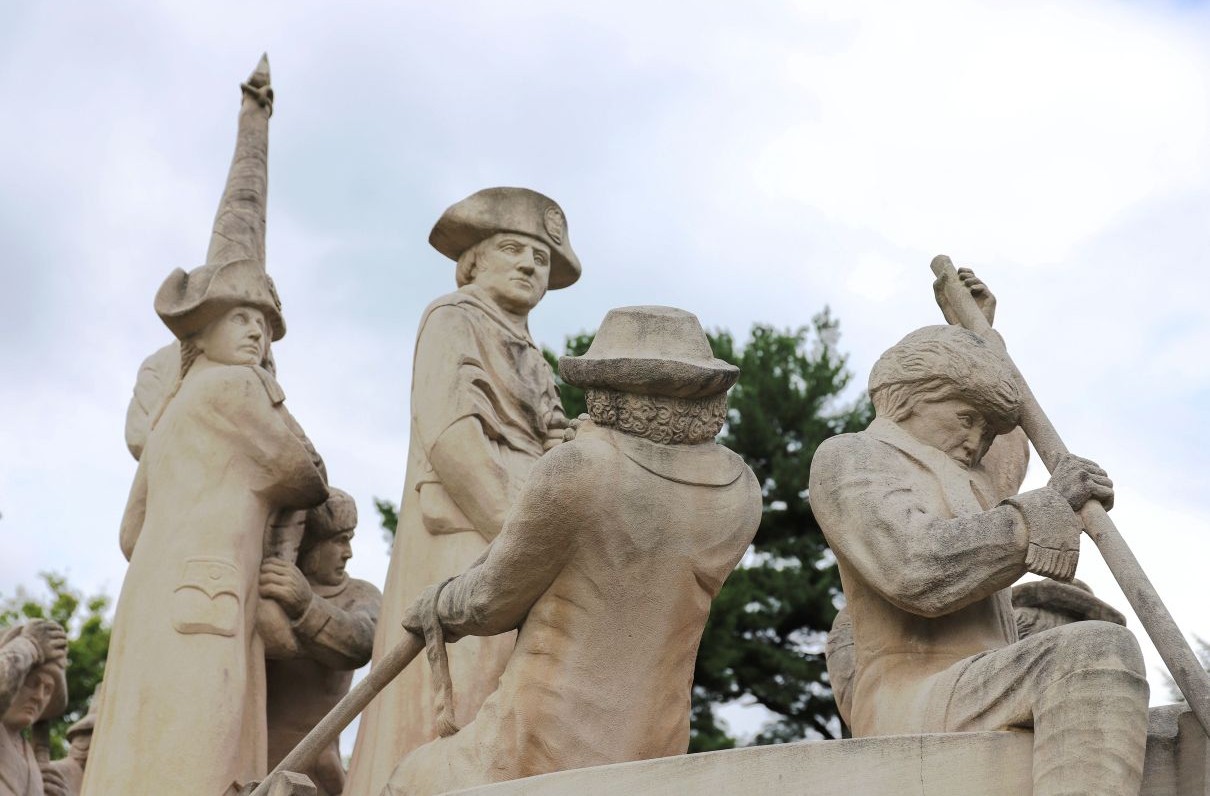
MOAA: Washington’s 1776 Delaware Crossing Reversed Revolution’s Collapse
Two hundred fifty years after the Battle of Trenton, a Military Officer magazine analysis details how Gen. George...