
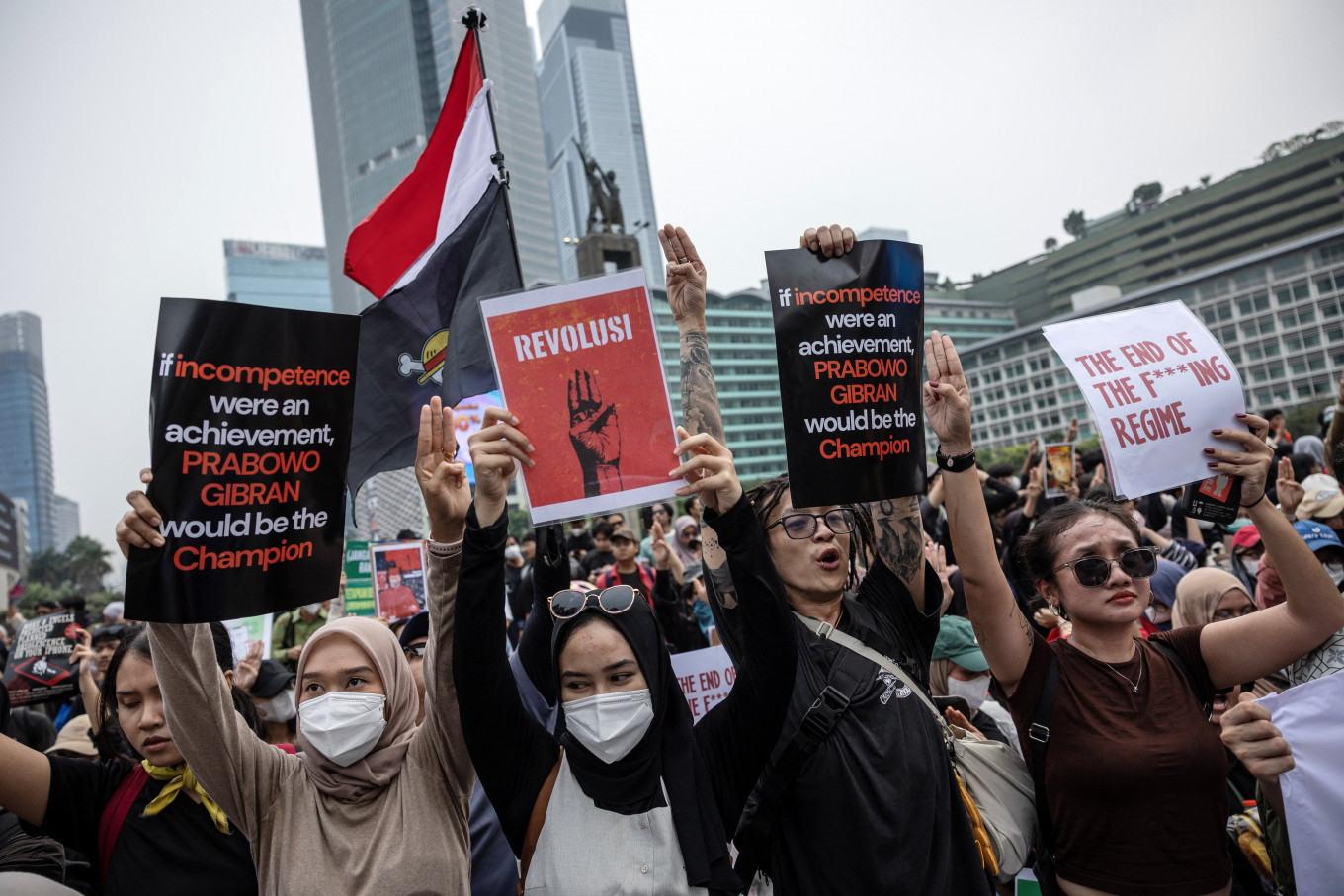
Thousands of protesters converged on Jakarta’s Bundaran HI roundabout on October 28, 2026, to demand government accountability over suffocating forest haze, rising living costs, and alleged corruption. Organized under the hashtag #IndonesiaSadar (#IndonesiaAwake), the demonstrations coincided with Youth Pledge Day, drawing a coalition of university students and civil society groups who used the rally to voice frustration with the administration of President Prabowo Subianto and Gibran Rakabuming.
The protests weren’t just a Jakarta phenomenon. Smaller rallies broke out in Yogyakarta, Padang in West Sumatra, and both Malang and Bandung. In Bandung, students from various universities staged a demonstration on October 26, lighting candles in the street as a symbol of mourning for those affected by fires in Papua, Sumatra, and Kalimantan.
The Demand for a National Disaster Declaration
At the heart of the unrest is a plea for the government to officially declare the forest and peatland fires in Sumatra and Kalimantan a national disaster. This designation is seen by protesters as a way to prompt additional resources to extinguish blazes that have raged for months.
The human cost is visceral. Yuyun Santoso, a 23-year-old student from the Islamic State University Palangkaraya who traveled from Central Kalimantan to the capital, described a landscape turned crimson. Kalimantan has turned red. It’s that bad. The air we breathe now appears red,
Santoso told reporters, questioning how the government could argue against a disaster declaration under such conditions.
The stakes extend beyond the horizon. The transboundary haze has evolved into a regional issue, raising health concerns not only within Indonesia but in neighboring countries. Vitri Sekarsari, a volunteer providing medical aid at the rally, noted that she and other volunteers provided snacks, drinks, trash bags, and medical assistance for the protesters.
A Shrinking Space for Dissent
While the fires provided the spark, the fuel for these protests is a growing sense of political alienation. Students are decrying a shrinking civic space under the Prabowo administration, claiming that government policies are increasingly serving political elites rather than the public.
This tension was visible in the tactical maneuvers at Bundaran HI. Student protesters, who had been repeatedly blocked by police in previous months—most recently in August—managed to reach the roundabout this time by splitting their forces. The symbolism was equally pointed: many students marched without their varsity jackets and held up the three-finger salute, a gesture of resistance popularized by The Hunger Games and adopted by pro-democracy movements in Myanmar and Thailand.
The government’s response has been one of measured dismissal. While spokesperson Syahganda Nainggolan stated that the administration respects demonstrations as part of democracy, the administration has repeatedly shrugged off calls for a national disaster declaration, insisting that the blazes are under control.
Economic Inequality Pressures Lower-Income Communities
The haze is not the only pressure point. For many participants, the environmental crisis is inseparable from an economic one. In Bandung, student representatives highlighted the rising prices of essential goods and economic inequality. Students specifically pointed to the increasing pressure on lower-income communities during the first two years of the Prabowo-Gibran leadership.

This economic strain is felt by the community. Vitri Sekarsari, who helped provide food and drink for protesters, explained that she and her group show support because everyone is striving for change.
The State’s Counter-Argument
The Indonesian government maintains that it is taking operational and legal steps to resolve the crisis. Syahganda Nainggolan highlighted the deployment of over 70,000 firefighting personnel and ongoing investigations into corporations and individuals suspected of being involved in starting the fires.
From the perspective of law enforcement, the priority is stability. Polri Chief General Suyudi Ario Seto and Inspector General Eddizon Isir both emphasized a “humane approach” to crowd control, with reports that police measures were designed to be preventive and preemptive to minimize disruption to public activities.
The contrast is stark: the state points to the number of boots on the ground and legal filings, while the citizens point to the red sky and the price of essential goods. One side sees a managed operational challenge; the other sees a national catastrophe ignored by a distant elite.

As dusk fell over Jakarta, the anger of the day shifted toward a solemn remembrance. Protesters sang patriotic songs and recited the Youth Pledge, reaffirming their allegiance to one motherland, one nation, and one language—even as they fight a government they believe has forgotten them.
Worth a look
Study Finds Causal Link Between More Education and Lower Dementia Risk
Staying in school for just one additional year may lower the risk of developing Alzheimer’s disease and related...

Rs 35 Crore Allegedly Missing From PNB Greater Noida Branch; 5 Employees Suspended
Customers of a Punjab National Bank (PNB) branch in Greater Noida have discovered that nearly Rs 35 crore...

From Pages to Pilates: The Rise of Romantasy-Inspired Fitness
"It wasn't just working out to do a rep; it was to gain a skill," says Charity LeBlanc....

Micheál Martin Calls for Evidence-Based Approach to Irish Unity Debate
Taoiseach Micheál Martin is calling for a new, evidence-based initiative to define the practicalities of Irish unity, arguing...