
Federal Grants Target Wyoming’s Meat Processing Bottlenecks
Three independent meat processors in Wyoming are set to receive a combined $908,216 in federal funding, a move aimed at easing the persistent logistical hurdles that have long complicated life for the state’s livestock producers. Announced Wednesday by the U.S. Department of Agriculture (USDA) Rural Development, these grants are part of a broader $57.4 million investment spanning 147 projects in 40 states, as reported by Cowboy State Daily.
For the ranchers who raise cattle and other livestock across Wyoming’s vast landscapes, the news represents more than just a capital injection for local businesses. It serves as a direct intervention in a supply chain that has historically forced many producers to transport animals long distances for processing, effectively shrinking their profit margins and limiting their ability to reach local retail markets.
Expanding Capacity at the Local Level
The funding is distributed through the USDA’s Meat and Poultry Processing Expansion Program, an initiative explicitly designed to bolster smaller, independent facilities. In Wyoming, the impact is expected to be immediate: officials project the creation of 15 new jobs and the preservation of 32 existing positions across the three recipient businesses.
Nearly $1 million in federal money will help rural Wyoming meat processors in Cody, Cheyenne and Star Valley expand production and help local ranchers get more value from their livestock. For ranchers, it means more meat processed close to home.https://t.co/cgnrgFs4tT
Wyoming Legacy Meats LLC in Cody secured the largest portion of the state’s allocation, receiving $552,906. While the company has not publicly detailed its specific plans for the funds, the scale of the award suggests a significant expansion of its operational footprint. Meanwhile, Star Valley Meat Block and Cold Storage in Thayne was awarded $186,198, and Home on the Range Meat Processing in Cheyenne received $169,112.
Investing in meat processing capacity is investing in Wyoming agriculture, our producers, and our rural economy. Strengthening our ability to process and add value to Wyoming products right here at home is a win for our state and my community. — Rep. Rachel Williams, in a statement supporting the grant applications.
Operational Efficiency and the Full Carcass
For small-scale processors, the challenge often lies in the labor-intensive nature of the work. Tylee Williams, owner of Star Valley Meat Block, noted that the grant will allow her facility to streamline processes that are still largely handled by hand. By increasing speed and efficiency, the business aims to keep costs manageable for the ranchers they serve. Since achieving USDA-inspected status six years ago, the facility has been able to operate year-round, offering ranchers a vital gateway to farmers markets and retail shelves.
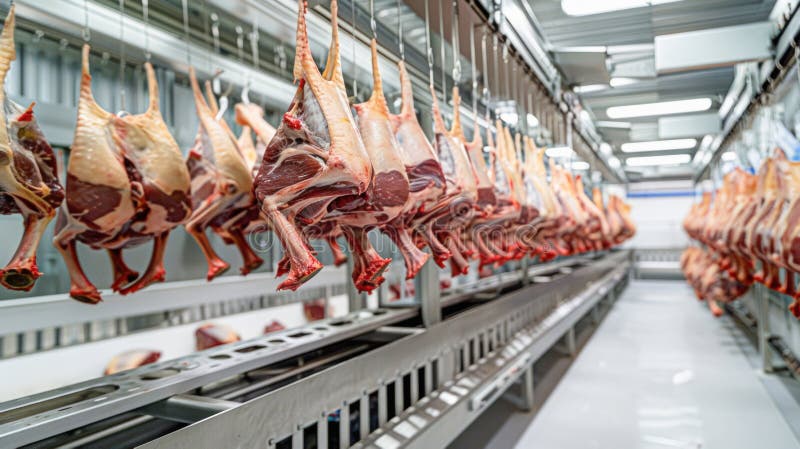
At Home on the Range Meat Processing in Cheyenne, owner Kirstan Castro is taking a different approach to expansion. Because the federal grants come with specific constraints regarding the physical footprint of a facility, Castro plans to renovate unused shop space to relocate the smokehouse. This move will alleviate the heat and humidity issues currently affecting the main processing area, creating a more sustainable work environment.
Perhaps most innovative is Castro’s plan to carve out a dedicated production area for dog treats. By diversifying into secondary products, the business helps ensure that more of the animal is utilized rather than wasted. This strategy provides ranchers with an additional revenue stream and a wider variety of products to offer their customers. Notably, Home on the Range also processes chickens, a service that remains a rarity among regional processors.
The Economic Stakes for Wyoming Ranchers
The broader goal of this USDA initiative is to decentralize the American meat supply chain, which has historically been dominated by a handful of large-scale packers. When processing options are scarce, ranchers are often at the mercy of distant facilities, bearing the costs of long-haul transportation and losing control over the final product’s value.
By keeping processing close to the pasture, these federal investments aim to help producers retain a larger share of the value of their livestock. This is particularly critical for small-to-mid-sized operations that rely on direct-to-consumer sales to sustain their businesses. As the fourth phase of the Meat and Poultry Processing Expansion Program focuses heavily on the beef industry, the emphasis remains on diversifying market access for local producers.
While these grants provide a much-needed boost, the long-term success of these independent processors will depend on their ability to scale efficiently in a market that remains highly competitive. For now, the funding offers a tangible lifeline to businesses that form the backbone of Wyoming’s rural economy, ensuring that the path from the ranch to the dinner table is shorter, more flexible, and more profitable for those who do the hard work of raising the state’s livestock.
Keep reading
- Southern Company Reports Record $2 Billion Third Quarter Profit
- Outback Steakhouse Franchisee Files for Chapter 11 Bankruptcy Amid Rising Costs
- Zelenskyy: Ukraine Operations Against Russian Oil Industry Will Continue (world-today-news.com)
- ICJ's Myanmar Judgment Nov. 19: Three Outcomes and What Each Would Order (daybreakwire.com)

Southern Company Reports Record $2 Billion Third Quarter Profit
Southern Company Profits Surge to $2 Billion as Customers Monitor Utility Costs As Alabama Power customers keep a...

Outback Steakhouse Franchisee Files for Chapter 11 Bankruptcy Amid Rising Costs
The casual dining sector is facing a sharp reality check as Cerca Trova Restaurant Group, the operator of...

West Virginia vs. Stetson: Preview, Game Info, and Betting Odds
The West Virginia Mountaineers return to the floor at Hope Coliseum this evening, looking to build on their...

ICT opens 2027 applications for WIPTA Lodi Gyari fellowships
Washington Internship Program for Tibetan Americans opens 2027 applications The International Campaign for Tibet (ICT) is now accepting...