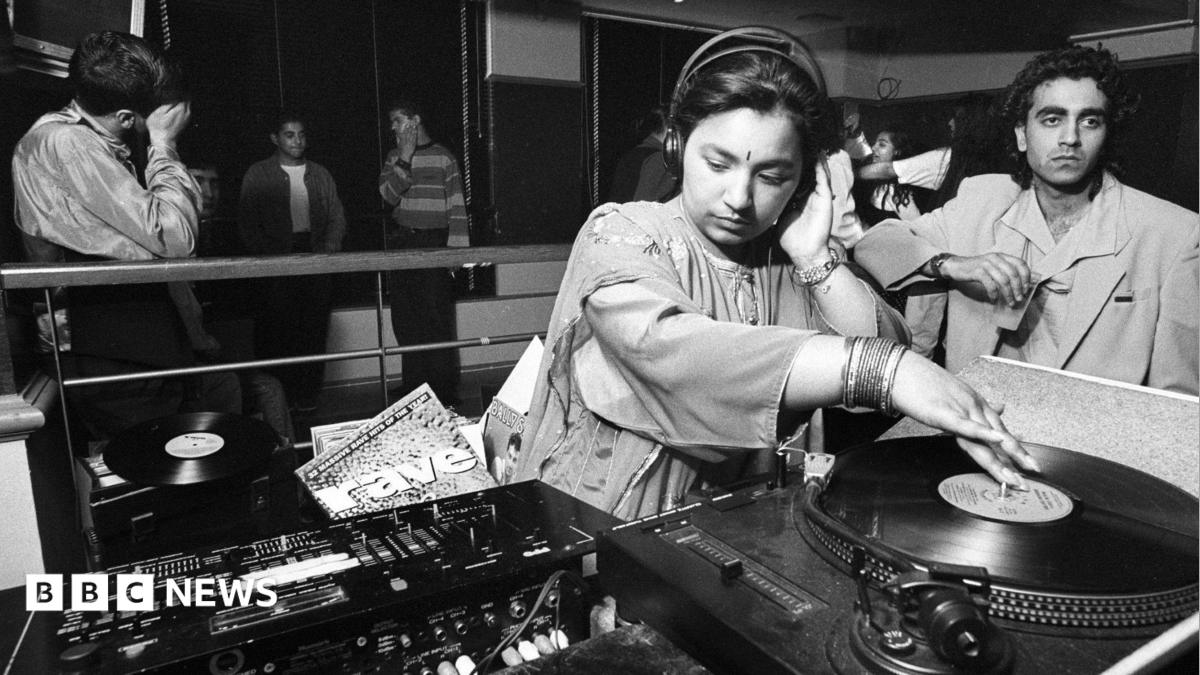
Photographer Tim Smith’s long-hidden images of Bradford’s 1990s South Asian “daytimers” dance scene are joining a major Tate Britain exhibition opening Thursday. The showcase examines a decade of creativity and rebellion, highlighting cultural shifts that developed far beyond London’s traditional media centers.
On a bright afternoon in Bradford, shoppers moved through the city center carrying bags and going about their day. Behind a nearby doorway, another side of the city pulsed to a very different rhythm. Tim Smith remembers stepping out of a small nightclub beneath the Alhambra theater after spending hours photographing a daytimers disco.
From Underground Bhangra Gigs to Tate Britain
More than three decades later, images Smith took inside that hidden world are making an unlikely journey from Bradford’s underground scene to the Tate Britain art gallery. His photographs feature in the new showcase The 90s: Art and Fashion, which opens on Thursday. Curated by former Vogue editor-in-chief Edward Enninful, the exhibition brings together more than 100 works by nearly 70 artists, photographers, and designers to examine a defining decade of creativity and rebellion.
For Smith, who lived in Bradford for more than 40 years, the inclusion of his photos serves as recognition that vital cultural shifts reshaping Britain during that era were happening far outside the capital. I'm pleased because I think there's a big shout-out for Bradford,
he says. These culturally significant moments of that time weren't just happening in London and Manchester, like many media people like to think they were.

Documenting South Asian Communities in Bradford
Smith arrived in Bradford in the mid-1980s after studying photography in Newport. A nomadic childhood and life among migrant communities in Newport’s Docklands had drawn him toward documenting lives existing beyond the mainstream. Through the then-recently established Bradford Heritage Recording Unit, he began photographing the city’s South Asian communities at work, at religious gatherings, at weddings, and in their social lives.
The daytimers bhangra gigs came later, after a friend told him about afternoon club events aimed at young British Asians. When Smith first heard about them, his response was straightforward: What’s a daytimer?
He soon found out.
Because nightclubs stood empty during the day, the venues were cheap to hire. They quickly evolved into spaces where a new generation could gather, celebrate, and forge a unique subculture by fusing Punjabi and South Asian musical traditions with contemporary British sounds. What Smith witnessed was not simply young people celebrating their heritage, but proudly being British Asian
.
Capturing Pioneers and Crowds in the Dark
Among those Smith photographed was Rani Kaur, known as DJ Radical Sister, who stands out as one of the pioneering women of the movement. In one of his most recognized images heading to the Tate Britain exhibition, she stands at the DJ decks surrounded by young clubbers. Another frame, shot from above in the darkness using flash, caught a room full of faces in a fleeting moment that Smith could not inspect until he developed the film.
Part of it’s luck, but you earn your luck,
he notes, adding that every visible face looks as though they are having the best time of their lives. To him, their expressions carried a clear message: We’re here, this is us, we’re having a wonderful time.
Yet those photographs also recorded the tensions of a generation balancing the expectations of family and community with the personal desire to test music, fashion, friendship, and independence. Because publishing a photograph could inadvertently expose someone whose presence at a club was never meant to be public, much of Smith’s work stayed out of sight for decades. When some images were later exhibited at Bradford’s National Science and Media Museum, they met with minor grumblings, but also a growing realization among those who lived through the scene that it was their history to claim.
Keep reading

Digger Struggles at Box Office as Tom Cruise Defends the Film
Tom Cruise defended his new film Digger on October 3, 2026, sharing production photos and thanking the cast...

Kathleen Turner confirms 1984 affair with Michael Douglas after four decades of denial
Michael Douglas has confirmed in his upcoming memoir, One Helluva Ride, that he and his Romancing the Stone...

Ben Affleck says dating isn’t a priority amid Shakira setup rumors
Ben Affleck addressed rumors about his love life while attending the Los Angeles premiere of his thriller Animals,...

Get Jiro Animated Series Premieres on Adult Swim in October 2026
Anthony Bourdain and Joel Rose’s graphic novel Get Jiro! arrives as an Adult Swim animated series on October...