Historic fall rains have turned Albuquerque’s dry Rio Grande riverbanks into a trap, pulling a woman chest-deep into a sinkhole Wednesday night and forcing firefighters to dig her out with shovels.
Albuquerque Fire Rescue crews responded around 8 p.m. local time to the west bank of the Rio Grande, south of Interstate 40, where they found the woman stuck roughly ten feet from the water’s edge, abc7NY reported. She was not in the river, but the ground beneath her had given way without warning.
“River and water rescues are a common response in the spring and monsoon season, but the historic fall rains have also changed the shape of the recently dry riverbed and banks,” the department said in a statement. Crews used shovels to free the woman after about 30 minutes of work.
Reshaped riverbed creates hidden hazards
The rescue shows how dangers along the Rio Grande are changing. Typically, water emergencies here cluster during spring runoff or the summer monsoon. This year, however, heavy autumn rainfall saturated soil that had been baked dry, hollowing out voids beneath a seemingly solid surface near the walking paths.
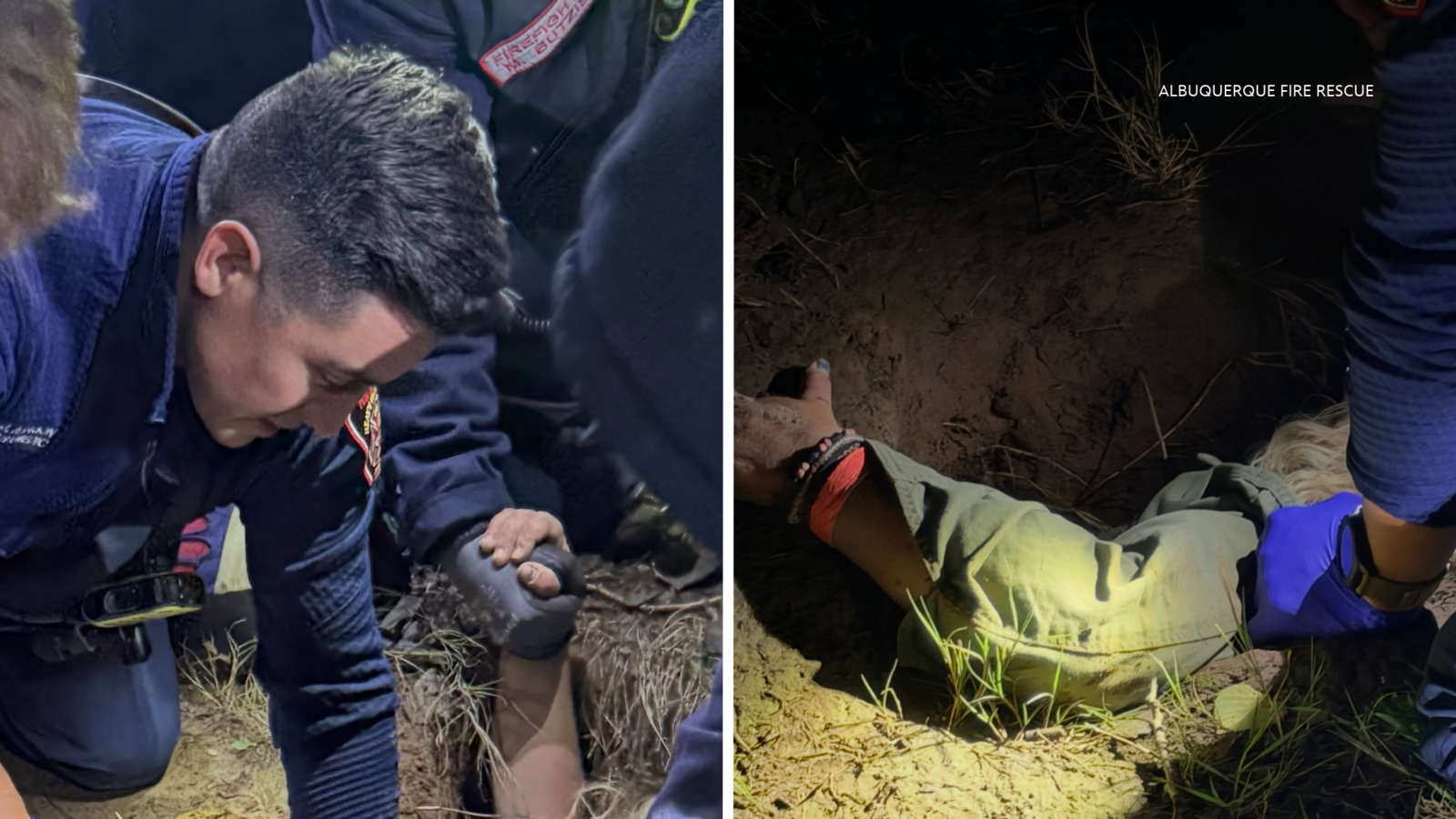
According to wisevoter.com, the sinkhole formed on a bank recently reshaped by those historic fall rains, creating conditions that “can catch people unexpectedly near the water.” The outlet noted the incident highlights risks residents face along Albuquerque’s riverfront as conditions change.
AFR urged the public to be careful when hiking near the river because the banks may be unstable, noting that rescues do not always occur in the water. The department did not release the woman’s name or condition, nor did it specify the depth of the sinkhole or whether the surrounding ground remains compromised.
Seasonal patterns broken by extreme rain
Albuquerque Fire Rescue is the municipal fire and emergency service responsible for responding to emergencies within the city, including technical rescues along the Rio Grande. Their standard playbook anticipates high water in spring and monsoon-driven flash floods in summer. A late-autumn sinkhole rescue on a dry riverbank represents a departure from that calendar.
The event fits a broader pattern of infrastructure and natural systems struggling with precipitation extremes. When intense rain falls on drought-hardened soil, infiltration is uneven; water finds preferential paths, piping out subsurface material and leaving cavities that collapse under minimal weight — a hiker’s boot, a vehicle tire, or in this case, a person standing ten feet from the bank.

What remains unknown
Officials have not said how deep the sinkhole extended or whether the area has been cordoned off for further geotechnical assessment. The report does not say how deep the sinkhole is or whether the surrounding ground remains unstable, wisevoter.com noted. No other agencies have been cited as investigating the riverbank’s structural integrity beyond the immediate rescue zone.
The Rio Grande, which flows through Albuquerque at an elevation of 5,312 feet, originates in Colorado’s San Juan Mountains and stretches 1,896 miles to the Gulf of Mexico, making it the fourth-longest river in North America.
Only about 20 percent of its water now reaches the gulf, with the rest diverted for irrigation and municipal use in cities such as Albuquerque. In New Mexico the river runs through the Rio Grande rift, cutting canyons between sediment-filled basins and supporting a fragile bosque ecosystem on its flood plain.
Residents walking near the Rio Grande should keep a safe distance from recently reshaped banks, since ground near the water can give way without warning. If someone becomes trapped, call 911 immediately rather than attempting a rescue on unstable ground.
Related reading

New Orleans Street Performers Protest Bourbon Street Curfew Enforcement at City Hall
Street performers gathered at New Orleans City Hall on Thursday to protest an 8 p.m. curfew enforcement that...

Dispatch: Ohio State Must Fix Road Penalties, Contain Colandrea at Nebraska
Ohio State takes its final regular-season road test at Nebraska on Saturday, a week before the Michigan showdown...
Ohio Republicans Send Sweeping Gun Expansion to DeWine, Lowering Permitless Carry Age to 18
Ohio Republicans rammed through one of the state’s most sweeping expansions of gun rights in years on Wednesday,...

Indiana State Tops SEMO 75-68 for First Road Win, Fourth Straight Victory
Indiana State beat Southeast Missouri State 75-68 on Thursday night in Cape Girardeau for the program's first road...