Tracing the Apostle Paul Through a Resurgent Damascus
In a recent column for the Biblical Archaeology Review, Mark Wilson recounts his journey to Damascus to document sites associated with the apostle Paul. His trip, undertaken in late 2026, highlights the complex reality of visiting a city that has spent over a decade defined by civil conflict and shifting geopolitical tensions. Wilson’s account captures both the historical weight of the Syrian capital and the modern logistical hurdles of navigating a region still marked by a Level 4 “Do Not Travel” classification from the U.S. State Department.
The decision to travel, Wilson notes, followed the April 2026 ceasefire and the subsequent resumption of direct flights from Turkey. For the archaeology enthusiast, the trip served as a long-awaited opportunity to walk the ground where tradition says Paul experienced his conversion and subsequent flight from local authorities. While the U.S. currently maintains no embassy in Syria, Wilson relied on a local guide named Akel to manage security and logistics, eventually connecting with Ignatius Aphrem II, Patriarch of the Syriac Orthodox Church, upon his arrival in the Old City.
The via Recta and the Weight of Tradition
Central to Wilson’s itinerary was the “Straight Street,” or Via Recta, the Decumanus Maximus that stretches nearly a mile through the Old City. According to Acts 9, this is the path where a blinded Paul was led to the house of Judas, where he remained for three days before his sight was restored by Ananias. Wilson observes that while the street remains an active, bustling artery—at the time of his visit, it was crowded with residents preparing for the Muslim holiday of Eid al-Adha—no specific site remains definitively linked to the house of Judas. This lack of archaeological consensus is a recurring theme in sites associated with early Christian history; Walks With Jesus notes that while the Roman-era street itself is well-documented, the identification of the house of Ananias remains a traditional, rather than proven, historical claim.
The tour continued to Bab Kisan, the southeastern gate where tradition holds that Paul was lowered in a basket to escape King Aretas. Wilson points out a discrepancy in the traditional narrative: if Paul were attempting a covert escape, a guarded city gate would likely be the least logical point of exit. He suggests that the city’s extensive, broken-down walls to the west might offer a more plausible location for such a departure. Inside the gate, a display of a basket serves as a symbolic marker of the event, reinforcing how the city’s physical layout continues to frame the narrative of the apostle’s life.
Repurposed Architecture and the Great Mosque
Beyond the sites specifically attributed to Paul, Wilson explores the layers of history preserved in Damascus’s architecture. The Temple of Jupiter, which dates back to the early Roman period, provides a clear example of historical repurposing. Its western wall now serves as part of the Great Mosque of Damascus, an Umayyad-era structure that Wilson describes as unique for its basilica-style design. The mosque itself contains a shrine dedicated to John the Baptist—known as the prophet Yahya in Islam—a testament to the city’s enduring role as a crossroads of religious traditions.
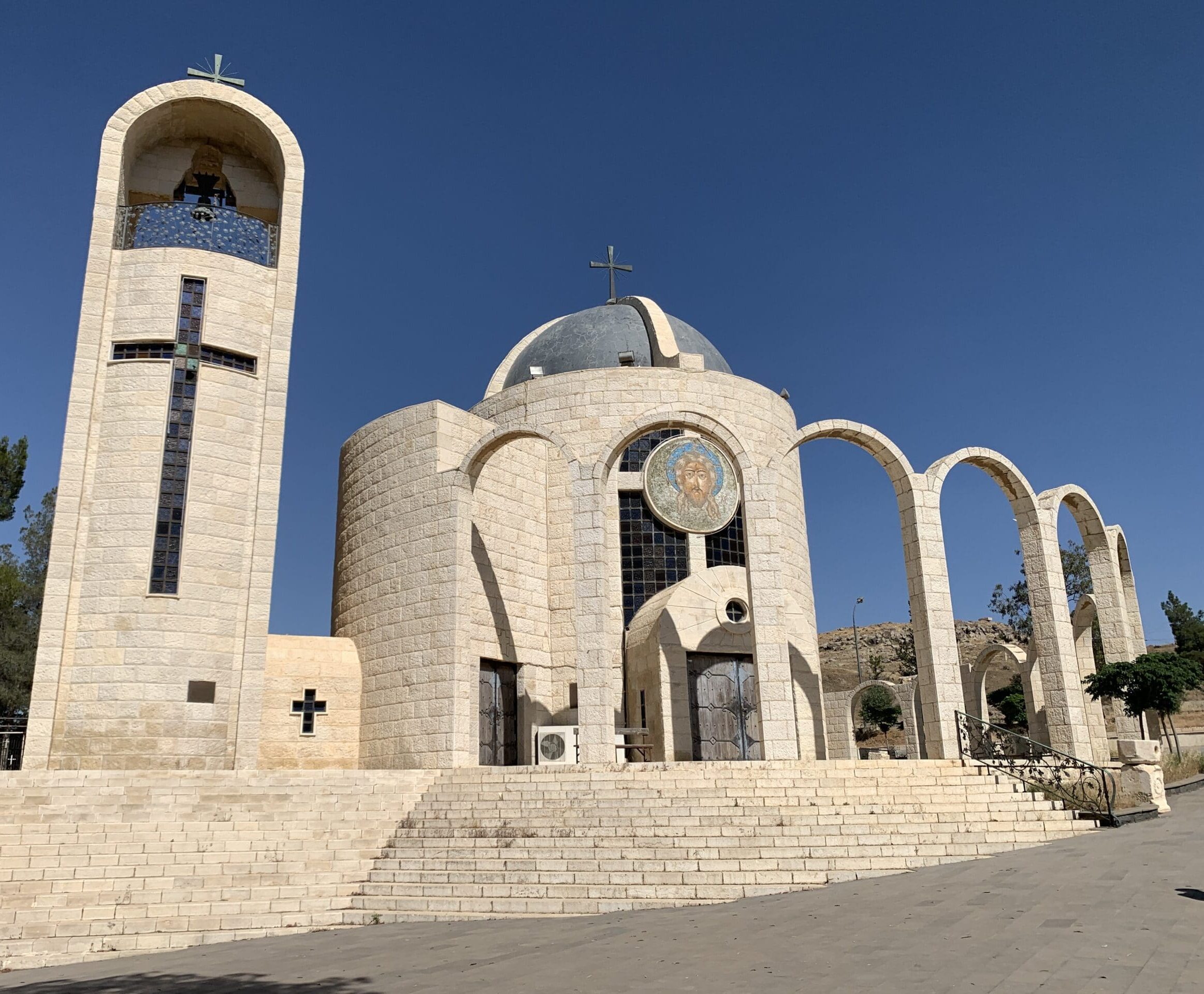
The journey also included a trip 10 miles southwest of the city to the Monastery of the Vision of Paul. The site, which features a round church built in 1965 and a statue of the apostle, marks the location where tradition places Paul’s visionary encounter with Jesus. Wilson describes the site as the most moving of his visit, noting the presence of ancient Roman ashlar blocks and Corinthian capitals that suggest a significant building once occupied the route from Jerusalem.
The Economic and Social Context of Modern Syria
Wilson’s experience offers a glimpse into the current state of Damascus, where the remnants of a once-vibrant Jewish quarter stand alongside active Christian churches and bustling markets like the Al-Hamidiyah Souq. While the narrative is rooted in biblical history, the stakes of the trip are distinctly modern. The presence of tourists in Damascus remains rare, and the city’s recovery is tied to the fragile stability following the end of the civil war and the ongoing volatility of the region.
For those interested in the intersection of faith and geography, the trip underscores a fundamental tension: the pursuit of historical truth in a landscape that has been continuously inhabited and transformed for millennia. As Wilson prepares for future research, his account leaves the reader with the image of a city that is simultaneously an open-air museum and a living, changing capital, where the footsteps of the past are constantly being obscured or rewritten by the demands of the present.

Concord-SLAM Unifies Semantic and Geometric Rendering for Precise Mapping
Concord-SLAM addresses semantic leakage in 3D Gaussian mapping Researchers presenting at NeurIPS 2026 have introduced Concord-SLAM, a new...

BYU vs. Omaha Odds, Spreads, and Betting Trends for Nov. 6 Matchup
BYU Opens Marriott Center Doors as 32.5-Point Favorites The BYU Cougars return to the Marriott Center tonight, November...

Billings woman identified as victim in fatal Yellowstone River crash
Authorities Identify Victim in Fatal Yellowstone River Crash A Billings woman has been identified as the individual who...

Mississippi Senate Race Too Close to Call as Vote Counting Continues
In Mississippi, the wait for a final tally in the U.S. Senate race is testing the patience of...