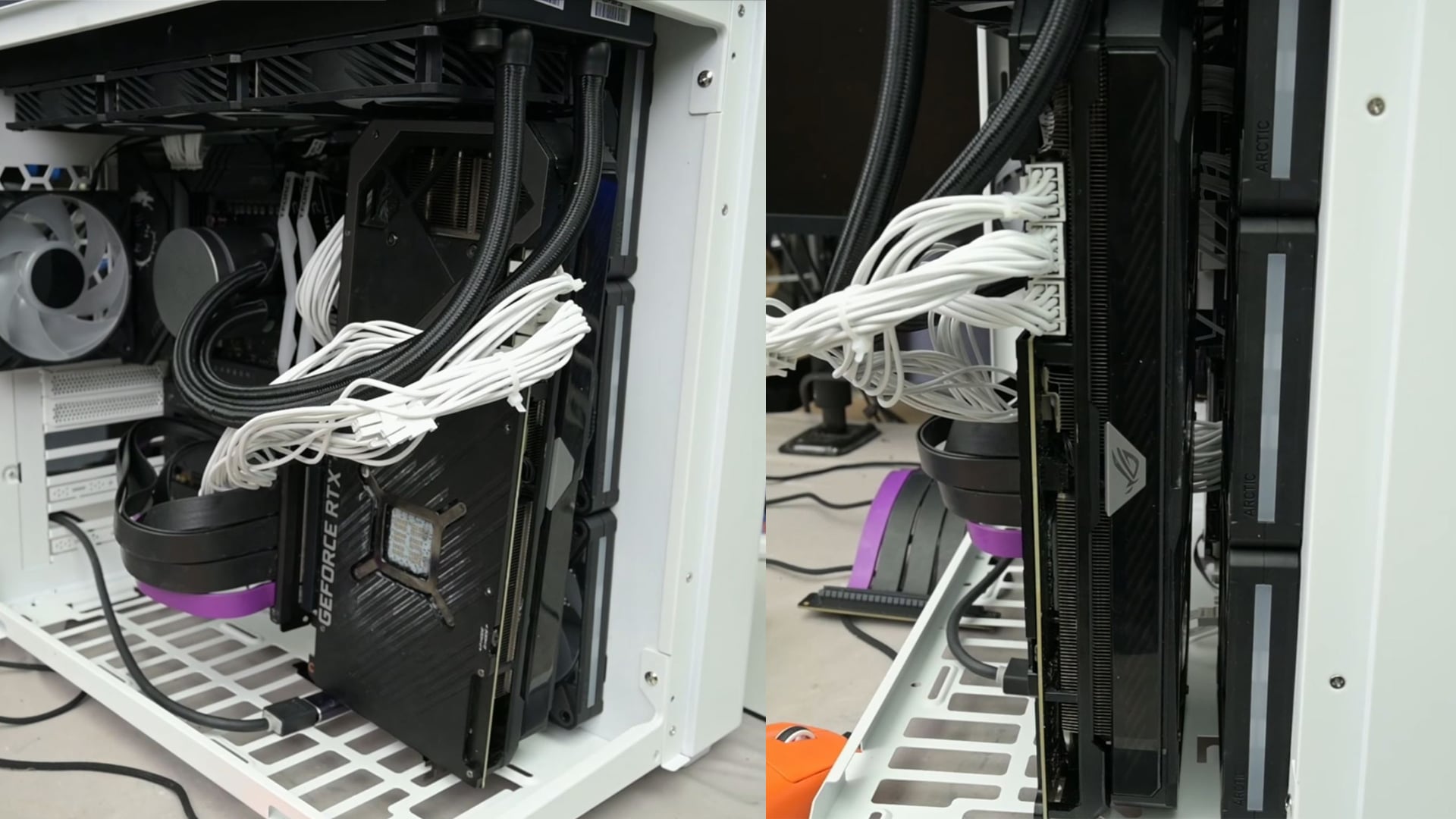
A modder achieved a 19°C reduction in GPU hotspot temperatures by mounting the graphics card vertically near the front or side panel of a PC case, according to tech publications covering the experiment.
This approach dramatically improved thermal performance compared to traditional horizontal mounting.
The Experiment: A New Approach to GPU Cooling
TrashBench’s experiment challenged conventional PC building norms by rethinking GPU placement. This change led to a 19°C drop in GPU hotspot temperatures, alongside significant reductions in VRAM and VRM temperatures.
Tom’s Hardware detailed the process, noting that TrashBench initially tested the GPU in a conventional horizontal setup before experimenting with vertical mounting. Test it normally, then start moving s*** around,
he said in a video quoted by the outlet. The modder found that placing the GPU after intake fans—rather than in the standard PCIe slot—optimized airflow.
Results: A Trade-Off Between GPU and CPU Cooling
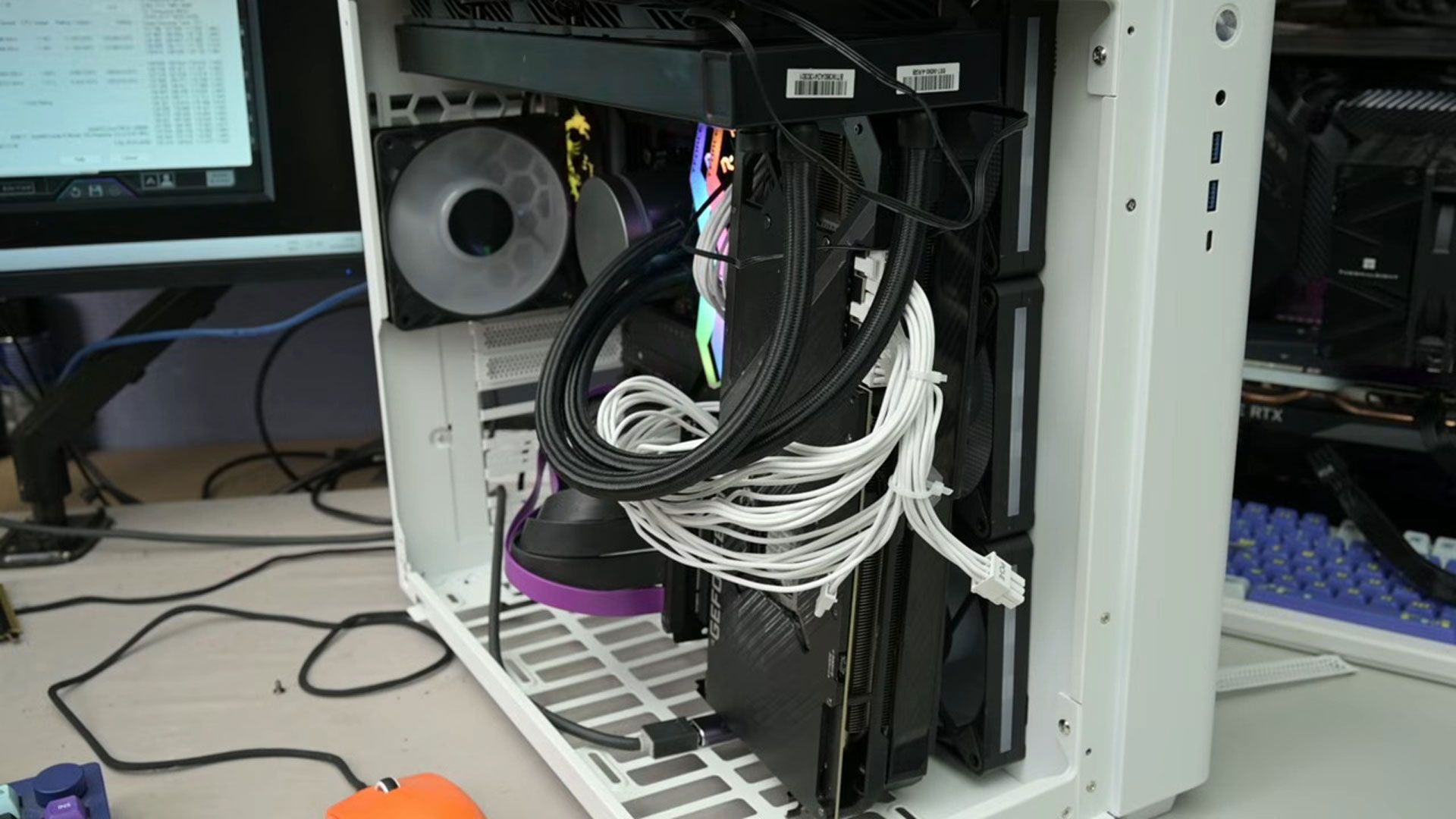
The experiment revealed a trade-off between GPU and CPU cooling. Further adjustments, including repositioning the CPU’s 360mm AIO cooler, balanced the system. Tom’s Hardware reported that the final setup achieved a 14°C GPU hotspot drop and a 3.3°C cooler CPU.
Extremetech highlighted that the GPU’s core temperature fell 17°C, and VRAM temperatures dropped 14°C when mounted at the front of the case. However, the CPU’s temperature rose slightly, prompting TrashBench to tweak the configuration. Cable management isn’t important here… Is it ever?
he mused during the experiment quoted by the outlet.
Implications for PC Design and Cooling Strategies
The findings suggest that traditional cooling paradigms may be missing opportunities. Extremetech noted that modern GPUs consume more power than other PC components, making optimized airflow critical. It makes sense to rethink GPU positioning,
the outlet wrote, adding that new motherboard and case designs could make this approach more practical.
The experiment also shows that PCIe riser cables are necessary for the vertical GPU setup. Tom’s Hardware emphasized that such cables are essential for testing alternative configurations, allowing modders to experiment without permanent hardware changes.
Related reading

NATO Uses AI Agents to Test Information Warfare in Synesis 2026
NATO has launched the Synesis 2026 exercises in Riga, Latvia, involving civil and military teams from 13 nations...
Squier Releases Troy Van Leeuwen Telecaster XII for $599.99
Queens of the Stone Age guitarist Troy Van Leeuwen has brought his custom copper 12-string Telecaster to the...

What Physical Therapists Say About How Stretching Changes Muscles
Regular stretching improves flexibility primarily by altering how your nervous system responds to tension rather than by physically...

Google Launches $180 Fitbit Edge Fitness Tracker with Replaceable Battery
Google launched the $180 Fitbit Edge fitness tracker on October 12, 2026, positioning an oval-shaped display and replaceable...