
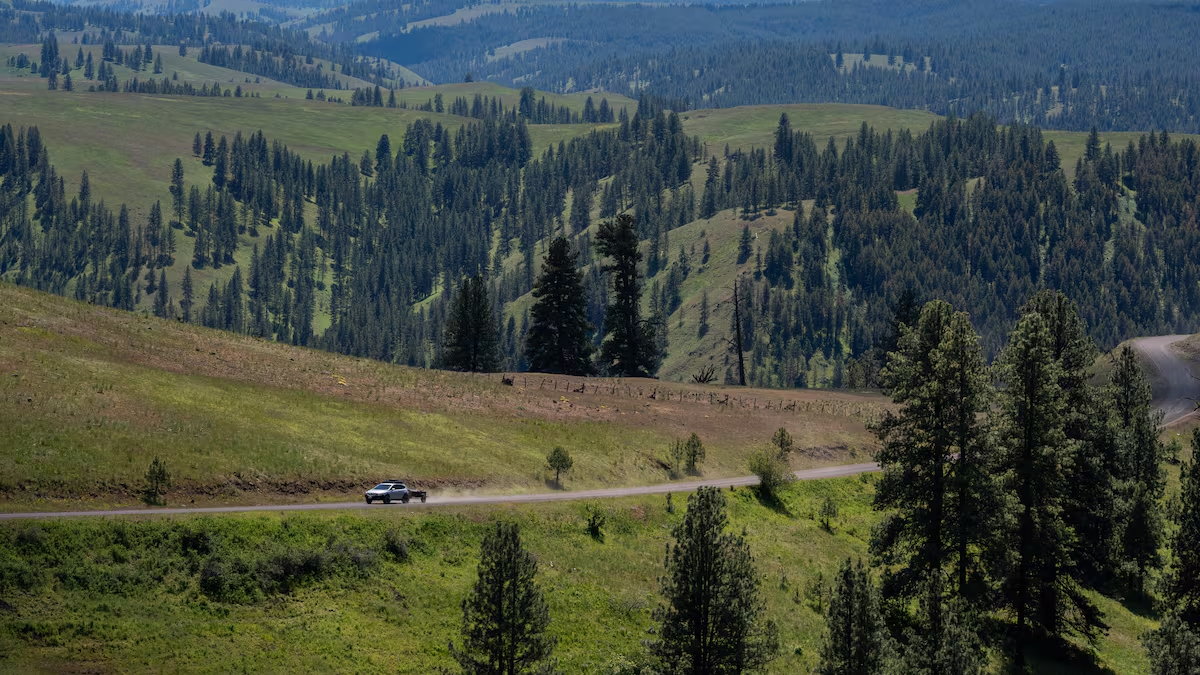
In northeastern Blue Mountains, the Trump administration is pursuing policy changes that would expand roadbuilding and motorized access across 5.5 million acres of national forest, reviving a decades-old dispute over whether public lands should prioritize resource extraction and vehicle access or wildlife habitat and quiet recreation.
The Wallowa-Whitman, Umatilla and Malheur national forests — collectively known as the Blue Mountains forests — contain more than 23,000 miles of mapped roads across a landscape of pine forests, juniper woodlands, grasslands and glacially carved peaks nicknamed the “Alps of Oregon,” newzly.net reported.
The administration has proposed rescinding the 2001 Roadless Area Conservation Rule, which bars roadbuilding and logging across 45 million acres nationally, including 977,000 acres in the Blue Mountains, opb reported. It also intends to revert travel management policy so that all forest roads are considered open unless marked otherwise, giving local officials more discretion to keep routes open.
Road density already among highest in Pacific Northwest
The existing network was largely built to support industrial logging, fire suppression and mineral prospecting, creating one of the densest route systems in the region, newzly.net reported. Conservation groups and scientists say current road density is already degrading ecosystems: unpaved roads channel silt and runoff into streams that host threatened salmon and steelhead, fragment forest canopy, accelerate erosion and allow invasive weeds into mountain meadows.
Wildlife displacement documented
Research shows vehicle traffic displaces Rocky Mountain elk and mule deer from high-elevation summer range on public land, pushing them onto private agricultural lowlands where they damage fences and hay crops, newzly.net reported. That displacement reduces big-game hunting opportunity on public land, a tourism draw that fills local hotels and restaurants.
Hunter and conservationist argues for fewer roads
Jamie Dawson, a hunter and conservation director for the Greater Hells Canyon Council, found her favorite turkey hunting spot — a meadow she calls “no tell ’em” — by driving an old logging road. Still, she says the forest has too many roads. “I don’t think we need all of the roads that we currently have on the landscape,” she told opb.
“I think that we could have some rational conversations to figure out which ones we really need.” She also said the Forest Service has not made an honest effort to resolve competing interests: “It feels like they want to sweep stuff under the rug and say, ‘We did the plan. Sorry if you don’t like it. We have to move on to other things.'”
Access advocates want guarantees, not just more logging
Don George, who leads Forest Access For All, grew up in Union and learned to forage morel mushrooms from his grandparents. He says driving into the woods eases his social anxiety and that road closures condense everyone into smaller areas. “Everybody should have access to public lands,” George told opb. “When the government starts designating anything, you’re granting special permissions to certain groups and taking freedoms away from other groups.”
His group has staged ATV parades with a former “tumbleweed wagon” jail cage labeled “Locked up and locked out.” Although the latest forest plan draft triples logging levels — something George supports — he remains unhappy because it does not guarantee the road access he seeks. “There’s a lot of land up here,” he told opb. “There’s no reason that everybody can’t do what they want to do up here.”
Two previous plan updates withdrawn after public pushback
Forest plans are typically revised every 10 to 15 years, but the Blue Mountains plans have not been updated since the 1990s, opb reported. The Forest Service has withdrawn two prior drafts because no constituency — from conservationists to access advocates — found them acceptable. In June the agency released a third draft that includes tripling logging levels. A final version is expected in spring 2027.
Travel management maps never finalized for two forests
After the 2005 travel management rule required forests to designate where motor vehicles may travel, the Wallowa-Whitman and Malheur national forests never produced maps due to local opposition, leaving them among the few national forests without such designations, opb reported. The administration’s proposed policy change would effectively restore the pre-2005 default of open-unless-closed across all national forests.
Legal challenges anticipated
Environmental watchdogs have signaled they will challenge any road expansions in federal court, citing potential violations of the Roadless Rule and the National Environmental Policy Act, newzly.net reported. The Forest Service said in an emailed statement it plans to publish the final Blue Mountains Forest Plans in spring 2027.
Worth a look
- Madison Introduces Zoning Ordinance to Ban Hyperscale Data Centers, Limit Size to 75,000 Square Feet
- NOPD Announces 16 Arrests in Warrant Roundup on Auto Burglary, Armed Robbery and Other Charges
- Trump's Beef Quota Filled About 37% in Month One; Ground Beef Fell 13 Cents (daybreakwire.com)
- Ohio Delegation Urges Trump to Site Space Force Academy at Wright-Patterson (archyde.com)
Madison Introduces Zoning Ordinance to Ban Hyperscale Data Centers, Limit Size to 75,000 Square Feet
Madison introduced a zoning ordinance Tuesday that would ban hyperscale data centers and limit new facilities to 75,000...
NOPD Announces 16 Arrests in Warrant Roundup on Auto Burglary, Armed Robbery and Other Charges
New Orleans police arrested 14 people during a three-day warrant roundup that concluded November 17, the department announced....
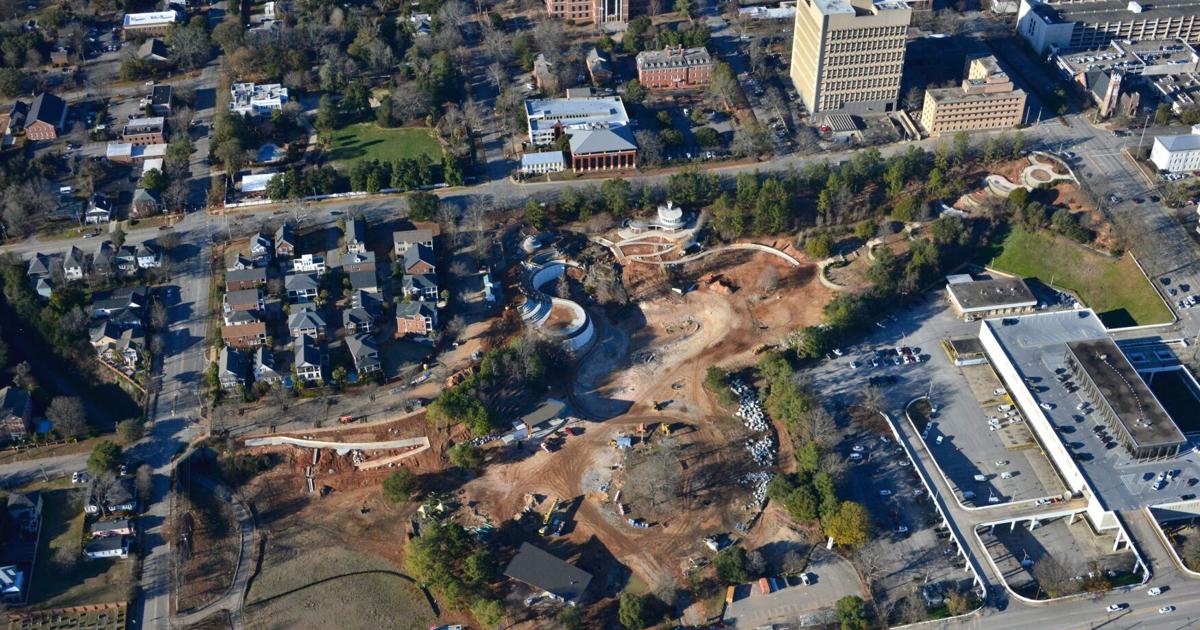
Finlay Park Marks First Year With $92K Revenue, 200+ Fitness Classes After $25M Renovation
Finlay Park's first year back brought more than 200 fitness classes and $92,000 in rental and food-truck revenue,...
Burlington Q3 Comp Sales Rise 1% as Warm Weather Cuts Traffic
Burlington Stores' comparable sales rose just 1% in the third quarter as warm October weather cut store traffic....