Tidal announced Tuesday it will remove every track identified as fully AI-generated from its catalog on December 9, deleting an estimated 29 million recordings and rejecting 80,000 to 85,000 new uploads daily.
The ban escalates sharply from the streaming service’s July policy, which labeled and demonetized wholly AI-generated tracks but left them playable. Tidal said the softer approach failed to stem the influx: over the past 90 days, 43 percent of all tracks distributed to the platform were detected as completely AI-generated, and on November 6 that share spiked to 60 percent.
43% of tracks distributed to us in the last 90 days have been detected as AI-generated. Something more drastic needs to be done. Robert Anderson
Scale of the purge
Tidal currently hosts about 27 million tracks tagged as AI-generated, representing 6.3 percent of its total catalog. The company said 96 percent of those flagged recordings received zero streams in the previous 90 days, and 94 percent of the AI-badged tracks were attributed to the music-generation platform Suno. Tidal also disclosed it has already removed roughly 66,000 tracks for suspected artist-name impersonation.
Anderson estimated the December 9 purge will delete 29 million songs and that the service will reject 80,000 to 85,000 AI-generated tracks daily once the new intake filters are fully running. Removals are expected to finish by early 2027.
https://t.co/1BG44wWjqf
What stays, what goes
The policy targets only recordings created wholly by generative AI. Tracks that use AI tools as assistants — for mixing, mastering, or arrangement — while retaining human authorship will remain eligible. Distributors will bear the first screening burden: any delivery whose metadata declares a track as fully AI-generated will be rejected at intake.
Tidal relies on Ircam Amplify detector without appeal process
Tidal relies on Ircam Amplify’s AI-Generated Detector, the commercial arm of the French research institute IRCAM. The company has not published a bright-line technical threshold for distinguishing “wholly AI-generated” from “AI-assisted” works, nor has it said whether artists who lose tracks can appeal. Tidal also has not released a list of distributors it considers high-risk.

Industry context
Deezer reported in April that fully AI-generated tracks accounted for more than 44 percent of its daily deliveries, rising to nearly 90,000 per day on peak days in June. Deezer keeps such tracks out of algorithmic recommendations and editorial playlists and said in July it would remove AI-generated tracks used for streaming fraud or those unstreamed for six months, but it has stopped short of an outright ban.
Bandcamp banned music created “wholly or in substantial part by AI” in January. Spotify and Apple Music have introduced labeling and spam-removal measures but continue to host fully AI-generated recordings.
“We are the first DSP to do so, and we encourage our peers to follow suit,” Anderson wrote. “Tidal will continue to make decisions that support real artists first.”
Bye AI music. Starting December 9. https://t.co/mu7UNwPfqq pic.twitter.com/aaUgCswIbc
Tidal labeled AI tracks since June 2026 and will remove them by 2027
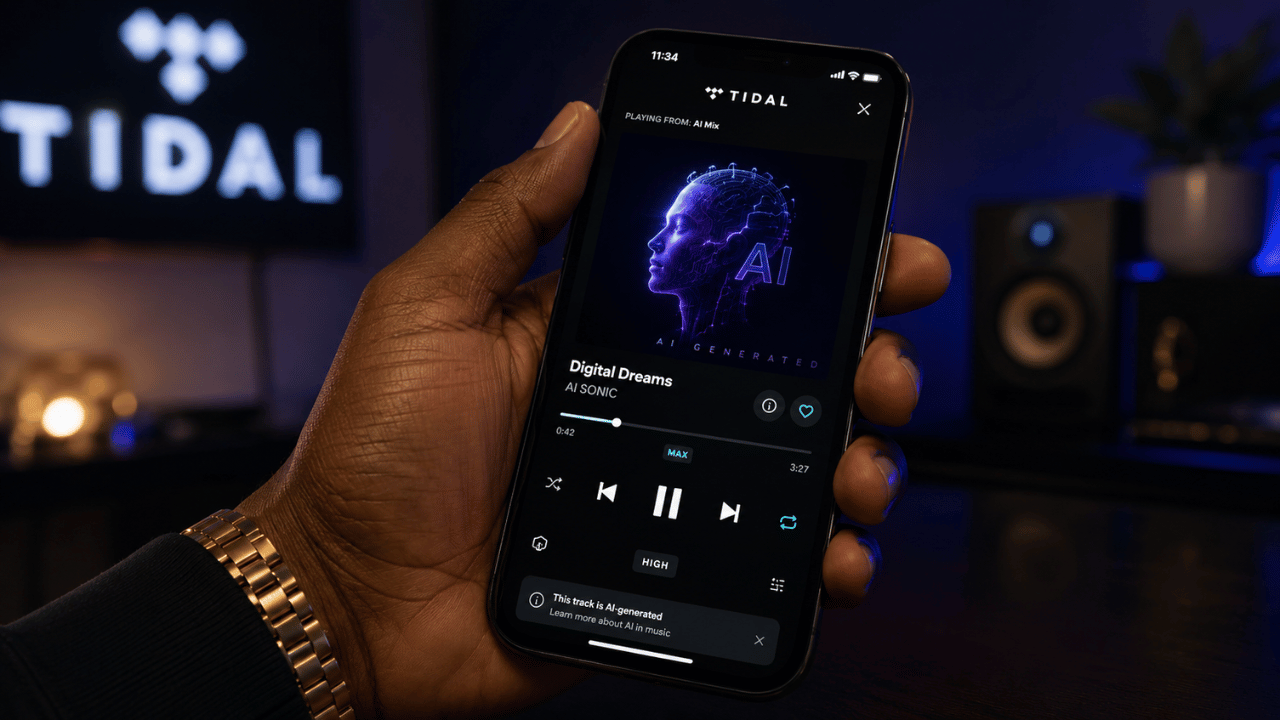
Since June 2026, the service has labeled recordings identified as fully AI-generated and prevented them from earning streaming royalties. The earlier rules also required labels distinguishing AI-generated music from AI-assisted music.
The announcement was made on November 24, 2026, via a post on X by Robert Anderson, who leads Tidal at its parent company, Block. Anderson wrote that on December 9, Tidal will begin removing all wholly AI-generated tracks from its catalog and that they will be completely gone by the beginning of 2027. The company also stated it will keep sharing what it finds and keep acting on it.

Tidal has taken down over 65,000 flagged tracks suspected of artists’ name impersonation, which was against its AI policy even before this update.
Reactions from rival platforms and industry leaders
Variety reported that Tidal’s leader expects the decision to resonate with both artists and listeners alike, signaling the audience the company sees for the move.
Anderson says AI advances feel quick and unsettling for creatives
Tidal added that it will keep sharing what it finds and keep acting on it.
Robert Anderson wrote that the pace of recent advances in generative AI technology has felt quick and at times unsettling, especially for creatives, and that at its best AI unlocks incredible new ways for artists to create music and for listeners to discover it.
The company said it will continue to make decisions that support real artists first, and Anderson encouraged peers to follow suit. Digital Music News reported that Tony Gervino told the outlet in June that AI’s takeover of the music industry is not inevitable if greater steps are taken now to monitor and control it.
Deezer reports 1 to 3 percent of streams are fully AI-generated
Deezer says fully AI-generated music accounts for just 1 percent to 3 percent of all streams on its platform, and that up to 85 percent of the streams on those tracks were fraudulent in 2025.
SoundCloud CEO Eliah Seton told Billboard, “Simply wishing away the advent of AI music is not a strategy.” A coalition of record labels proposed a new system for tagging AI-generated songs on streaming services this summer and called on those platforms to adopt it, but so far none have adopted that exact proposal.
Since its web launch in December 2023 and integration into Microsoft Copilot, Suno has iterated rapidly through model versions, reaching v6 by September 2026 with partnerships from Warner Music Group, BMG, and Believe, while its free and paid tiers enable mass output that floods distributor pipelines.
Deezer’s “international barometer,” conducted by Ipsos across nine countries, concluded that while 57 percent of people now have fully AI-generated music in their playlists, 74 percent of people don’t think they do. It also found that 67 percent of people fear that AI could reduce creativity in music production, and 69 percent believe that AI-generated music threatens the livelihood of musicians.
Worth a look
Peripheral Nerves Shift From Bystanders to Targetable Drivers of Tumor Growth
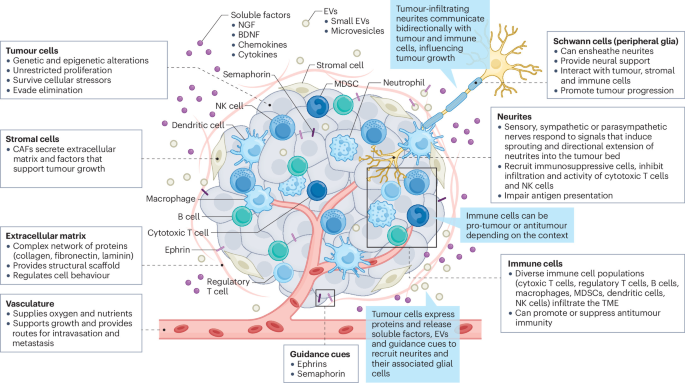
Peripheral nerves have moved from a footnote in cancer biology to a targetable driver of tumor growth, metastasis...

Human Rights Watch Says Modi Government Systematically Weakened Independent Institutions
Human Rights Watch said Prime Minister Narendra Modi’s government has systematically weakened independent institutions over the past decade,...

Prabowo Gets Rare Recognition From Trump in Manila, Putin and Xi in Shenzhen
Indonesian President Prabowo Subianto secured rare simultaneous recognition from the leaders of the United States, Russia and China...

UN Warns HIV Infections May Rise by 2027 After Historic Low as Funding Cuts Threaten Progress
New HIV infections fell to a historic low of 1.2 million last year, yet the UN warns that...