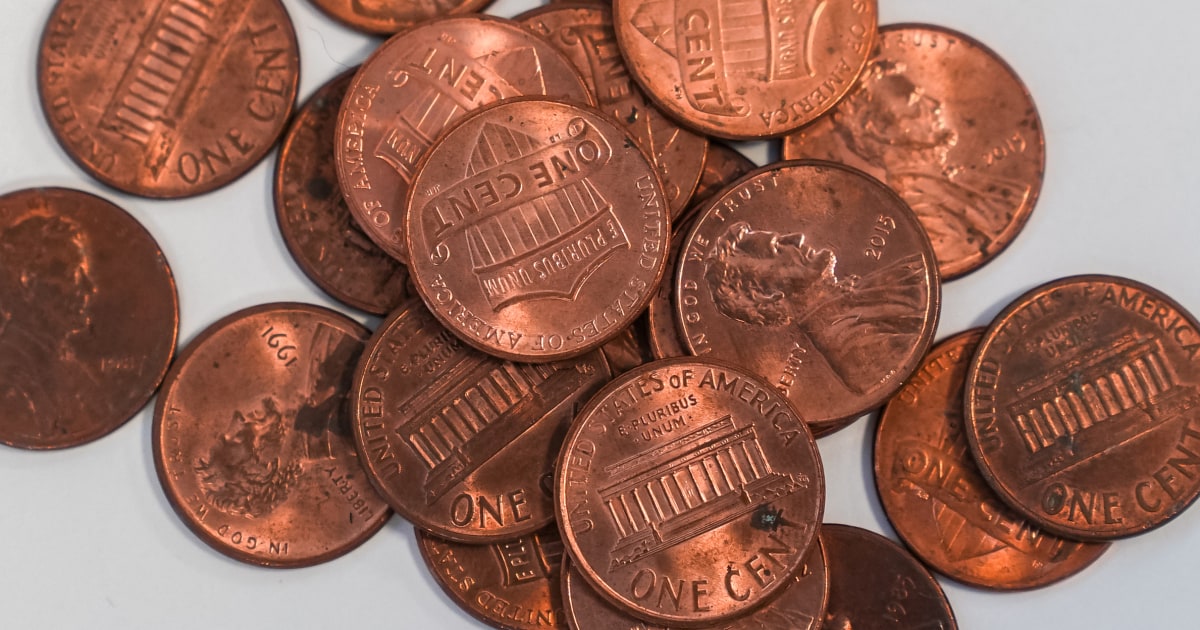
Washington is officially done with spending a pretty penny on penny production, NBC News reported.
The bipartisan Common Cents Act was signed by President Donald Trump on Friday, legally instructing the federal government to end the minting of pennies.
The Bottom Line:
- It costs nearly four cents to make just one penny, according to Rep. Lisa McClain.
- The legislation is projected to save $85 million per year by permanently ending penny production.
- The U.S. Mint last year put the immediate annual savings of discontinuing penny production at $56 million.
Both the House and the Senate passed the measure by voice vote, meaning no notable opposition. Pennies ceased to be manufactured in November 2025, arriving three quarters of a year after Trump urged the Treasury Department to halt production, noting in his remarks at the time that the procedure was “so wasteful!” as reported by NBC News.
“It costs nearly FOUR cents to make just one penny.”
“This legislation will save $85 million per year by permanently ending penny production — it’s common sense!”
McClain told NBC News.
Businesses Round Cash Payments to the Nearest 5 Cents
Stores and commercial establishments taking cash payments are given a structured mechanism by the newly enacted legislation to adjust prices to the closest value divisible by 5 cents. As CBS News reported, cash transactions are rounded up or down to the nearest 5 cents when exact change is unavailable.
Based on reporting from CBS News, if a transaction totals $10.02 post-tax and the buyer lacks 2 cents, the bill will drop down to $10 under the legislation. A charge of $10.04 would round up to $10.05.

Retailers are authorized by the statute to utilize voluntary symmetrical rounding to the closest nickel across all cash deals, with instructions requiring figures ending in 1, 2, 6, or 7 cents to go downward, while amounts ending with 3, 4, 8, and 9 cents move upward, according to Bloomberg Tax. Bloomberg Tax also said that the law grants retailers flexibility to adopt rules that always benefit the customer.
Business advocacy groups cheered its passage. Praising the legislation for establishing dependable standards for handling cash sales, NACS—which speaks for the convenience and fuel retailing sector—issued a statement noted by CBS News.
“Retailers have been looking for federal guidance on processing cash transactions since penny production ended.”
said Brennan Duckett, NACS’ director of regulatory and policy, in a statement to CBS News.
“NACS members benefit directly from this law, and we are pleased to see President Trump make it official with his signature.”
Duckett told CBS News.
Business owners said they faced confusion and were vulnerable to litigation before the act passed.
“As a retailer, I am grateful to have established legal guidance on rounding cash transactions.”
said Scott Zietlow, CEO and president of Kwik Trip, in a statement reported by CBS News.
“Every cash transaction that we processed in recent months was a reminder that we needed more clarity from the federal government. We’ve now got that clarity.”
Zietlow told CBS News.
FMI – The Food Industry Association also welcomed the signing of the Common Cents Act, noting that grocery stores faced challenges providing exact change since the U.S. Mint stopped producing pennies in 2025, according to Mass Market Retailers.
“Since the ceased minting of the penny, grocery stores have experienced an inability to provide exact change to cash-paying customers and have had no choice but to round to the nearest nickel when exact change is unavailable.”
said Christine Pollack, FMI vice president of government relations, in a statement reported by Mass Market Retailers.

“The Common Cents Act is the federal solution to address the confusion faced by customers and the operational challenges that grocers and other Main Street businesses have encountered with limited penny availability.” Christine Pollack
Pennies Remain Legal Tender While Nickel Production Costs Rise
NBC News reported that under the terms of the fresh legislation, the penny maintains its status as legal tender valid for all public fees, debts, taxes, and dues. The U.S. Mint said it would still produce collector versions in limited quantities.
As the nickel steps in to occupy the lowest tier of the U.S. Mint’s currency list, production of the coin may now incorporate an internal zinc core coupled with a nickel exterior, according to NBC News.
Mining.com.au reported that the Mint’s audited FY2025 financial statements recorded a unit cost of US$0.13 per nickel, more than twice its face value, exceeding face value for the 20th consecutive financial year.
Senate Banking Chairman Tim Scott, R-S.C., said the bill modernizes the currency system and gives families and businesses clear rules for everyday cash transactions, Roll Call reported.
Disclaimer: The information provided in this article is for educational and market analysis purposes only and does not constitute financial, investment, or legal advice. Always consult with a certified financial professional before making investment decisions.
Keep reading
- Dauda Confirms 2027 Arnold Classic and Arnold UK, Sets Up Nick Walker Rematch
- Wheeling Health Dept Accepts Card Payments for Fees and Immunizations
- Trump's Beef Quota Filled About 37% in Month One; Ground Beef Fell 13 Cents (daybreakwire.com)
- Trump Threatens Tremendous Tax on US Firms Building Data Centers Abroad (newsarchyuk.com)

Dauda Confirms 2027 Arnold Classic and Arnold UK, Sets Up Nick Walker Rematch
Samson Dauda will defend his 2023 Arnold Classic title in Columbus next March and then fly to Birmingham...
Wheeling Health Dept Accepts Card Payments for Fees and Immunizations
The Wheeling-Ohio County Health Department has streamlined its payment process, allowing residents to settle environmental health fees, immunizations,...

Volunteer Jay Stewart Found Vella Campillo Near Eloy
Wearing only a single diaper in the chilly desert night, two-year-old Vella Campillo survived seven hours alone before...

Lori Ann Morales Obituary Midwest City Oklahoma 1968-2026
Lori Ann Morales, born May 22, 1968, passed away peacefully at her home on Wednesday in Midwest City,...