
Italy adopted the International Holocaust Remembrance Alliance working definition of antisemitism into national law on Tuesday, passing the lower house with 147 votes in favor, 93 against, and five abstentions.
The legislation establishes a national coordinator for fighting antisemitism to oversee a three-year strategy. This initiative focuses on monitoring incidents, tackling online hate, boosting education, strengthening security for Jewish communities, and promoting Jewish culture.
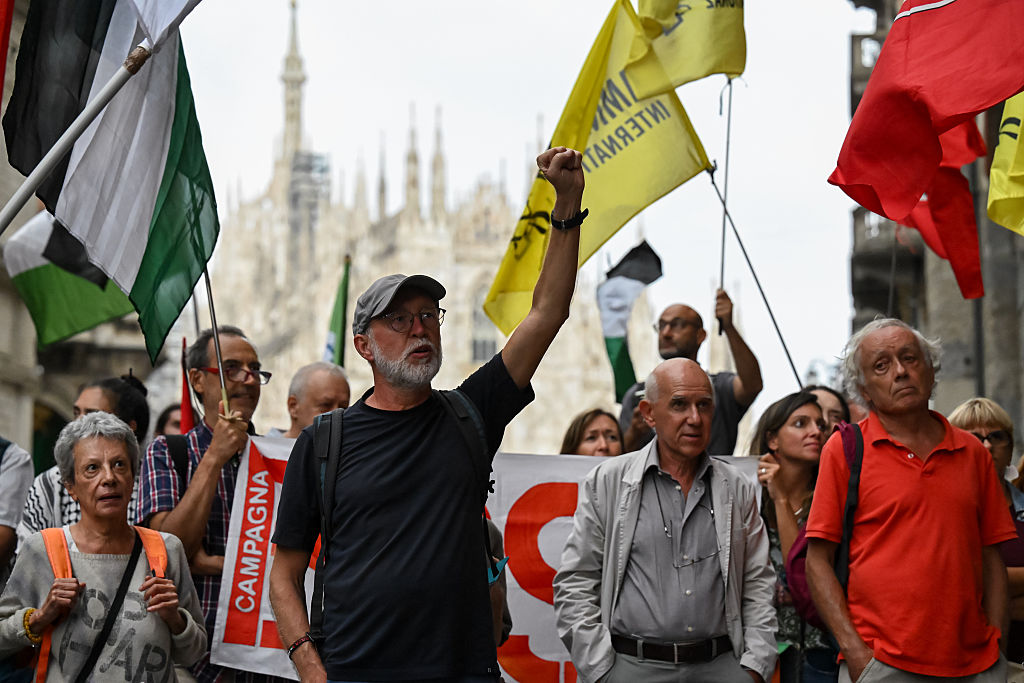
While the measure does not create new criminal offenses or penalties, it has sparked fierce debate over free expression. Supporters argue it provides vital protections during a surge in anti-Jewish prejudice, while critics warn it conflates legitimate criticism of Israel with hate speech.
Clashing Perspectives in Rome
“Today marks a bleak day for freedom of expression as Italy explicitly makes the IHRA working definition of antisemitism legally binding,” said Erika Guevara Rosas, Amnesty International’s senior director for research, advocacy, policy, and campaigns.
Italy approves law to combat antisemitism that references IHRA definition of antisemitismhttps://t.co/2uBiMveQnn
Amnesty International cautioned that the law heightens the risk of far-reaching censorship and self-censorship across schools, universities, and social media platforms. The organization said that the framework could be instrumentalized to punish peaceful advocacy and criticism of state policies.
Conversely, proponents defend the legislation as a necessary moral stand. “At a time when antisemitism is surging worldwide, Italy is sending a clear message of zero tolerance for this unique form of hatred directed at the Jewish people,” said Foreign Minister Gideon Sa’ar.
Livia Ottolenghi, president of the Union of Italian Jewish Communities, expressed satisfaction with the vote. She said that it was “unfortunate that there wasn’t broader participation,” while describing the measure as a strengthening of civil society’s democratic defenses.
Rising Incident Statistics
The legislative push arrives against a backdrop of escalating hostility across the country. According to data from the CDEC Foundation’s Antisemitism Observatory, researchers recorded 963 antisemitic incidents in 2025.
| Year | Recorded Incidents | Context / Source Comparison |
|---|---|---|
| 2022 | Baseline | Significantly lower volume prior to Gaza conflict escalation |
| 2023 | Half of 2025 peak | Surged following the October 7 Hamas-led attacks |
| 2025 | 963 | Roughly four times higher than 2022 levels |
Gadi Luzzatto Voghera, director of Milan’s Jewish Contemporary Documentation Center, highlighted the physical nature of recent confrontations. “We have seen an increase in incidents involving people being shoved, spat at, or slapped. We recorded 18 cases in 2025 and 10 in the first six months of this year,” Voghera told Reuters.
Political Fractures and Alternatives
The debate severely fractured Italy’s center-left opposition bloc, which aims to challenge Prime Minister Giorgia Meloni’s right-wing government in the upcoming 2027 general elections. Laura Boldrini, a member of the center-left Democratic Party, sharply criticized the governing coalition.
“The majority does not really want to fight antisemitism,” Boldrini posted on X. “It wants to censor criticism of the Israeli government, which is committing genocide and war crimes and crimes against humanity.”
Boldrini had backed an amendment to substitute the IHRA framework with the Jerusalem Declaration on Antisemitism. Proponents of the alternative text argue it explicitly protects political discourse regarding Israel without infringing on minority protections. The parliamentary majority rejected all such amendments.
Meanwhile, ruling coalition defenders insisted that standard political debate remains fully protected. “No one has ever sought to limit freedom of expression and criticism, which is a cornerstone of our democracy,” said Paolo Emilio Russo, a lawmaker from the co-ruling Forza Italia party.
Italy, a founding member of the European Union and the bloc’s third-most populous state with nearly 59 million inhabitants, has a Jewish history dating back to ancient Rome. The community’s modern institutional representation, the Union of Italian Jewish Communities, operates within a nation that hosts the world’s highest number of UNESCO World Heritage Sites, 62, reflecting a cultural landscape where the new national coordinator for fighting antisemitism will implement the three-year strategy.
The question of how Italian courts, universities, and civil rights advocates will interpret the statute’s boundaries in practice remains open as the national coordinator prepares to roll out the three-year enforcement strategy.
More on Italy
Related reading

UN Talks on AI Killer Robots End With Softened Agreement to Elaborate by 2028
"States have agreed it is sufficient to just talk about the issue, for the 14th year, while these...

Beloved hippopotamus Fiona died on Thursday at the Cincinnati Zoo in Ohio at nine years old
Beloved hippopotamus Fiona died on Thursday at the Cincinnati Zoo in Ohio at nine years old after ingesting...

Westside Cowboy Named BBC Introducing Artist Of The Year For 2026
Manchester quartet Westside Cowboy have been named the BBC Introducing Artist of the Year for 2026, becoming the...

Strictly Come Dancing Brings Eight Couples to Blackpool Tower Ballroom
Strictly Come Dancing returns for its annual visit to the Blackpool Tower Ballroom with eight couples taking to...