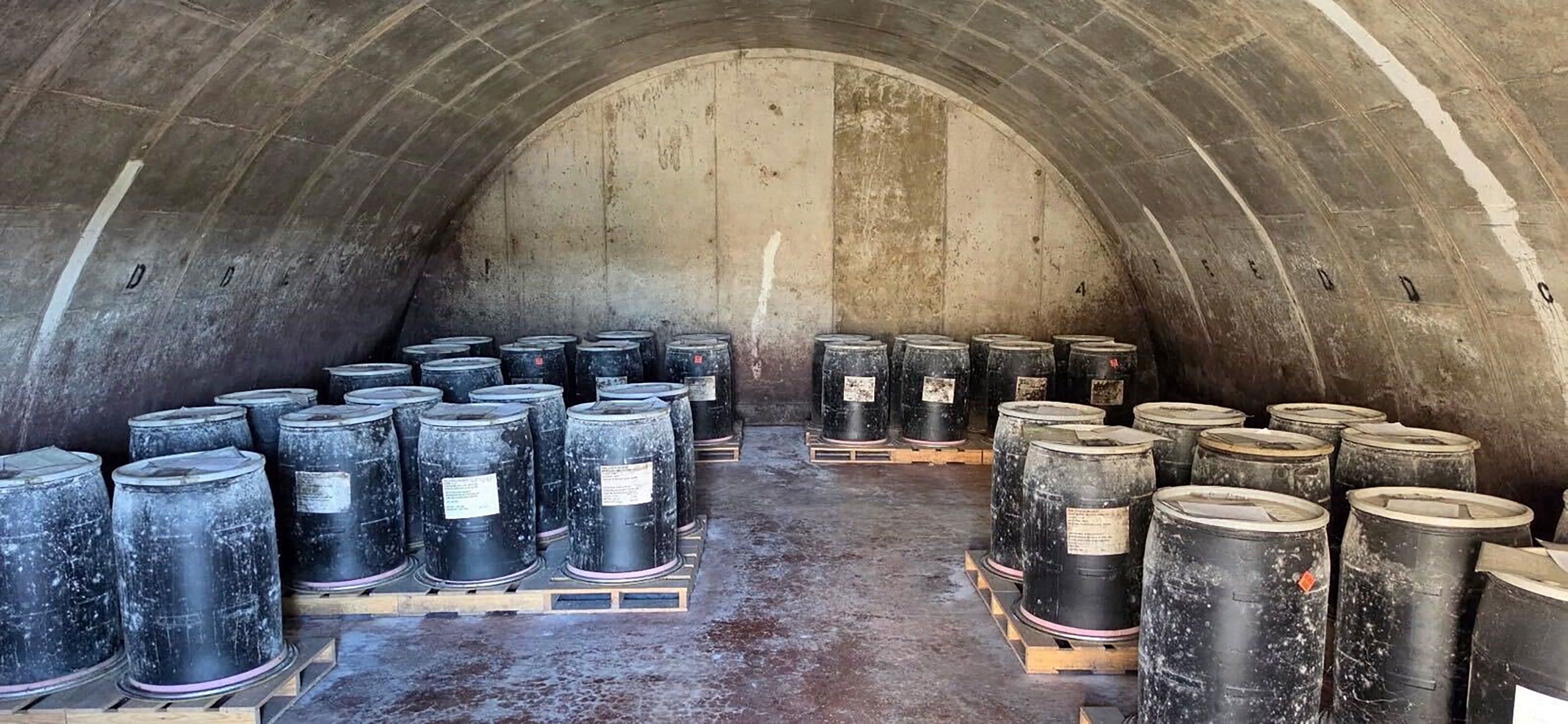
- Detonation occurred at 9:00 a.m. Nov. 25, destroying all 68 barrels of degraded explosive.
- EPA real-time monitors reported zero detection of airborne lead throughout the region.
- Plume models had predicted particle travel up to 100 miles southwest into Missouri.
- FEMA lifted the shelter-in-place order Wednesday evening; residents may resume normal activities.
Detonation destroys all 68 barrels
Major General Eric Shirley, commander of the Army Sustainment Command, said overhead footage confirmed that “all of the lead azide barrels were definitively removed.”
The operation, conducted at 9:00 a.m. Wednesday, destroyed approximately 4,500 kilograms (10,000 pounds) of lead azide — a primary explosive used in munitions since World War I that inspectors earlier this year found had degraded into an ultra-sensitive state, creating a risk of uncontrolled detonation.
“There was no secondary explosions. There was no kick-out. There was no infrastructure damage in or around our installation,” Shirley said at a news conference.
“The operation was tremendously successful.”
Viewers watching the livestream could be heard asking, “That was it?” A New York Times reporter stationed a half-mile from the site described the sound as “dull booms,” like thunder. Local reporters with KCCI-TV in Des Moines said the blast was “not as visible as maybe we expected,” WTTW News reported.
Mitigation layers credited with containment
The Army deployed extensive physical barriers: concrete bunkers barricaded with sand-filled barriers two stories high, aqueous foam blocks, two walls of four 16,000-gallon water tanks, and gel blocks adjacent to the bunkers to absorb thermal energy and reduce airborne particulate emissions at the source.
PFAS-free suppressing foam was applied over containment screens and tarps, and high-volume industrial misting units saturated the soil and airspace before and during detonation.
Shirley attributed a “visible signature” from the detonation to the more than 3,600 gallons of aqueous foam applied to the site. EPA Administrator Lee Zeldin told CNN the mitigation efforts “exceeded expectations” in containing the plume, KTTN reported.
UPDATE: Our EPA team has now been scaled up to 209 personnel on the ground in Middletown, Iowa, and we will be over 300 by tomorrow. We have now collected 1,216 samples ahead of tomorrow’s controlled lead azide detonation at the Iowa Army Ammunitions Plant: 650 soil samples 297… https://t.co/SoksHujBrA pic.twitter.com/3iAjG8DX55
Monitoring shows no airborne lead; shelter order lifted
EPA deployed real-time air monitors reporting data points every five minutes. Shortly after the operation, the agency posted that “ALL EPA real-time air monitors are reporting ZERO detection of airborne lead throughout the region.” The Iowa Department of Health and Human Services said it “believes the risk of breathing in harmful amounts of lead from this event is low.”
FEMA Administrator Cameron Hamilton said Wednesday evening that Iowans in the area could “safely resume normal activities” as the shelter-in-place order had been lifted and ongoing air monitoring results show no detectable lead, Bleeding Heartland reported. Hamilton added there will be “additional resources and testing” in the coming days and weeks.
Wind shift moves plume away from Illinois
Updated Army maps showed the potential dispersal path reaching southwest into Missouri, with lead particles likely to travel as far as 100 miles over several hours and dust expected to settle up to 40 miles southwest of the blast site.
A shift in wind direction from the original Nov. 20 detonation date had taken Illinois out of the path, WTTW News reported.
Residents in the projected path were advised to remain indoors with windows and doors closed until the Army gives an all-clear. The Army is working with FEMA to distribute mobile notifications.
It is clear: the delay we secured for the IAAAP detonation in Middletown was incredibly important. But it should not have taken public outcry for the federal government to put in place every mitigation measure possible to protect the health and safety of Iowans. The failure of…
Chemical neutralization ruled out by crystallized explosive
Colonel Aaron Teller, group commander of the 71st Explosive Ordnance Disposal, said a “significant accumulation of crystallized lead azide on the exterior of the barrels, including the barrel lids” prevented the barrels from being moved or opened. “That’s why they can’t be treated, and that’s why you can’t open the lids to treat it with a chemical neutralization agent,” Teller told media.
Army officials maintained throughout that intentional detonation was the safest way to neutralize the material. “I’ve seen the reporting on the chemical neutralization agent. That proved to be an unsafe method,” Teller said.
Criticism over timing and communication
Democratic U.S. Representative Mike Quigley of Illinois called the holiday-eve scheduling and lack of communication “unconscionable.” In a statement on X, he wrote: “It is unfair that our military leaders are releasing 9,500 pounds of unstable lead azide on our friends in Iowa the day before Thanksgiving,” Al Jazeera reported.
The EPA has collected more than 1,200 total samples of soil, dust, air and water to test for lead levels and will continue monitoring during and after the explosion. In response to a query from WTTW News, the EPA did not answer whether this sampling protocol had been in place prior to the original detonation date.
The controlled, mitigated detonation of the lead azide stored at the Iowa Army Ammunition Plant has taken place. Initial analysis shared with us by federal partners and Iowa Homeland Security and Emergency Management indicates that the mitigation measures appear to have been…
Army to release lead maps and review storage
The Army Sustainment Command said it would release a final breakdown of the affected area — including lead-dust dispersion and surface-deposition maps — after the operation. Acting Army Secretary Adam Telle told the Associated Press the Army is reviewing its weapons storage facilities to ensure something like this never happens again.
Independent environmental testing expert Scott Smith, who monitored air after the 2023 East Palestine, Ohio, train derailment, cautioned that lead persists in the environment and that testing must also cover breakdown products, stabilizers and plasticizers containing lead azide, some of which are endocrine disruptors or cancer-causing chemicals. “I don’t want to see that happen again,” Smith told Al Jazeera.
More on Iowa
At 9:00am CT, @USArmy Sustainment Command executed the controlled mitigated detonation at the Iowa Army Ammunition Plant in Middletown, Iowa. ALL EPA real-time air monitors are reporting ZERO detection of airborne lead throughout the region. EPA monitors never stopped collecting…
EPA has been on the ground in Iowa BEFORE the controlled detonation, we will be here DURING the detonation, and we will be here for as long as necessary AFTER detonation to ensure communities are safe. With over 1,200 air, land, and water samples already conducted, and 300…
The Army’s controlled, mitigated detonation exceeded all expectations and was a HUGE success. The threat of an uncontrolled spontaneous detonation has been eliminated. I am so proud of our SOLDIERS for their courage, training, mitigation, and precision! They put it on the line…
Initial feedback from our state experts and federal partners is that the detonation at the Iowa Army Ammunition Plant was successful. We remain in close contact with authorities on the ground, while state agencies continue to monitor incoming data from the State Emergency… pic.twitter.com/l6k5xT43vq
There is obviously more testing to do that will provide certainty over time, but for now, federal officials have reported that lead dispersal should be limited, Iowans are safe, and damage to property is limited. I’m grateful to the experts on the ground who did all they could to…
Worth a look
- Trudeau Foundation Doctoral Scholarships Support Research on Canada’s Future
- Woman Dumps Kittens at Tempe Shelter, Second Incident in Two Months
- Lions Turn Tied Game Into 19-10 Halftime Lead Over Bears (archyde.com)
- Median Net Worth Peaks at 75+ in the Fed's Survey, but the Lead Is Thin (daybreakwire.com)
Trudeau Foundation Doctoral Scholarships Support Research on Canada’s Future
Applications for the 2027 cohort closed as of the Foundation's latest notice. Eligible candidates must be in their...
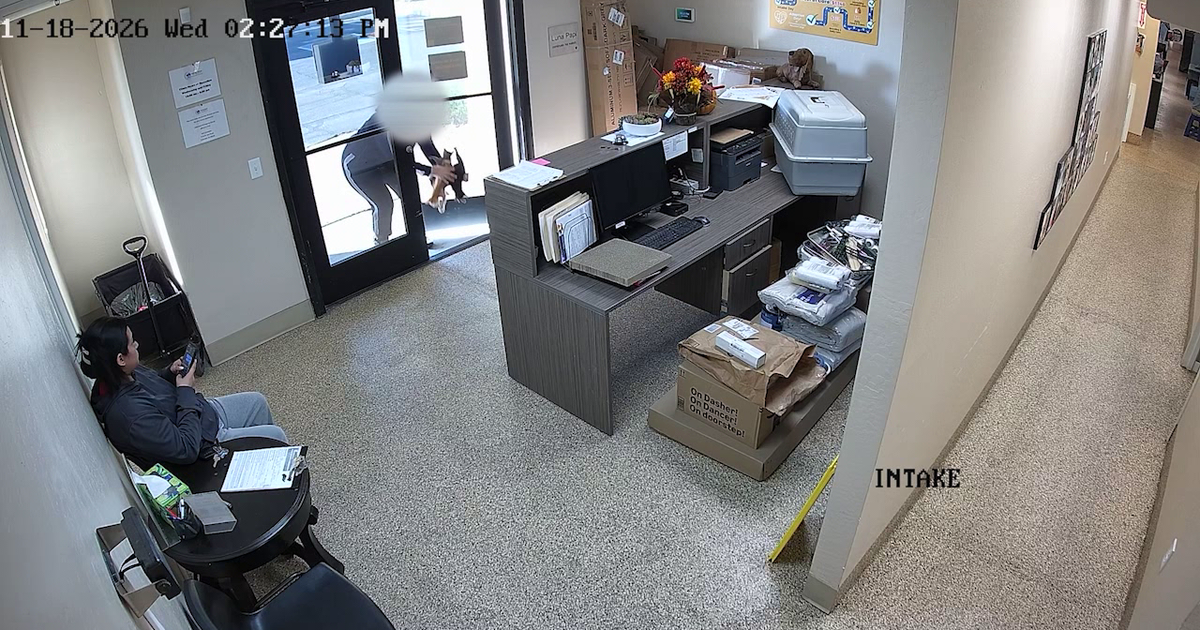
Woman Dumps Kittens at Tempe Shelter, Second Incident in Two Months
The kittens, each about two months old, scampered around the lobby for several minutes before staff noticed what...

2021 Chevrolet Colorado Z71 Crew Cab Sells With Trailering Package
A 2021 Chevrolet Colorado Z71 Crew Cab with a heavy-duty trailering package is now available at Stivers CDJR....

National Weather Service: Calm Thanksgiving Weekend in Las Vegas Before Rain
Las Vegas Valley will see a calm, mostly sunny Thanksgiving weekend before a wetter pattern arrives Tuesday, the...