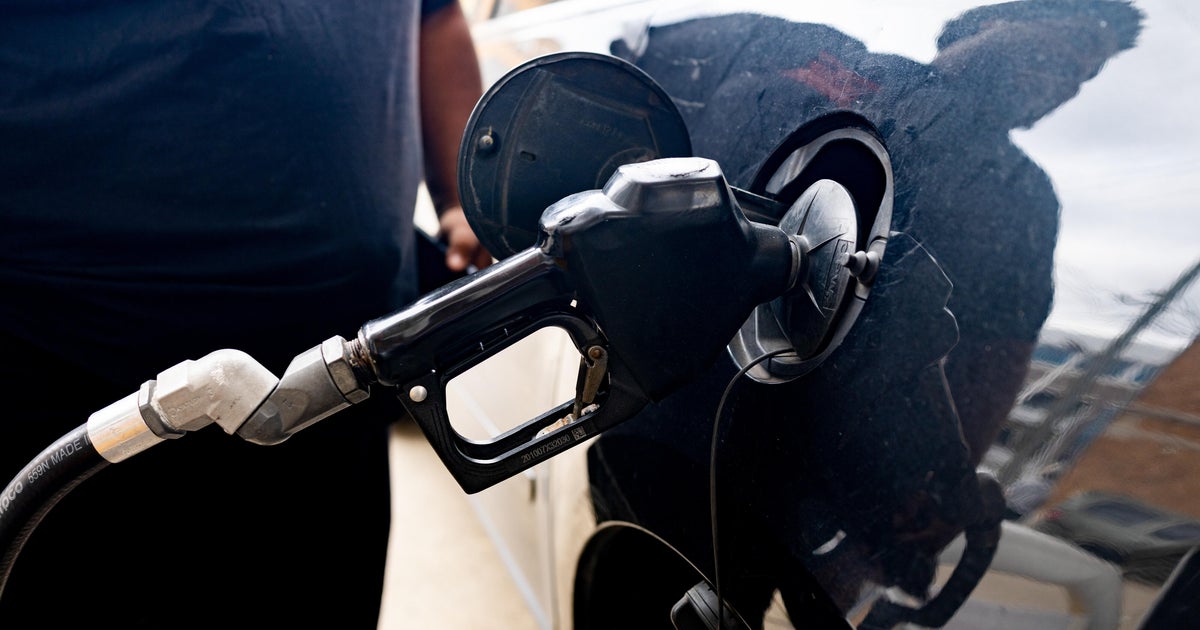
U.S. gasoline prices drop below $4 threshold
“I don’t think there’s any reason to” escalate the war in Iran, President Trump told 60 Minutes correspondent Ross Douthat in a recent interview, signaling a potential shift in geopolitical risk that is already hitting the energy markets.
The national average for a gallon of regular gasoline fell below the $4 mark on Tuesday for the first time since July, according to AAA. This decline is a retreat from the $4.56 per gallon seen earlier this year, as reported by CBS News.
One of the things the data analysts on our side obsessed over was "composition"—whether the electorate looked close enough to 2024 for Republicans to win. And despite polls that showed a Democrat blowout, the data kept on telling us the same story: in some states turnout was…
The Fuel Market Bottom Line:
- Gasoline Price Break: The national average hit $3.9788 on Tuesday, down nearly 39 cents from one month ago.
- Crude Oil Volatility: Brent crude, the international benchmark, traded around $91 per barrel as markets weigh potential diplomatic resolutions in the Middle East.
- Inflationary Pressure: Despite the dip at the pump, October’s Consumer Price Index (CPI) data shows food prices rose 0.5% in a single month, complicating the broader economic outlook.
Seasonal mechanics and fuel blend changes drive prices down
The downward trend is driven by a combination of seasonal mechanics and changing demand. Gas stations are currently transitioning from summer-blend fuels to cheaper winter blends, a move permitted by federal rules once the summer mandate ends on September 15. CBS News reports that this switch, combined with lower driving demand during winter months, typically causes prices to drop by 10 to 30 cents per gallon.
BREAKING: US average retail gasoline price drops below $4 a gallon (to $3.9788) for the first time in 114 days. Despite the fall in prices, the average cost is still up ~30% from pre-war levels (but that's a lot better than a peak of ~53% increase set in May).
However, current prices remain significantly higher than historical norms. Oilprice notes that while the national average has dipped, prices are still roughly 20% above the seasonal average. At this time last year, the national average sat at approximately $3.07 per gallon.
Comparing energy cost trends
| Fuel Type | Current National Average | Previous High/Period Reference |
|---|---|---|
| Regular Gasoline | $3.98 | $4.56 (Earlier this year) |
| Diesel | $6.16 | $6.53 (Late September) |
| Brent Crude | ~$91/barrel | N/A |
Diplomatic hopes between U.S. and Iran lower crude prices
The primary driver for the recent retreat in crude oil prices appears to be the hope for a diplomatic breakthrough between the U.S. and Iran. CNBC reports that Brent crude briefly fell below $90 a barrel on Tuesday following comments from President Trump regarding the conflict.
While ING analysts noted that recovering oil flows from the Persian Gulf have eased supply concerns—with regional exports returning to 80% to 85% of pre-war levels—they warned that the market sell-off may be “overdone.”
US gasoline retail prices have a LOT of space to fall. Yes, rockets and feathers. Yet, judging by the very slow drop in retail prices vs the plunge in wholesale costs, the feather must be from a tiny hummingbird. Don't be surprised if the White House starts to apply pressure.
The situation remains precarious. Gregory Brew, a senior analyst at the political risk consultancy Eurasia Group, stated in a research note that the prospect of a deal remains “unlikely” because neither the U.S. nor Iran has shifted its negotiating position. Furthermore, NBC News highlights that the ongoing Russia-Ukraine war continues to impact diesel supply, as Ukrainian President Volodymyr Zelenskyy has pledged to continue striking Russian energy assets.
The inflation disconnect
While consumers may feel immediate relief at the pump, the broader macroeconomic picture remains tight. The Bureau of Labor Statistics released October’s CPI data on Tuesday, showing that while energy inflation slowed to 0.7% in October compared to a 5.2% surge in September, other costs are climbing.

The “Main Street” impact of these energy shifts is most visible in grocery and retail costs. Diesel, which remains elevated at $6.16 per gallon, is critical for transporting goods via truck, train, and ship.
NBC News reports that diesel prices have remained more than 70% higher than the start of the year due to both the Iran conflict and attacks on Ukrainian energy infrastructure. As diesel costs stay high, economists like Mike Reid of RBC Capital Markets warn that higher freight costs are being passed through to consumers.
“While I am pleased to see energy prices down from their high rates over the past week or so, they are still quite elevated relative to the start of the year, and the ultimate effect on inflation will depend on what levels are sustained,” Federal Reserve Governor Christopher Waller said on Tuesday.
The Cleveland Federal Reserve Bank estimated that consumer prices in October were up 3.7% from a year ago. This outpaces the average wage gain of 3.1%, meaning the typical American worker is seeing a decline in real purchasing power. This trend contributed to the high voter turnout for last week's midterm elections.
Policy shifts create market uncertainty before January
Institutional investors are watching a “lame duck” window for potential policy shifts. Citigroup commodities analysts noted that between now and January 3, when the new Democratic Congress is seated, the White House may seek to advance foreign policy objectives with fewer political constraints. This period could lead to either accelerated dealmaking or renewed escalation, keeping markets choppy.
For the immediate term, Patrick De Haan, head of petroleum analysis at GasBuddy, predicts that fuel prices will continue to ease heading into the Thanksgiving holidays. He suggests the national average could potentially fall to $3.70 per gallon if the geopolitical situation remains stable. However, the stability of the U.S. Strategic Petroleum Reserve—which currently holds its smallest amount of crude since 1982—remains a critical variable for long-term supply security.
the days of $4/gal gas nationally may be behind us for the time being… GasBuddy data showing $3.95/gal this morning, we could head toward $3.75/gal around Thanksgiving. 2026 has tallied 182 days over $4, compared to 157 days in 2022 and 47 days in 2008.
“Since peaking on Sept 24, gas prices have dropped nationally almost every week… and it will continue for at least the next week or few until finding a bottom,” De Haan noted to Oilprice, while cautioning that geopolitical developments remain the ultimate wildcard.
Disclaimer: The information provided in this article is for educational and market analysis purposes only and does not constitute financial, investment, or legal advice. Always consult with a certified financial professional before making investment decisions.
live national average this morning $3.967/gal according to GasBuddy, diesel at $6.157/gal, gasoline falling at a pace of 1-3c/gal per day, which is about as quickly as the national average moves, diesel falling 1-2c/day. under $6 around Thanksgiving as prev mentioned.
11 states have seen average gas prices drop by 50 cents per gallon over the last four weeks- NC (-76c/gal), NM (-62c), MI (-60c), CA (-60c), ID (-57c), AK (-54c), UT (-53c), MT (-52c), SC (-52c), OK (-50c) and AZ (-50c). Individual stations in these states may be down >75c/gal
Worth a look

Why the Federal Scholarship Tax Credit Won’t Drain Illinois Public School Funding
The federal Education Freedom Tax Credit will not reduce Illinois public school funding if the state opts into...

Coach Leo Manzo Leads 2027 Kohl’s Kicking Training in Atlanta
Kohl’s Kicking has announced a full schedule of professional training camps for the Atlanta, Georgia, area throughout the...

Analyst Says Eileen Laubacher Leads in Colorado District 4
Colorado shifts toward Democratic control in House elections In a column for Daily Kos, an analyst argues that...

Tennessee Titans and Gallagher Unveil New Gallagher Club at Nissan Stadium
Gallagher Club to debut at new Nissan Stadium The Tennessee Titans and Gallagher have unveiled the Gallagher Club,...