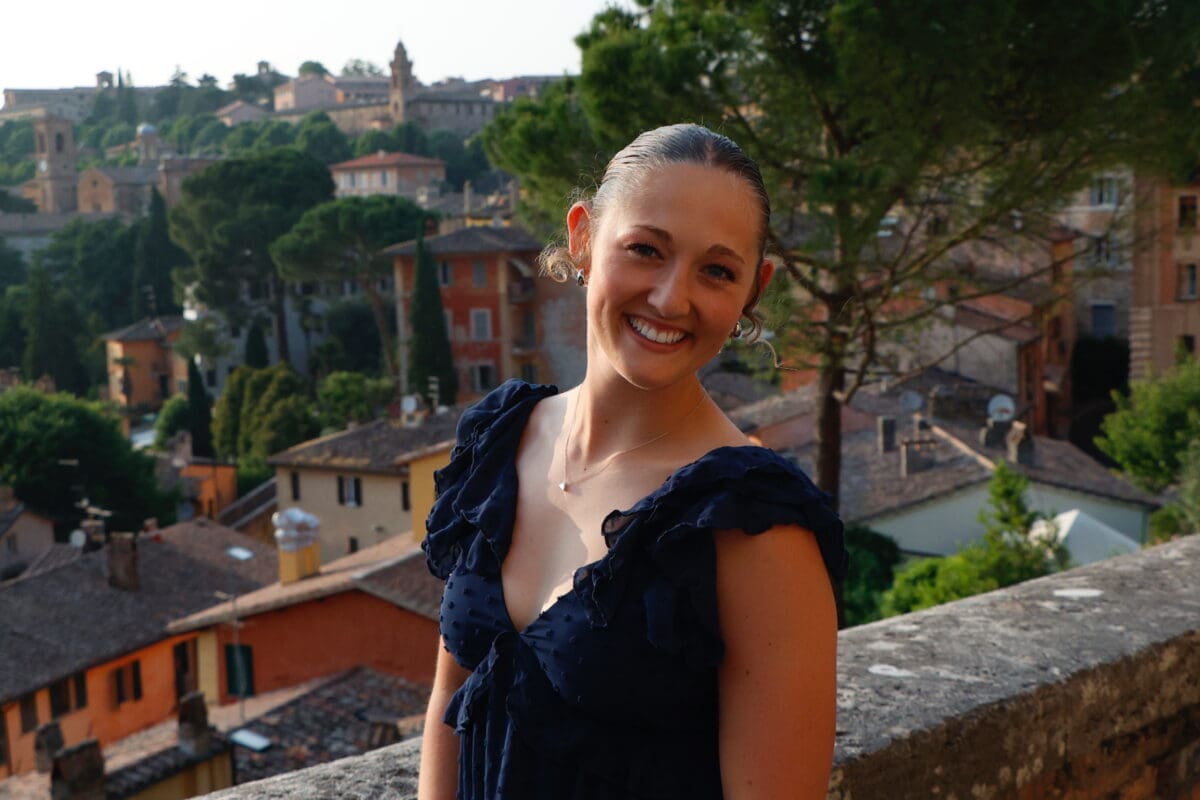
“Only 10 people got selected for my tribe, so that’s so gratifying to me,” Kendal Wells said. The University of Arkansas at Little Rock student-athlete was named one of 10 recipients from the Muscogee Nation to receive the Muscogee Nation Scholarship Foundation’s Aristocrat Cokv Hecv Honors Program Scholarship, the University of Arkansas at Little Rock reported.
For Wells, the honor carries weight that reaches far beyond tuition support. “It’s reassuring to know that I am part of my tribe and that I have a place,” she said. That sense of belonging has been hard-won. Raised in northwestern Oklahoma, physically distant from many of the Muscogee Nation’s cultural activities and traditions, she had limited chances to engage with and discover her identity. She discovered that the separation only fueled her determination to learn more about her heritage and forge a stronger bond with her tribal community.
That search for roots now shapes every part of her life at UA Little Rock, from the laboratory to the soccer pitch, and it points toward a career she hopes will bring her back home to Oklahoma.
Reconnecting Across the Miles
Wells’s interest in understanding her heritage carried directly into the scholarship application process. She studied Phillip Deere, a Muscogee spiritual leader who helped Native Americans reconnect with their culture and identity, and his work spoke to her as she started learning her tribal language and seeking ways to deepen her own tie to Muscogee culture.
She kept investigating her ancestry via Native Explorers, a program uniting participants from tribes throughout Oklahoma to study Indigenous traditions and experiences. Throughout a weeklong camping trip, she picked up Indigenous methods for locating fossils, listened to elders recount stories, studied migration histories of other tribes, and passed on a Muscogee tradition of her own.
“Hearing everybody else’s stories and being able to come together as one was beautiful,” Wells said.
Where Tradition Meets the Lab
The program additionally allowed Wells to examine how Indigenous culture intersects with health and science via a STEM internship at the Oklahoma State University Center for Health Sciences. She spent time observing in an anatomy lab, mastered traditional basket weaving, and investigated methods to modify Indigenous foods and cooking practices to promote healthier eating.
She collaborated with two second-year medical students on a study looking at violence against Native American women, working to highlight a problem impacting her community. Over 80% of American Indian and Alaska Native women face violence during their lifetime, per a report from the National Institute of Justice, and their homicide rate is almost triple that of non-Hispanic White women.
The research experience reinforced Wells’s interest in medicine. A double major in biology and chemistry, she is preparing for medical school with the goal of using her education to serve her community.
A Family on the Pitch
After transferring to UA Little Rock to play soccer, Wells found another community that supports her. The women’s soccer team became a source of support and family, shaping how she approaches her own involvement on campus.
Kelly Farrell, head coach of the Trojan women’s soccer team, said Wells “has been the consummate teammate over the course of her time” as a Trojan, “someone who exudes positive energy, uplifts the people around her, and always puts the team first.” “Kendal’s work rate is second to none, she’s prepared and comes ready to face every challenge head-on,” Farrell added. “She’s an incredible representative of Little Rock Soccer, and I’m so proud to call her a Trojan.”
“I couldn’t imagine going through college without being a student-athlete,” Wells said. “I love soccer so much, and you build a family with your teammates.”
Building Bridges Beyond the Classroom
In her roles as a college ambassador and chemistry learning assistant, Wells takes pleasure in greeting students, passing along her passion for science and assisting others in developing confidence in their capabilities. Dr. Mark Baillie, provost’s fellow and associate professor of chemistry, has seen that commitment firsthand as her instructor, research mentor and learning assistant mentor.
“I’ve been fortunate to have Kendal as a student and later as a learning assistant in my general chemistry courses,” Baillie said. “She has an amazing ability to balance rigorous academic courses, high-level athletics and a research position while still finding ways to improve the lives of those around her.”
She carried that commitment past the classroom walls by establishing the Trojan Outdoors Club, offering students chances to engage in pursuits like rock climbing, kayaking, paddleboarding and biking. Wells aims to broaden access to outdoor recreation while fostering connections among students and encouraging them to discover Arkansas.
For Wells, becoming a physician is about more than treating patients. She aspires to go back to Oklahoma and work at a tribal hospital, where she can develop rapport with Native patients and help establish a health care setting where they feel at ease getting treatment.
“A lot of Native Americans don’t trust the health care system,” Wells said. “I want to go back and let them know they can trust me. I’m there to help and support them.”
Through her cultural ties, campus engagement or professional path, Wells keeps searching for ways to aid others and reinforce the communities surrounding her.
“I have my teammates that I love, and the more people you know, the more fulfilled you are and the more people you can help,” she said. “I just want to help people. I think at the end of the day, that’s why I love being so involved on campus, because I’m helping other people. It feels good being there and providing something for others.”
Worth a look
Indiana Candidate Jaime West Loses Election After Viral Interview
Jaime West Loses Indiana Council Race After Viral 'We Have Guns Too' Interview Jaime West, the Indiana Democrat...
Jessica Biggs wins race to lead Chicago’s first fully elected school board
"Families are tired of chaos and uncertainty," Jessica Biggs said after declaring victory Tuesday night. Chicago voters have...
Idaho voters reject abortion rights measure to keep ban intact
Pregnant Idahoans who need an abortion will keep driving to Utah, and the doctors who stayed behind will...
Democrats Poised to Flip Georgia House for First Time in Over 20 Years
Democrats have netted enough seats to seize control of the Georgia House of Representatives for the first time...