
On election night, Connecticut Republicans braced for losses. What arrived instead was a wipeout. Democrats are projected to hold majorities as large as 33-3 in the state Senate and at least 111-40 in the House, according to Connecticut Public Radio, leaving the GOP with its smallest-ever presence in the upper chamber and Democrats without a single seat lost in either chamber.
The scale of the shift matters beyond the headline numbers. Republicans went into Tuesday holding 11 of the Senate’s 36 seats; by Wednesday morning, only three of those 11 incumbents were clear victors. The rest — including Senate Minority Leader Stephen Harding of Brookfield, who trailed his Democratic challenger Aaron Zimmer with 71% of the vote counted — were swamped what Harding himself called a national wave exceeding the worst fears of a party that held half the state Senate seats as recently as 2017 and 2018.
“A caucus of three” — Harding concedes the magnitude
Harding, speaking Wednesday morning, did not soften the arithmetic.

“It’s a caucus of three. You know, we go from a caucus of 11 to a caucus of three in one night. It’s as bad as it gets,” Harding said.
The three Republican survivors in the Senate are Sen. Eric Berthel of Watertown, Sen. Henri Martin of Bristol, and Sen. Rob Sampson of Wolcott. Democrats, who entered the night with a 25-11 majority, now stand to expand that dramatically. In the 34th Senate District, with 100% of the vote counted, Sen. Paul Cicarella, R-North Haven, lost to Democrat Brandi Mandato by about two dozen votes, and a recount is expected — one of the few remaining variables in an otherwise settled chamber.
Incumbents fall across the map, from Enfield to Groton
The Senate losses were not confined to the leadership. Democrats unseated Sen. John Kissel of Enfield, a state senator for 34 years, who lost to David Kiner in the 7th District; Sen. Heather Somers of Groton, who lost to Joe de la Cruz in the 18th; and Sen. Jeff Gordon of Woodstock, who lost to Ethan Werstler in the 35th. In the 21st District, Carolann Reid unseated Sen. Jason Perillo, R-Shelton, with 50.87% of the vote. Democrats also captured two open seats in Fairfield County: Rob Blanchard of Newtown won the 28th District seat previously held by Sen. Tony Hwang, R-Fairfield, and Jill Oberlander of Greenwich took the 36th District seat held by Sen. Ryan Fazio, the GOP nominee for governor.
The House told the same story. House Minority Leader Vincent J. Candelora, R-North Branford, who ran unopposed, put it plainly:
“Basically, every seat that we thought we had a challenge in, we lost,” Candelora said.
House Speaker Matt Ritter, D-Hartford, said that if other close races fall their way, the House Democratic advantage could reach 115-36. Republican incumbents who lost included Rep. Cara Pavalock-D’Amato of Bristol — a strong public supporter of Trump and ICE’s enforcement of immigration law — Rep. Steve Weir of Hebron, Rep. Carol Hall of Enfield, Rep. Mark Anderson of Granby, Rep. Chris Aniskovich of Clinton, and Rep. Greg Howard of Stonington. In Bristol’s 77th House District, Democrat DeWayne K. Wynn, Jr. beat Pavalock-D’Amato 56% to 44. Rick LeBorious defeated Hall in their 59th District rematch, Ellen Paul took the 55th from Weir with 53%, and on her third try Kim Becker unseated Anderson in the 62nd District covering Barkhamsted, Granby, Hartland and New Hartford.
Fairfield County’s Republican base keeps eroding
The suburban shift was starkest in Fairfield County, long a Republican stronghold. Democrats flipped state House seats in Newtown and Shelton: Michelle Embree Ku unseated Rep. Mitch Bolinsky of Newtown in the 106th District, and Bryan Lizotte won the open 113th District seat in Shelton. The trend extended to the shoreline, where Democrat Jane Wisialowski won the 23rd District — Lyme, Old Lyme, Old Saybrook and Westbrook — on a second run after losing narrowly to Rep. Devin Carney, R-Old Saybrook, in a previous election; Carney did not run this year.
One of the night’s most striking races came in the 8th House District, where Rep. Tim Ackert, R-Coventry, is leaving after an unsuccessful run for lieutenant governor. The GOP nominee, 21-year-old UConn journalism student Will Gifford, had posted a video in December in which he nodded in seeming agreement as a white Christian nationalist figure told him Judaism is “evil.” Gifford lost to Democrat Francis Lombard. Democrats also held the 31st District in Glastonbury, where Moise “Moses” Carelus defeated Rep. Jill Barry — a Democrat who had run on the Republican and Independent ballot lines after Carelus won the Democratic nomination — with 58% of the vote.
What a 33-3 Senate means for Connecticut governance
A caucus of three gives Republicans almost no procedural leverage in a chamber where Democrats can advance legislation without a single GOP vote. For residents, that translates into a legislature where budget negotiations, bonding priorities, and committee assignments will be decided almost entirely within one party — a configuration that shapes everything from property tax debates to transportation funding in the coming session. The House, even at its minimum projected 111-40 advantage, gives Democrats a veto-proof cushion on most votes.
Whether the final tally lands at 33-3 or settles a seat or two lower, the direction is unmistakable: the Connecticut GOP that controlled half the Senate in 2017 and 2018 is now a rump caucus, and the party’s remaining footholds are concentrated in a handful of reliably conservative towns. With a recount pending in North Haven and a few House races still being counted, the full shape of the new General Assembly will take shape over the coming days — but the wave, as Harding put it, has already crashed.

Worth a look
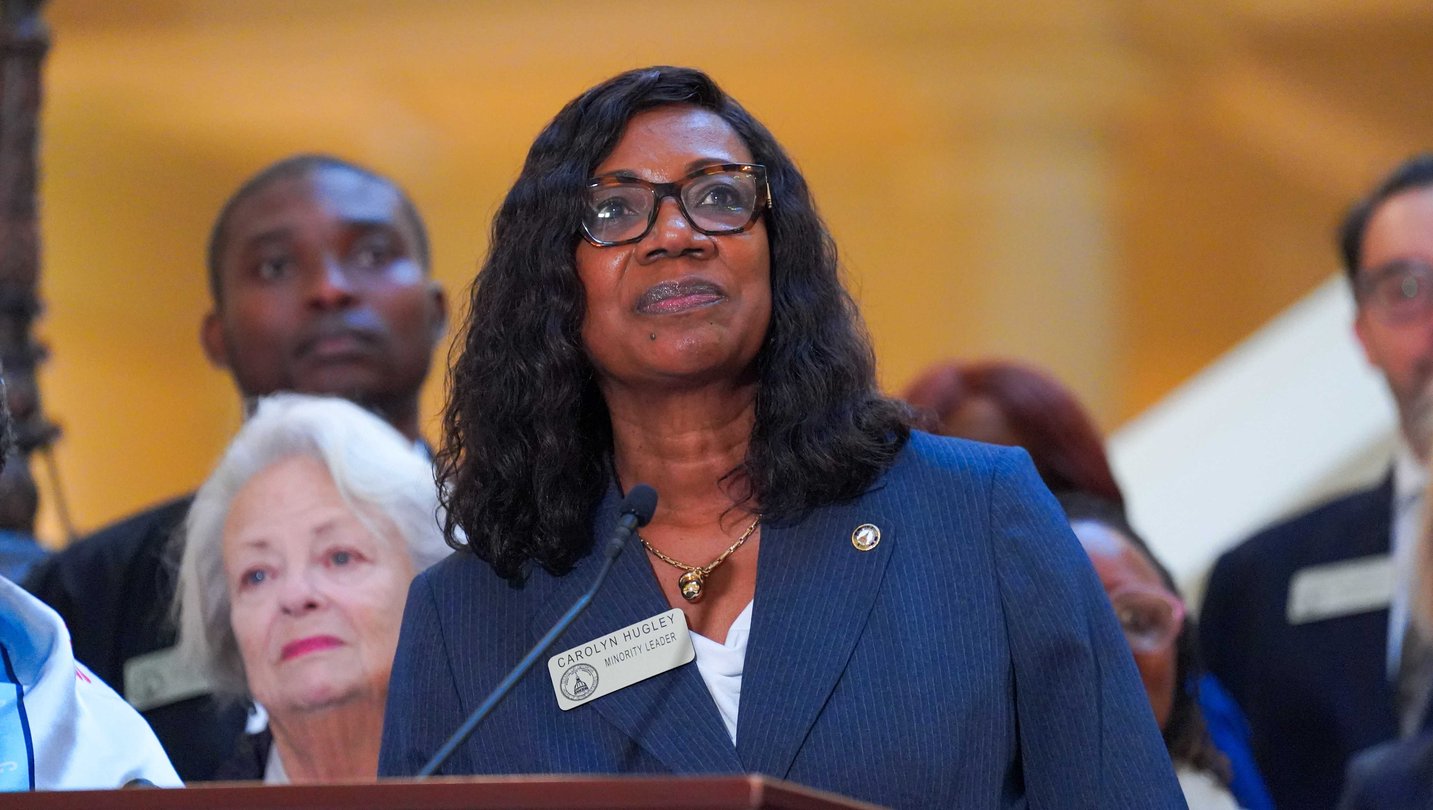
Democrats Poised to Flip Georgia House for First Time in Over 20 Years
Democrats have netted enough seats to seize control of the Georgia House of Representatives for the first time...

Happy Days’ stench limited to back entrance, sniff test finds—no odor on Waiʻalae Ave frontage
The rot is real but contained: as of Halloween, the stench from the collapsed Happy Days restaurant in...

Thomas Howard Hall, 56, landscaper and DuPont Country Club groundskeeper, dies October 23, 2026
Thomas Howard "Tom" Hall, 56, passed away suddenly on October 23, 2026, leaving behind the manicured fairways he...

Byron Donalds elected Florida governor; term lasts four years
History was made Tuesday night in Florida. Republican U.S. Rep. Byron Donalds defeated Democratic candidate David Jolly by...