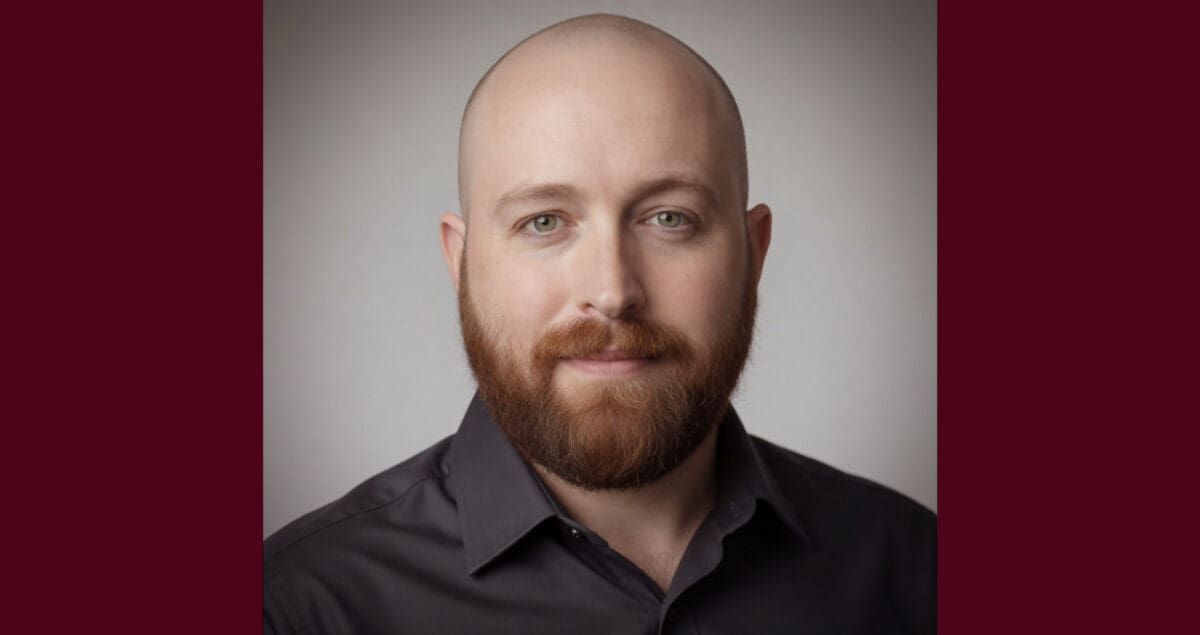
“Being selected tells me that my experience, including the hardest parts of my past, has value in this field,” Phillip Hill said.
The University of Arkansas at Little Rock graduate student has become the first master’s degree student in the School of Social Work to receive the Council on Social Work Education (CSWE) Minority Fellowship, University of Arkansas at Little Rock reported.
Hill, an advanced standing MSW student, is one of only 40 fellows chosen from a nationwide pool this year following a competitive three-round review process. The fellowship, which is funded by the Substance Abuse and Mental Health Services Administration (SAMHSA), targets graduate students dedicated to improving mental health and substance use services in underserved communities.
For Hill, the national honor serves as a bridge between personal history and professional purpose. A graduate of Benton High School, he earned an associate degree from the University of Arkansas-Pulaski Technical College before transferring to UA Little Rock, where he graduated summa cum laude with a Bachelor of Social Work and a minor in English.
Academic research and clinical training
Hill’s work extends beyond the classroom into active research and frontline clinical practice. He currently serves as a graduate research assistant under Dr. Esaa Mohammad Samarah, an assistant professor in the School of Social Work, focusing on peer recovery, corporal punishment, and rural behavioral health.
His research has already gained traction in the academic community. Hill has had presentations accepted at the 2026 CSWE conference and the 2027 Society for Social Work and Research conference, and he is the lead author of one manuscript with a second co-authored work currently pending publication.
In addition to his academic pursuits, Hill is gaining practical experience through an internship at Little Rock Recovery. There, he works with clients in early recovery under the supervision of Michael Godfrey, a licensed clinical social worker, and Brian Fleckenstine, a board-certified psychiatric-mental health nurse practitioner.
“We could not be prouder of Phillip for earning this national distinction and representing UA Little Rock’s School of Social Work so exceptionally well!” Dr. Laura Danforth, director and professor of UA Little Rock’s School of Social Work, said.
The fellowship provides Hill with more than just financial support; it offers specialized training, mentorship, and a network of social work professionals across the country.
The value of lived experience
The selection of Hill highlights a growing emphasis within the social work profession on the utility of lived experience. Rather than viewing personal struggles as obstacles, the fellowship recognizes them as assets in serving populations that often feel overlooked by traditional systems.
“It’s a national affirmation that the work I want to do matters,” Hill said.
Hill noted that the mentorship he received from faculty members—including Professor Morgan Leyenberger, Dr. Theresa Flowers, Dr. Samarah, and Dr. Danforth—fundamentally altered his perception of his career trajectory.
“Working with faculty changed how I see my own future,” Hill said. “Doing real research, being treated as a contributor, and seeing my name on manuscripts showed me that my past doesn’t close doors in this field. It’s part of what I bring to it.”
Upon completing his master’s degree, Hill has already accepted a full-time position as a clinical provider at Little Rock Recovery in Maumelle. His long-term goals include pursuing a Ph.D. in social work and entering academia to teach future generations of practitioners.
For students looking to enter similar competitive fields, Hill suggests a strategy of persistence despite uncertainty.
“Take chances, and get comfortable being uncomfortable,” Hill said. “Apply for the things that seem like a long shot. If you don’t apply, the answer is automatically no.”
Donatella Davanzo Argues Route 66 Is a Destination, Not Just a Road
Donatella Davanzo argues that Route 66 has evolved from a mere transit corridor into a primary destination, according...

Special Prosecutor Assigned in Trenton Arson Case Against Tommy Fry
A special prosecutor has been appointed to lead the arson case involving a July 2025 fire that damaged...

Concord Offers $2,500 Stipends for Downtown Sculpture Show
The City of Concord is turning to the national art community to refresh its downtown aesthetic, inviting artists...

Prince concert film hits 500 theaters, 3121 album reissued
A concert film capturing Prince's 2006 era will begin a limited theatrical run in more than 500 theaters...