
University of Kentucky researchers have built a toolkit that hands people who use drugs a practical playbook for confronting stigma inside exam rooms and hospital corridors.
The Health Communication & Advocacy for Recovery Empowerment — HealthCARE — toolkit emerged from a 2024 grant by the UK Office for Land-grant Engagement, which seeded community-engaged projects aimed at improving life across the commonwealth. Jessalyn Vallade, an associate professor in the College of Communication and Information, Kimberly Parker, a professor in the Department of Integrated Strategic Communication, and Alex Elswick, a Cooperative Extension faculty member and co-founder of the Lexington recovery center Voices of Hope, led the work.
“We know stigma can be a significant barrier to seeking help, but we wanted to understand what that barrier actually looks like from the perspective of people who use drugs,” Elswick said.
“People may recognize that they want support but still encounter judgment, fear or other barriers that make reaching out difficult. This toolkit helps people work through those experiences, find their voice and feel empowered to advocate for themselves and the care they deserve.
The team started by listening. They interviewed health-care providers and ran focus groups with the community advisory board at Voices of Hope and the UK Survivor’s Union of the Bluegrass, a group of people in non-abstinence-based recovery. The conversations revealed a pattern: patients who use drugs often feel punished by the very system meant to treat them, and standard stigma interventions tend to target providers’ attitudes while leaving patients without immediate tools.
“Stigma interventions generally target providers’ beliefs and attitudes and hope for a positive trickle-down effect on patients,” Vallade said. “We wanted to approach it from the other direction, providing practical tools to build patient skills and confidence to be active participants in their own healthcare, which often means navigating significant stigma.”
The result is a three-part package: a self-guided workbook, a quick-reference guide for clinical and community offices, and a workshop facilitation kit. The materials walk users through managing difficult emotions when stigma surfaces, setting clear care goals they can articulate to a clinician, and practicing communication strategies drawn from real scenarios and quotes gathered during the research.
Parker, whose background spans persuasive message design and social-problem interventions, framed the project as a response to a persistent question: “How can we better understand the concerns facing the community and how can we help?”
After piloting the toolkit with community health workers representing 18 Kentucky counties, the team found that participants with substance-use disorder rated the scenarios as directly relevant to their lives. Survey data showed significant gains in self-efficacy and in the intention to use the toolkit’s strategies during future health-care encounters. Workers in the field signaled they were likely to deploy the materials across both clinical and community settings.
“At Voices of Hope, and for many other recovery organizations, we try not to treat our people as recipients,” Elswick said. “Rather, we treat them as resources in and of themselves and we prefer to empower them to understand they already have strengths they can leverage to succeed in their recovery.”
The researchers note that people who use drugs interact with health-care systems at disproportionately high rates yet frequently receive a lower standard of care. The toolkit is designed to narrow that gap by equipping patients to advocate effectively without severing the provider relationship.”
Worth a look
- Missouri Opens $160M Consolidated State Lab Complex
- Postal Retirees Must Enroll in Medicare Part B to Keep PSHB Coverage
- Researchers Detail Circular Polarization Asymmetry in Nonchiral Random Fiber Laser (archyde.com)
- How Documenting Your Everyday Work Can Build Trust and Grow Your Business Audience (world-today-news.com)
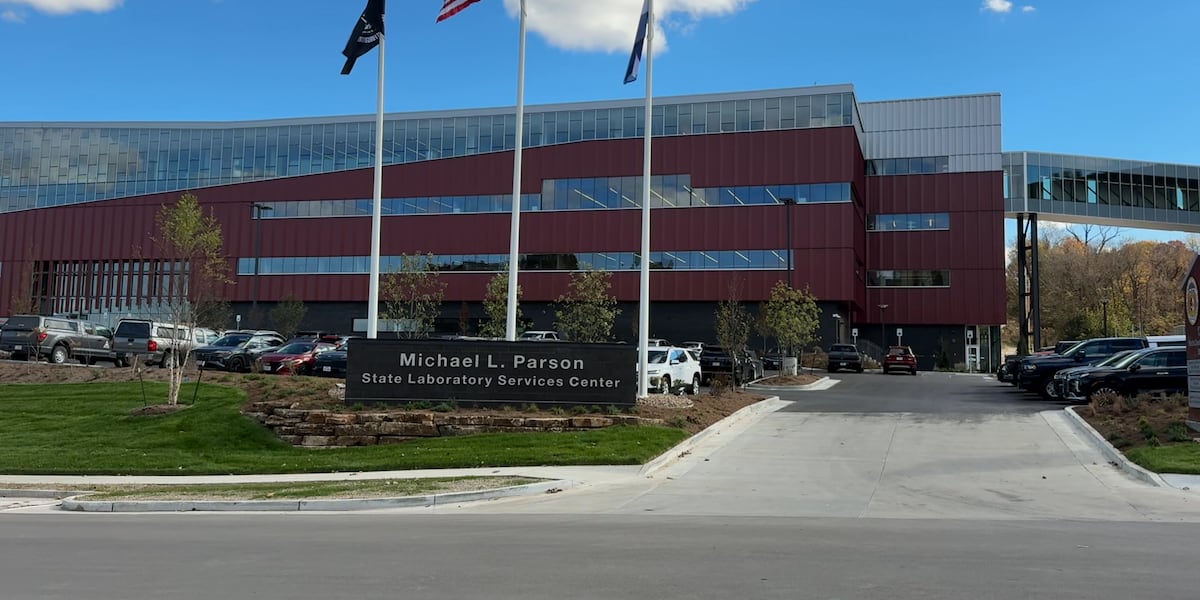
Missouri Opens $160M Consolidated State Lab Complex
Missouri opened a $160 million state laboratory complex in Jefferson City on Thursday, consolidating five agencies under one...

Postal Retirees Must Enroll in Medicare Part B to Keep PSHB Coverage
Postal retirees face a hard deadline this fall that most federal workers never see: enroll in Medicare Part...

Anchorage School Board Member Paul McDonogh Resigns for Wife’s Job
Anchorage loses a school board member seven months after voters elected him, leaving six colleagues to fill Seat...

Magnitude 4.2 Earthquake Near Commerce Rattles Southern California; No Damage Reported
At 3:25 a.m. Friday, a magnitude 4.2 earthquake jolted the Commerce area, its epicenter roughly one kilometer north-northwest...