The United Kingdom announced sanctions against five senior Myanmar military leaders on Monday after the International Court of Justice ruled last week that Myanmar committed genocide against the Rohingya during 2017 clearance operations in Rakhine State. Foreign Secretary Ed Miliband said the response must match the gravity of the crime and confirmed new legislation would be passed to stop the supply of aviation fuel to Myanmar.
What did the ICJ decide?
The court found by a 9–6 majority that Myanmar breached the 1948 Genocide Convention, killing around 10,000 Rohingya and driving more than 700,000 into Bangladesh. President Yuji Iwasawa said genocidal intent was “the only reasonable inference that can be drawn from the evidence,” AP News reported. It was the first time the court has held a state directly responsible for genocide since the convention was adopted.
Who faces UK sanctions?
The measures target Myo Htut Hlaing, Myo Min Tun, Myat Thet Oo, Kyaw Soe and Kyaw Swar Oo. Min Aung Hlaing, who led the military in 2017 and now heads the junta, was already sanctioned by the UK in 2021. Miliband told MPs he is “directly responsible for many of the atrocities that have happened,” BBC News reported.
“Money cannot replace life. Money cannot replace loved ones that were lost.” After this week’s landmark genocide ruling, @UN_PGA tells Rohingya refugees in Bangladesh that reparations can still help survivors rebuild their dignity and hope. https://t.co/HgUHUVbBXc
What further steps is the UK taking?
Miliband said the government would introduce legislation to stop the supply of aviation fuel to Myanmar and expelled the country’s defence attaché last week.
He also called for an immediate pause in hostilities, a halt to air strikes on civilians, the release of political prisoners and dialogue toward an inclusive political settlement. Miliband said he would call within a fortnight for a dedicated UN Security Council meeting, he told the Commons on Monday.
How does the ruling affect other genocide cases?
Its propositions will be used in future cases: “that genocidal intent may coexist with legitimate military objectives…that UN reports compiled without access can carry decisive weight; and that a state can breach the duty to prevent genocide without any finding that genocide occurred.”
Calling a genocide a genocide isn’t just about accountability, it’s about prevention. Choosing not to call a genocide a genocide isn’t just an act of cowardice, it’s an act of permission.https://t.co/8zAKky6mdz
What happens next for the Rohingya?
The ICJ ordered Myanmar to allow “the safe, voluntary, and dignified return of displaced Rohingya to their places of residence,” according to the Hindustan Times. International funding for refugee camps in Bangladesh has fallen from nearly $692 million in 2019 to under $500 million a year. Yasmin Ullah, a Rohingya rights activist in The Hague, said the judgment “will only mean something if governments act on it,” PBS reported.
Rofique, looking at his 12-year-old with tears lining his eyes, said: “When I saw him last, he was a baby … but now he’s grown up.” He said his family experiences newfound freedoms like education and equality, CBC reported.
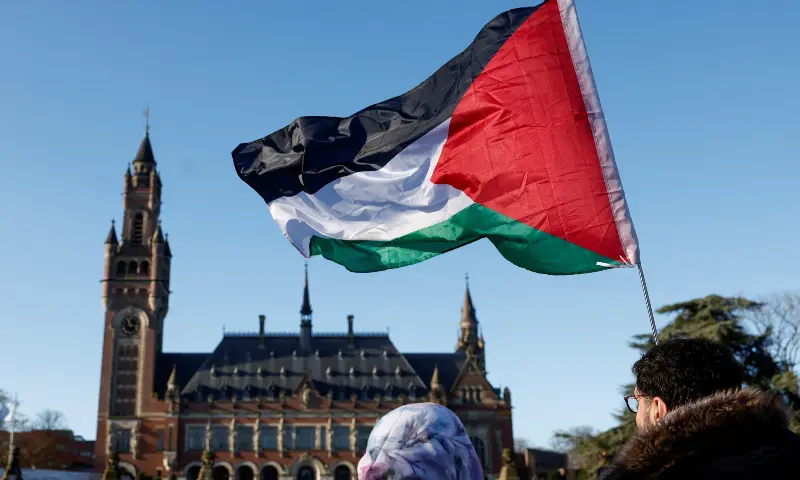
Court accepts UN reports as decisive evidence
Legal experts said the court’s acceptance of evidence compiled without access to the territory can carry decisive weight in future cases.
How has Myanmar responded?
Myanmar denied the claims against it. A spokesperson in the capital Naypyitaw told reporters “not all 15 judges agreed with the decision,” according to PBS. The junta continues air strikes and ground operations in Rakhine State, where the Arakan Army is also active, Miliband told MPs on Monday.
The Foreign Ministers of New Zealand, Australia, Belgium, Canada, Cyprus, Czech Republic, Estonia, Iceland, Latvia, Luxembourg, Portugal, Spain, The Gambia and the United Kingdom acknowledge the decision of the International Court of Justice concerning Myanmar under the Genocide…
“Our response to a crime as profoundly shocking as genocide must reflect our values and must be matched by clear action,” Miliband said.
[When you see smoke, run: Rohingya who escaped Myanmar’s genocide tell their stories] “Survivors recount rivers red with blood and burning nearby villages serving as an urgent warning to flee their homes“https://t.co/vlyZ58y9qq””
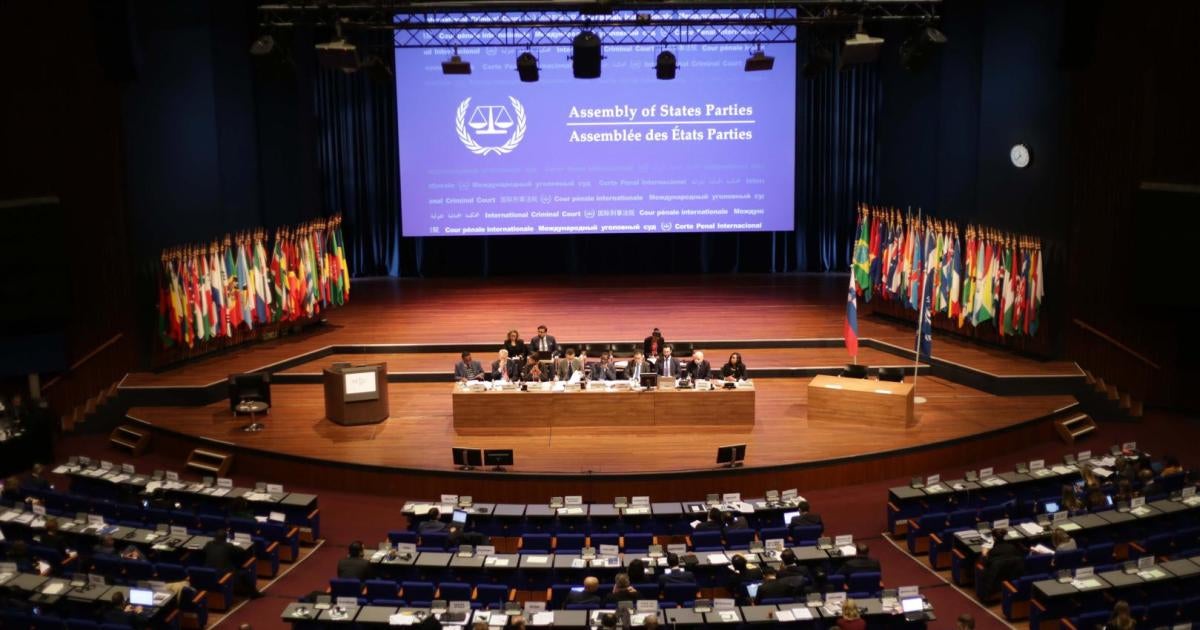
HRW Briefing Note for ICC Assembly Amid US Sanctions
Key developments in the ICC crisis DateEvent February 6, 2025Trump issues Executive Order 14,203 authorizing ICC sanctions December...

Luxon Calls Putin a ‘Killer’ and Criticises Trump’s Remarks
New Zealand Prime Minister Christopher Luxon called Russian President Vladimir Putin "a killer" and sharply criticised US President...
IDFA Director Warns Against Overstating Documentary Revival
Three documentaries — Alex Gibney's four-hour Musk, the Guardian-produced NAZA, and Nathan Fielder and Lance Oppenheim's You Can...

ICC Upholds Jurisdiction Over Njeem, Defers Admissibility Ruling in Libya Case
Pre-Trial Chamber I of the International Criminal Court unanimously upheld its jurisdiction over Osama Almasri Njeem on November...