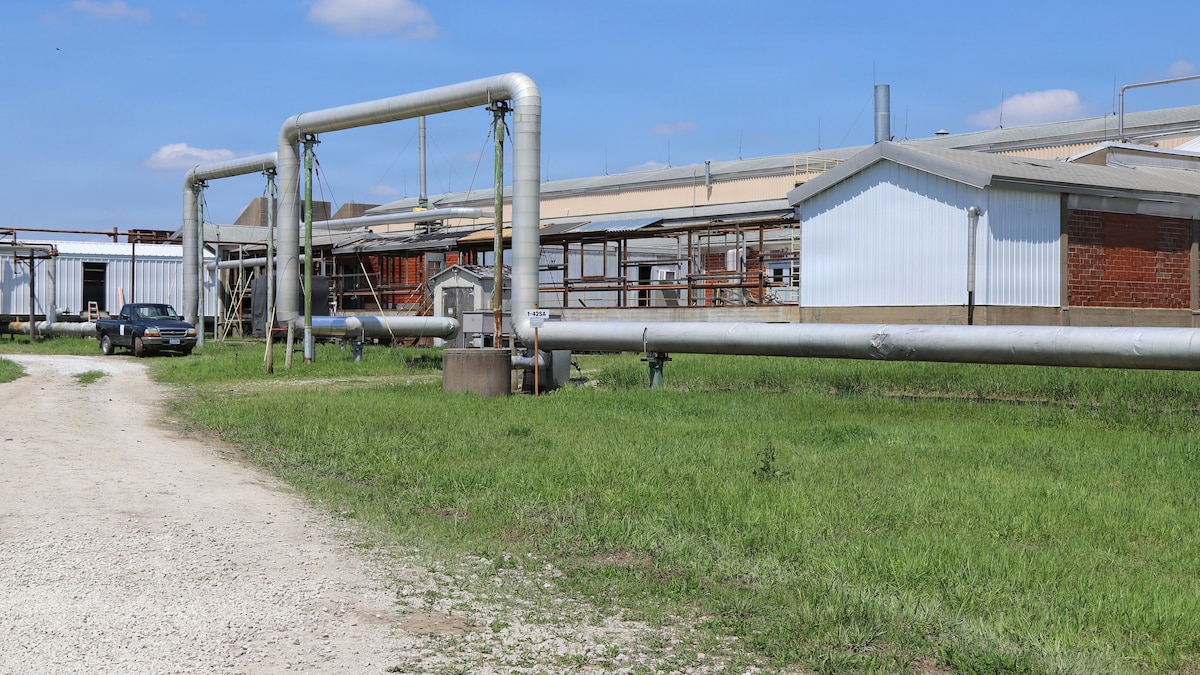
The U.S. Army plans to detonate 68 barrels of aging lead azide on Friday at the Iowa Army Ammunition Plant near Middletown, a controlled blast expected to send a plume of lead dust across parts of southeastern Iowa and northwest Illinois.
The material, roughly five tons of a primary explosive used to initiate munitions, has sat in earthen-covered igloos for more than 20 years, submerged in an ethanol-water bath to keep it stable.
Over time the lead azide dried out and became more volatile than anticipated, Army officials say, creating a risk of spontaneous detonation, especially as temperatures drop. Moving the barrels was ruled out because friction or vibration could set them off.
The Environmental Protection Agency approved an emergency permit on Nov. 13, triggering a requirement to notify the public five days in advance. That notice went out Sunday, reaching communities up to 100 miles downwind. Air-dispersion modeling shows the plume could stretch nearly that far, putting towns like Mediapolis — less than 20 miles northeast — directly in the projected deposition zone.
“The safety of our people and our neighbors is non‑negotiable.”
Daniel Nosse, commander of the plant, said at a public meeting in March, acknowledging the volatility of the compound.
Residents in Middletown, population roughly 400, have been advised to evacuate Friday morning if possible. Those who stay should shelter indoors with windows sealed and HVAC systems set to recirculate. The Army expects two rapid explosions and ground vibrations capable of breaking older windows. Dust is projected to linger for about an hour, depending on wind speed.
Some schools in the plume path have already canceled classes Friday. The Mediapolis Community School District cited “uncontrollable variables” in its decision to close buildings and cancel all events and practices. The public library there will also shut down, and the local fire department plans to hose down playground equipment afterward.
“This is probably a first for me. I believe it’s a first for a lot of our citizens.”
said Amy Stucker, deputy city clerk of Mediapolis. “The biggest issue we’re having is the lack of information.”
‼️The Army will set off two controlled detonations at the Iowa Army Ammunition Plant near Middletown on Friday, Nov. 20, to dispose of an old cache of lead azide. The Army found 68 barrels of the explosive that had been stored at the plant for more than 20 years. Lead azide… pic.twitter.com/BMWV9huBQ0
City officials in Mediapolis were approached late last month about allowing soil, water and air testing, but only learned Sunday — from the plume map — that they sat dead-center in the exposure area. The EPA will run a command center in town during and after the blast, but Mediapolis plans its own independent sampling to reassure residents.
Health experts are urging caution. Jennifer Sample, a medical toxicologist, told the Des Moines Register that lead remains particularly dangerous for young children because it can cause irreversible neurological damage. “The state of Iowa should close all schools in the plume path,” she said.
The Centers for Disease Control and Prevention maintains that no safe blood lead level has been identified in children; even low-level exposure can affect learning, attention and academic performance. Lead also accumulates in adults’ bones and can be released during pregnancy and breastfeeding, passing to the fetus or infant.
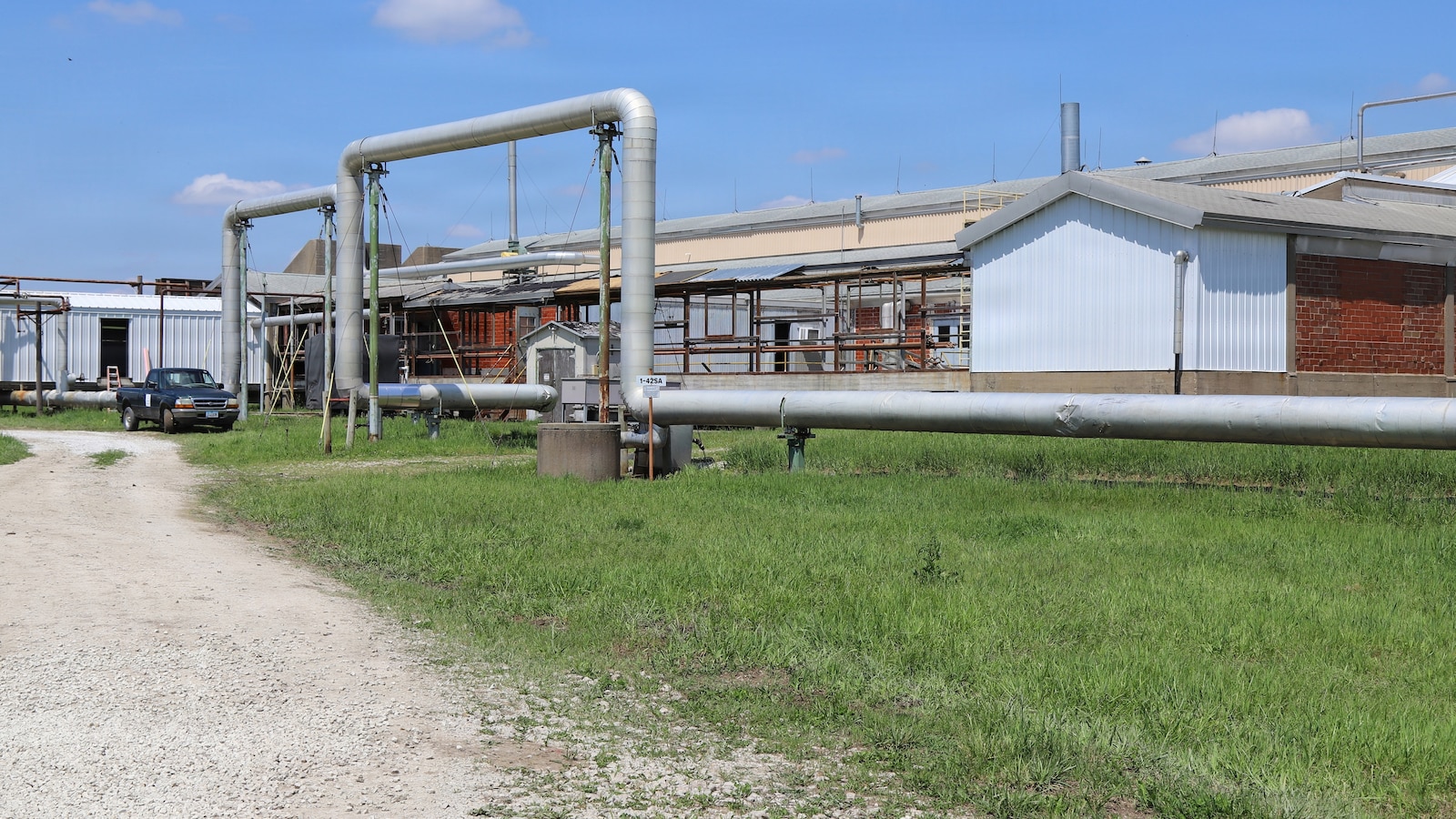
The Army and EPA say environmental impacts will be temporary and limited. Justine Barati, deputy chief of public and congressional affairs for Army Sustainment Command, described the projected exposure as minimal. “It’s not lead paint where it’s a chronic exposure by children,” she told the Register. “It’s the equivalent of living in a mining town for one hour.” There are no plans to offer blood-lead testing related to the detonation.
Independent researchers remain skeptical. Drew Latta, director of Iowa’s “Get the Lead Out” program, said information should have been released sooner. “It just seems like there’s a lot of unease. If they possess evidence that could dispel that unease, they must communicate it more effectively. And quickly,” he told the Register.
David Cwiertny, director of the Center for Health Effects of Environmental Contamination at the University of Iowa, wrote on social media that hosing down lead-containing dust does not mean it is “magically gone.” Latta and Cwiertny are conducting independent monitoring of the detonation.
Illinois environmental and public health officials have also weighed in, urging the military to conduct comprehensive sampling in their state after the blasts. Even Kim Reynolds’ office was first briefed on the public advisory Monday, her office confirmed.
The Iowa Army Ammunition Plant, established in November 1940 as the Iowa Ordnance Plant, spans 19,011 acres near Burlington and has produced medium- and large-caliber munitions since 1941. After pausing in 1945, it resumed operations in 1949 and surged during the Korean conflict; it was placed on the National Priorities List in 1989 for explosives contamination beyond its boundary, and a Restoration Advisory Board still oversees cleanup.
Property owners who suffer damage from blast vibrations can file claims with the Army, and certain landowners may be requested to permit environmental sampling on their property. The detonation is scheduled for Nov. 20.
More on Iowa Army Ammunition Plant
🔴 U. S. Army to detonate 68 barrels of unstable lead azide in Iowa on Nov 20 The Army will destroy the material at its ammunition plant in Middletown, Iowa, at around 12:00 p.m. Central Time on November 20. The lead azide—a highly sensitive explosive used in detonators—has been… pic.twitter.com/zBTFxhmOzd
The U. S. Army will detonate degraded lead azide at the Iowa Army Ammunition Plant in Middletown, Iowa, on Nov. 20 at approximately 12:00 PM CST. Lead azide is a highly sensitive primary explosive used in detonators. The stockpile is 68 barrels that have sat at the plant for… pic.twitter.com/166lk6avjJ
Related reading
- Tennessee Officials Cite Litigation in Refusing Answers on License Denials
- Downtown Austin Scavenger Hunt Adventure: 2.5-Mile Smartphone Game from Capitol to Lady Bird Lake
- France Raises Bird Flu Risk to High Across Mainland Territory (archyde.com)
- New surgical hubs to launch across Wales to cut waiting times (newsarchyuk.com)
Tennessee Officials Cite Litigation in Refusing Answers on License Denials
Democratic lawmakers pressed the Tennessee Department of Homeland Safety & Security on Wednesday for answers about a policy...

Downtown Austin Scavenger Hunt Adventure: 2.5-Mile Smartphone Game from Capitol to Lady Bird Lake
Urban Adventure Quest turns downtown Austin into a game board that starts at the Texas State Library &...

1976 Grocery Ads Show Philadelphia Thanksgiving Dinner Cost More Than Controller Reported
Philadelphia's City Controller said a Thanksgiving dinner costs nearly four times what it did in 1976. Controller Christy...

Ohio State Flips In-State Edge Damion King From Appalachian State for 23rd 2027 Commitment
Westerville North edge Damion King flipped from Appalachian State to Ohio State on Wednesday, giving the Buckeyes their...