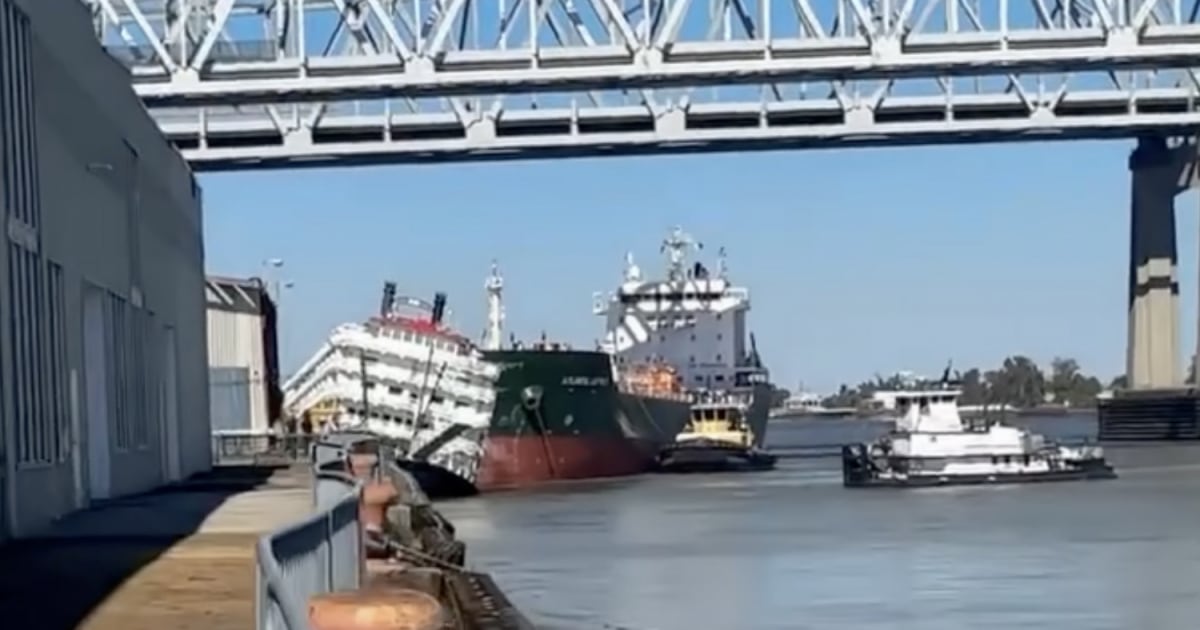
A major rescue operation is unfolding on the Mississippi River in New Orleans after a tanker collided with a docked river boat, leaving passengers and crew in the water.
The incident occurred around 12:30 p.m. local time on Friday, drawing an immediate emergency response to the busy stretch of the river near the French Quarter.
The vessel involved, the American Heritage, had been docked for approximately two hours when it was struck by a significantly larger tanker ship, according to reports from NBC News.
Managed by American Cruise Lines, the Heritage was carrying nearly 130 passengers at the time of the collision. Video and images verified by NBC News show individuals wearing life jackets in the water near the site of the crash, underscoring the urgency of the ongoing recovery efforts.
“We are in close coordination with the U.S. Coast Guard and local authorities,” a spokesperson for the cruise line said in a statement. “Guests and crew were evacuated, and we are deeply concerned for everyone involved.”
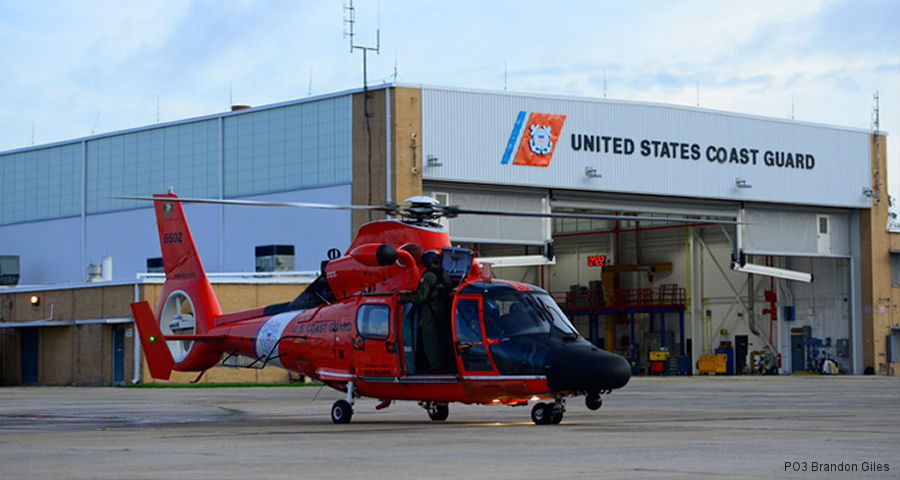
The U.S. Coast Guard has established a three-mile safety zone along the Mississippi River to facilitate the rescue operation. Lt. Krystal Wolfe, a spokesperson for the Coast Guard, confirmed that the stretch of the river remains closed to all traffic while responders assess the situation and conduct recovery operations.
The closure effectively halts commercial movement on one of the country’s most vital economic arteries, which serves as a primary conduit for grain, oil, and chemical shipments moving toward the Gulf of Mexico.
The vessel that struck the cruise boat, the Atlantic Asphalt, is a tanker registered in the Marshall Islands. Public records indicate the ship is owned by a combination of Chinese and Liberian companies.
While investigators are currently working to determine the precise cause of the collision, the mechanical and navigational complexities of maneuvering large tankers in the narrow, winding turns of the lower Mississippi have long been a focal point for maritime safety experts.
The Mississippi River remains the backbone of the American inland waterway system. A collision of this magnitude in a high-traffic port area highlights the vulnerability of passenger vessels operating in proximity to industrial shipping lanes.
While the immediate focus remains on the safety of the 130 passengers and crew, the incident raises questions regarding port management and the proximity of cruise docking facilities to commercial transit routes.
The National Transportation Safety Board (NTSB) often investigates such incidents to determine if human error, mechanical failure, or systemic communication gaps between pilots and vessels played a role. You can monitor updates on maritime regulations and safety standards through the U.S. Coast Guard official portal.
The situation remains fluid. As of Friday afternoon, it was not immediately clear if all passengers and crew members had been successfully accounted for by the emergency teams on the scene. Authorities continue to prioritize the extraction of those in the water, and the river closure will likely persist until the site is cleared and safety is verified.
Worth a look

New York City Passes Ban on Surveillance Pricing
“Some companies use your personal data, like browsing history, to serve different prices to different customers. It’s called...
New York City Bans Algorithmic Surveillance Pricing
New York City has officially banned surveillance pricing, making it the second major U.S. city to prohibit the...

NWS Investigating Potential Tornado Damage in Central New Jersey
National Weather Service survey teams are investigating whether a tornado struck central New Jersey following severe thunderstorms on...

Concord, Massachusetts Travel Guide: History, Hiking, and Literary Gems
Concord, Massachusetts, offers a historic and scenic alternative to the typical New England coastal getaway. Located roughly 20...