
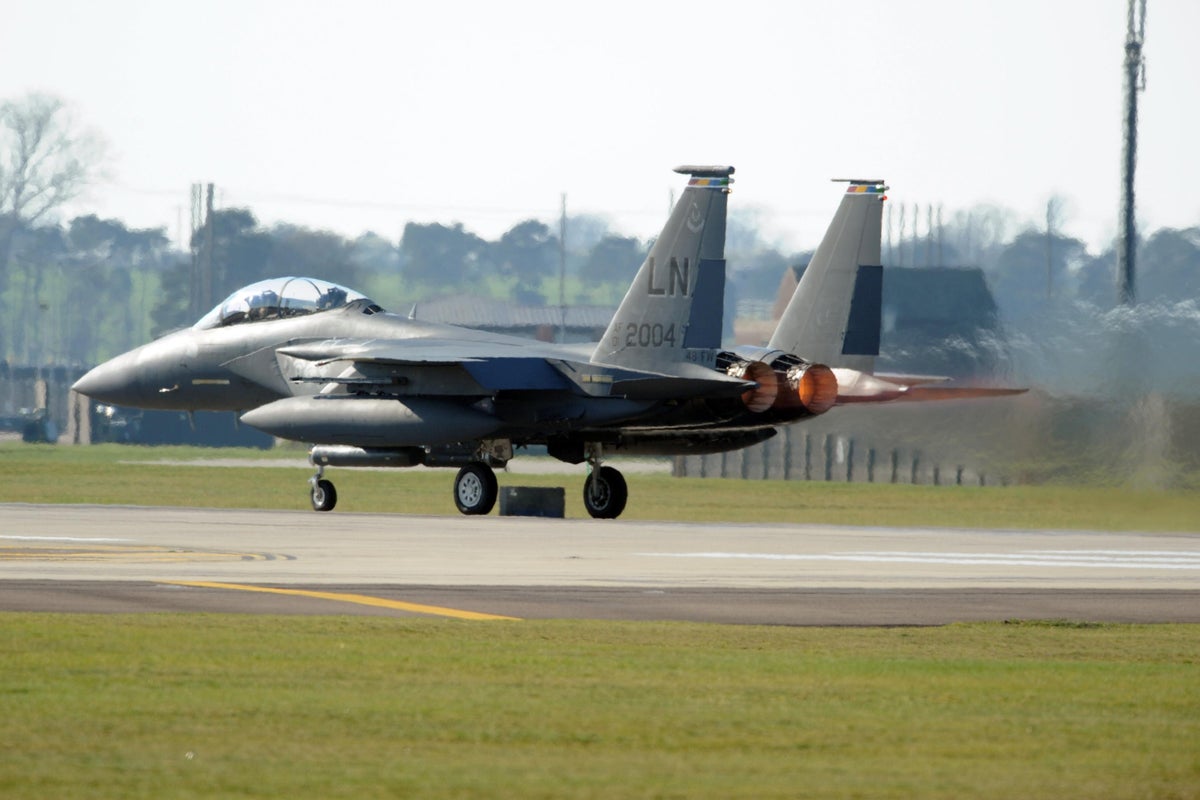
Suspected Iranian drones swarmed RAF Lakenheath, prompting a shelter-in-place alert for U.S. personnel. The U.S. military repelled the unmanned aircraft using counter-drone technology.
On November 13, a security alert was issued at the base in Suffolk, England, after “suspected unauthorised drone activity” was detected, according to multiple reports. The Financial Times, citing sources familiar with the incident, reported about six drones were seen around the base. U.S. defensive systems then engaged them.
The U.S. Air Force confirmed the response. “No personnel, aircraft or infrastructure were affected,” the force said. None of the drones were recovered, leaving their purpose unknown.
US Air Forces in Europe declined to discuss counter-drone systems on Friday for operational security reasons. A spokesperson urged the community to “remain vigilant and report any suspicious activity immediately to local authorities.”
RAF Lakenheath, home to the U.S. Air Force’s 48th Fighter Wing and the largest U.S. fighter jet operation in Europe with nearly 7,000 personnel, had been on “Charlie alert,” the second-highest threat level, since September.
The failure to retrieve any drones has left investigators without physical evidence. The suspected link to Iran relies on unnamed sources.
UK Ministry of Defence Police and Suffolk Police worked closely with USAF Security Forces to respond, the UK Ministry of Defence said. The situation was “quickly resolved,” with the base returning to normal security measures. The ministry added that protecting military bases is “a top priority.”
Iran has denied involvement in the incident. The Iranian embassy in London stated it “categorically rejects and strongly condemns” speculations about Tehran’s role. This denial mirrors Tehran’s response to other recent incidents.
Security concerns at British bases used by U.S. forces have grown this year. This includes a reported terror plot at RAF Fairford in Gloucestershire.
Miliband also summoned the Iranian ambassador. He issued a statement which said: “Britain will not tolerate threats on our soil.” Stephen Doughty, minister of state for the Middle East, North Africa, Afghanistan and Pakistan, later said Iran posed a “significant threat” to the UK.
Sources familiar with the incident suspect Iran was behind the drone swarm at RAF Lakenheath. Tehran has denied involvement. The Financial Times reported that while suspicions point to Iran, no definitive evidence has been presented publicly.
The failure to recover any drones has left investigators without physical evidence. This makes it impossible to confirm whether the aircraft carried weapons, surveillance equipment, or other payloads.
The incident is part of a series of security concerns at British military sites this year. This includes an alleged Iran-linked plot at RAF Fairford that prompted the removal of American B-1 bombers.

Britain is now investing £470 million to strengthen security at military installations. This includes enhanced physical protection, surveillance, and counter-drone capabilities.
The Royal Air Force is also moving some aircraft into hangars overnight. Sky News reported the RAF plans to install anti-drone netting around others left exposed.
Just days earlier, the US military evacuated at least a dozen aircraft from RAF Mildenhall.
Despite these measures, the Lakenheath incident shows that defending sensitive military locations against unidentified drone activity remains difficult. Attribution and recovery remain difficult.
Related reading

ITLOS Rejects Argentina Bid to Halt Falklands Oil Drilling
An international tribunal in Hamburg voted 18–3 on Saturday to reject Argentina's request for emergency measures that would...

Norse Atlantic’s Norwegian Unit Files for Bankruptcy
Sustaining the business required hundreds of millions of additional dollars of liquidity that Spirit simply does not have...

Kenyan Court Convicts Paul Mackenzie on 123 Manslaughter Counts
A Kenyan court convicted doomsday cult leader Paul Mackenzie on Friday of manslaughter in the deaths of 123...
Israeli Strike Kills Two MSF Staff at Gaza Clinic
An Israeli airstrike killed two Médecins Sans Frontières staff members at a clinic near Gaza City's al-Shifa Hospital...