
UT Austin is consolidating its medical footprint into a single, cohesive academic health system branded as UT Dell Medicine, a move anchored by a massive $750 million contribution from the Michael and Susan Dell Foundation. The rebranding encompasses all university medical facilities and services, including the existing Dell Medical School and the clinical practice previously known as UT Health Austin, to create a unified front for healthcare delivery in the rapidly expanding Austin area, KUT reported.
By bringing these entities under one umbrella, the university is attempting to solve a systemic friction point in healthcare: the “fragmented patient experience.” When a patient suffers from multiple complex conditions, they typically juggle different specialists across different practices, hospitals, and organizations. UT Dell Medicine aims to replace that with a coordinated team approach.
A $750 Million Bet on Austin’s Growth
The scale of the investment is staggering. The $750 million gift from the Michael and Susan Dell Foundation stands as one of the largest donations ever made to an American university. This capital is fueling the development of the Dell Medical Center, a new university hospital that officials describe as the future cornerstone of the entire system.
UT Austin’s new academic health system has a name: UT Dell Medicine. The logo was unveiled Tuesday on the Health Transformation Building, alongside a collaboration with MD Anderson to bring integrated cancer services to Central Texas. pic.twitter.com/lYCXlFOXxn
Dr. John Zerwas, chancellor of the UT System, noted that the opportunity to build an academic health enterprise from the ground up is a rarity in modern medicine. The goal is to ensure the city can handle mounting medical needs expected in the growing Austin area.
“The chance to build an academic health enterprise from the ground up almost never comes along,” Zerwas said.
The existing Dell Medical School will serve as the anchor for this expanded system. While the clinics already handle specialties like urology, pulmonology, ophthalmology, gastroenterology, and orthopedics, the new Dell Medical Center will push the system into higher-stakes territory. Once the hospital opens in 2030, the system will add cardiovascular, cancer, neurological, and transplant care, alongside advanced intensive care.
Solving the Coordination Gap
The human stakes here are found in the "information gap." Currently, patients with complex conditions are often the primary messengers of their own medical history, managing conflicting appointments and recommendations. Dr. Claudia Lucchinetti, dean of Dell Medical School and leader of UT Dell Medicine, argues that the current model is broken.
“Patients and their families are left to carry information between them, navigating conflicting appointments and recommendations, and make difficult decisions without a coordinated team beside them. We believe there is a better way,” Lucchinetti said.
To achieve this “better way,” the university is leaning into two specific strategic partnerships and technologies:
- MD Anderson Collaboration: The Dell Medical Center will partner with the MD Anderson Cancer Center to provide advanced oncology care locally.
- AI Integration: The hospital is being designed to incorporate artificial intelligence and advanced computing to power a focus on prevention and diagnosis as well as treatment.
The projected impact is a massive increase in throughput. University officials state that once the medical center is fully operational, the system will effectively triple the number of patients UT Dell Medicine can see.
The Economic and Civic Trade-offs
Related reading

Pat McAfee says he hates University of Utah after ‘College GameDay’ video – LA Times
Pat McAfee Puts University of Utah in His Crosshairs After Social Media Video In a tense fallout that...

Franklin Web Printing Empowers The Contributor for Nearly Two Decades
For nearly two decades, a partnership has turned the act of printing a newspaper into a vehicle for...
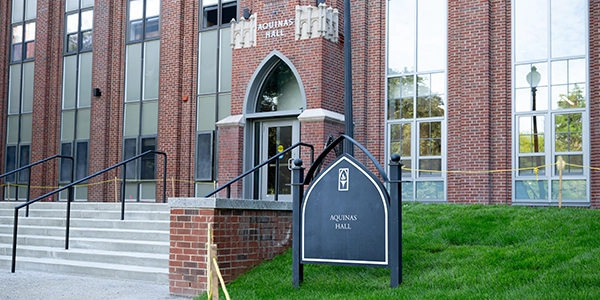
Aquinas Hall Undergoes Major Renovation at Providence College
Built in 1933 as Providence College's first residence hall and just the second building on campus, Aquinas Hall...

Green Bay Packers missed passing opportunities defined Week 7 game
A handful of missed passing opportunities defined the Green Bay Packers' Week 7 performance against the Detroit Lions,...