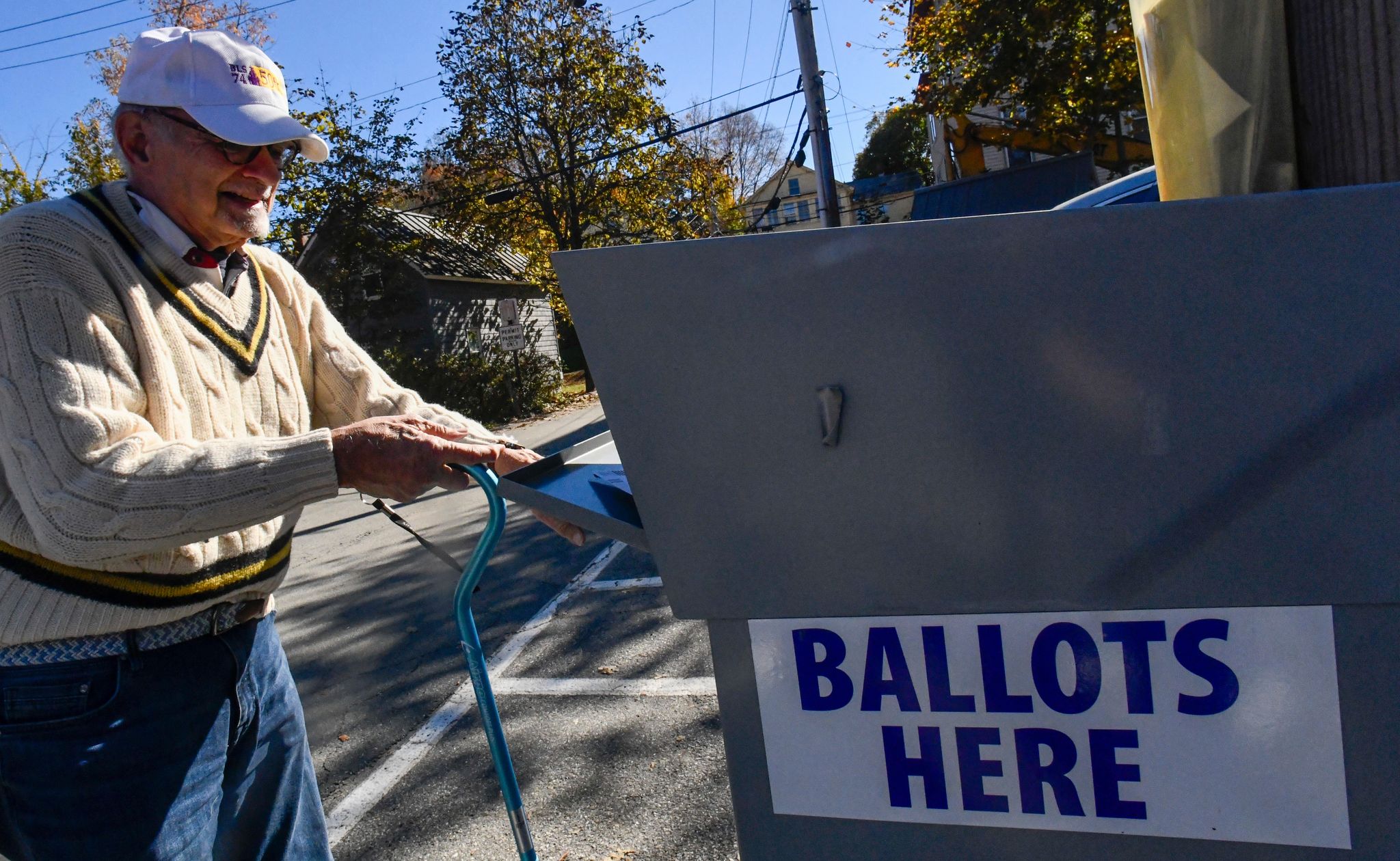
Vermont voters head to the polls this Tuesday to decide the future of several key federal and state offices, with the Associated Press (AP) preparing to monitor results across 247 distinct local jurisdictions. As Election Day unfolds, the state’s decentralized approach to vote counting means that the speed and format of reporting will vary significantly from town to town, though a clear picture of the results is expected to emerge throughout the evening.
Understanding the Mechanics of the Vote
The Associated Press will be tracking results for a wide array of positions, including governor, U.S. House, lieutenant governor, attorney general, secretary of state, and various state-level offices. Because Vermont handles election administration at the town and city level, there is no single, uniform process for reporting. In many larger jurisdictions, officials release the bulk of their results—combining mail-in ballots and in-person votes—in one initial update, according to NewsTimes. This practice differs from states that separate early and Election Day tallies, which can lead to shifts in the lead as the night progresses.
🚨GOP VICTORY: Phil Scott continues to DOMINATE Amanda Janoo in the Vermont governor’s race.Vermont – 2026 Governor🟥Phil Scott* 43.7%(+9.3)🟦Amanda Janoo 34.4%See all VT governor polls @Pollsmax.Governor Scott is running for a sixth two-year term. He is a historic… pic.twitter.com/Tau8yI4nZk
For those tracking the numbers, the historical context of 2022 provides a baseline for the expected volume. During the 2022 U.S. Senate race, approximately 286,000 votes were cast. A defining feature of the Vermont electorate is the reliance on mail-in and early voting; in that same 2022 contest, roughly 67% of all ballots were cast via those methods. Voters can check the status of advance vote totals through the official AP advance vote tracker.
The Timeline of Results
Polls are scheduled to close at 7 p.m. ET. Historically, the state has been relatively efficient in its initial reporting. In the 2024 general election, the first results appeared at 7:12 p.m. ET—just 12 minutes after the polls closed. By 8:48 p.m. ET, the state had reached 50% of votes reporting, with 90% of the tally completed by 10:44 p.m. ET.
The AP’s decision desk does not make projections based on partial data. Winners are declared only when the trailing candidate has no statistical path to close the gap. If a race remains too close to call, the AP continues to monitor developments such as candidate concessions or formal declarations of victory, while explicitly noting that a winner has not yet been determined.
When Recounts Become a Factor
The threshold for requesting a recount in Vermont is tied to the margin of victory, though the specific requirements depend on the office. For federal, statewide, county, and state Senate races, a candidate may request a recount if the margin between the winner and the loser is 2% or less of the total votes cast, divided by the number of people to be elected to that position. For state House and local races, the threshold is 5% or less. Even in instances where a race qualifies for a recount, the AP may declare a winner if the lead is mathematically insurmountable, regardless of potential legal challenges.

The Human and Economic Stakes
The decentralized nature of the 247 jurisdictions means that local election officials are the primary point of contact for the integrity and speed of the tally. For the average voter, this means that while statewide trends may appear quickly, the specific outcomes in smaller, rural towns might take longer to materialize. This structure is designed to keep the electoral process grounded in local community administration, but it requires patience as the varied reporting schedules of 247 different offices aggregate into a final state total.
As the evening progresses, the focus will remain on whether voter turnout matches the levels seen in previous midterm cycles. With 67% of voters having utilized early or absentee options in recent history, the “Election Day” experience is increasingly an exercise in aggregating work that began weeks prior. The logistical challenge for election workers remains consistent: ensuring that every ballot, whether dropped in a box or cast in a booth, is accounted for with the precision required by state law.
Keep reading
2026 midterm election voter guides: Find local resources in your community – NPR
Voters across the country are facing decisions on dozens of gubernatorial contests, fierce congressional battles, and high-stakes ballot...

Union Workers Rally at YVR to Protest Federal Airport Profitization
Workers Gather at Vancouver International Airport to Push Back Against Private Operators Airport workers and union representatives are...

2 helicopters crash midair in Oregon, killing an experienced pilot, an instructor and a student
Midair Collision in Oregon Farm Country Kills Three Two helicopters collided midair on Thursday afternoon near an airport...

Ken Paxton and James Talarico Locked in Tight Texas Senate Race
The Texas Senate Race Tightens as Early Voting Closes The race for the U.S. Senate in Texas has...